Volta's battery
1800 Como and Pavia, Italy
In short
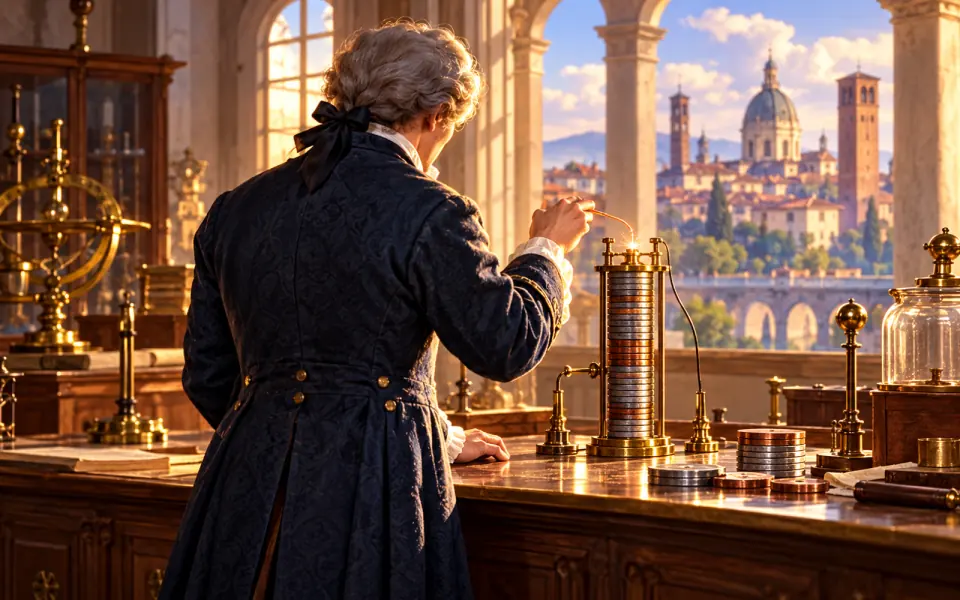
Alessandro Volta, a physicist from Como and a professor in Pavia, stacked small discs of zinc and copper one on top of the other, separated by bits of cloth soaked in salt water. From that column, called a pile because it really was a pile of discs, came a steady electric current. Volta described the invention in 1800 in a letter to the Royal Society in London. In his honour the unit of electrical voltage is called the volt.
Why it matters For the first time electricity could be had continuously, and the age of electricity began.
Source: Treccani, entry “Volta, Alessandro”
Study card about 5 minutes of reading
The story
The frogs' legs
In 1780 in Bologna a scientist and doctor, Luigi Galvani, was experimenting on frogs. One day he noticed that the legs of a dead frog, hanging from a copper hook, twitched as if it were alive when they were touched with an iron rod. Galvani thought he had discovered a new force, “animal electricity”: according to him, there was a special electric fluid in animals' muscles. In 1791 he published his results, and scholars all over Europe discussed them.
Among those who read Galvani's work was Alessandro Volta, a physicist from Como, born in 1745, who taught at the University of Pavia. Volta had already made important discoveries about electricity, but he did not agree about animal electricity. Repeating the experiments, he became convinced that the frog's legs moved not because of something in the animal, but because two different metals, in contact with a liquid, produced electricity. The frog was only a very sensitive detector. A great scientific dispute arose between Galvani and Volta.
How to make a current
To prove he was right, Volta wanted to produce electricity without animals. Until then scientists knew only “static” electricity, the kind that builds up when you rub, for example, a piece of amber or glass: you got sparks, but they lasted a moment and could not be used. Volta was looking for a way to get a steady flow of electricity.
In 1799, after years of attempts, Volta had the idea: he stacked a series of small metal discs, one of zinc and one of silver (or copper), alternating with pieces of cardboard or cloth soaked in salt water. One after another, all the layers formed a column: a “pile”. When he connected the two ends with a wire, he got a continuous electric current that did not run out at once. The more discs he added, the stronger the effect.
The letter of 20 March 1800
Volta described the discovery in a letter written in French, on 20 March 1800, to Sir Joseph Banks, president of the Royal Society, the most important British scientific academy. The invention was an enormous novelty: for the first time electricity could be produced continuously and under control. Within a few weeks scientists all over Europe had built piles and were trying them out.
As early as May 1800 two Englishmen, William Nicholson and Anthony Carlisle, used a pile to split water into hydrogen and oxygen, by “electrolysis”. In 1807 the English chemist Humphry Davy, with very large piles, managed for the first time to isolate new metals, such as sodium and potassium. In 1820 the Dane Hans Christian Ørsted discovered that a current makes a compass needle move, the first link between electricity and magnetism; and in 1831 Michael Faraday discovered how to produce a current with magnets, opening the way to generators and motors.
Volta was not a man who stayed shut in a laboratory: he travelled a great deal, to Paris, London and Germany, met the great scientists of the age and discussed with them. He was also a good teacher, able to explain with simple and spectacular experiments. That is why his discovery was understood at once and was immediately imitated.
Honours for Volta
Napoleon Bonaparte, who was interested in science, wanted to meet Volta. In 1801 he invited him to Paris: Volta showed his pile to the Institute of France, and Napoleon gave him honours and recognition. Later, in 1810, he made him a count. Volta went back to Como, where he lived quietly, and died in 1827. His name reminds scientists every day of his contribution: the unit of measurement of electric voltage is called the “volt”.
In Como, on the lake, there is a temple dedicated to him, the Tempio Voltiano (1928), which keeps his original instruments. His portrait was on the ten-thousand-lire banknotes until the end of the 1990s.
Why it happened
The pile came from curiosity and debate: the argument with Galvani pushed Volta to check things and to build instruments. The discovery was made possible by the knowledge that was building up about electricity during the 18th century, with electrostatic machines and the Leyden jar.
Volta was a great experimenter, skilful and patient, and a good instrument maker. He was also lucky, because by using metals and salt water he chose the right materials for producing electricity.
What changed
The pile was the first battery, and the start of the age of electricity. It made it possible to study electrical phenomena with a steady flow, and led to discoveries in chemistry (electrolysis, new elements), physics (electromagnetism) and technology: the telegraph, electroplating, electric motors, the light bulb.
Since then batteries have become smaller and more powerful: today they are in phones, laptops, electric cars and watches. For lithium-ion batteries, used almost everywhere, the Nobel Prize in Chemistry was awarded in 2019 to John Goodenough, Stanley Whittingham and Akira Yoshino.
The dispute with Galvani also had an ending: today we know that both were right. Volta had discovered the electricity produced by metals; Galvani had sensed, without knowing it, that living bodies really do contain electrical signals, those of the nerves, studied today by neurology.
Key people and places
People
- Alessandro Volta
- Italian physicist (1745–1827): he invented the pile, the first electric battery.
- Luigi Galvani
- Physician and physicist from Bologna (1737–1798): he discovered the twitching of frogs' legs and thought of animal electricity.
- Humphry Davy
- English chemist (1778–1829): with the pile he isolated sodium, potassium and other metals.
- Michael Faraday
- English physicist and chemist (1791–1867): he discovered electromagnetic induction.
- Napoleon Bonaparte
- French general and emperor (1769–1821): he honoured Volta and gave him honours and a pension.
Places
- Como, Lombardy
- Volta's home town, where the Tempio Voltiano stands.
- Pavia, Lombardy
- The city where Volta taught at the university and where he built the pile.
Good to know
- Volta's first pile was a column of zinc and silver discs separated by cloth soaked in salt water.
- Volta wrote the letter announcing the pile on 20 March 1800.
- The unit of measurement of electric voltage, the volt, is named after Volta.
- The Nobel Prize in Chemistry was awarded for lithium-ion batteries in 2019.
- Volta was on the ten-thousand-lire banknotes.
Find out more
- Wikipedia, “Alessandro Volta” en.wikipedia.org
- Wikipedia, “Electric battery” en.wikipedia.org
- Nobel Prize in Chemistry 2019, official site nobelprize.org
Related events
- Watt's steam engine1769 · Age of revolutionsIn the same years Watt's steam engine was setting factories in motion.
- The electric telegraph1844 · Age of revolutionsThe electric telegraph used current from piles.
- A practical electric light bulb1879 · Age of revolutionsThe electric light bulb was made possible by direct current.
- The modern smartphone2007 · TodayModern batteries power smartphones.
Before and after, in the era “Age of revolutions”
Event 10 of 25
 BeforeNewcomen's steam engine1712
 BeforeThe European Enlightenmentabout 1720
 BeforeDiderot's Encyclopédie1751
 BeforeWatt's steam engine1769
 BeforeThe American Revolution1776–1783
 BeforeThe first hot-air balloon flight1783
 BeforeThe French Revolution1789–1799
 BeforeThe metric system1795
 BeforeJenner's vaccine1796
- You are hereVolta's battery1800
 AfterNapoleon becomes emperor1804
 AfterThe Congress of Vienna1815
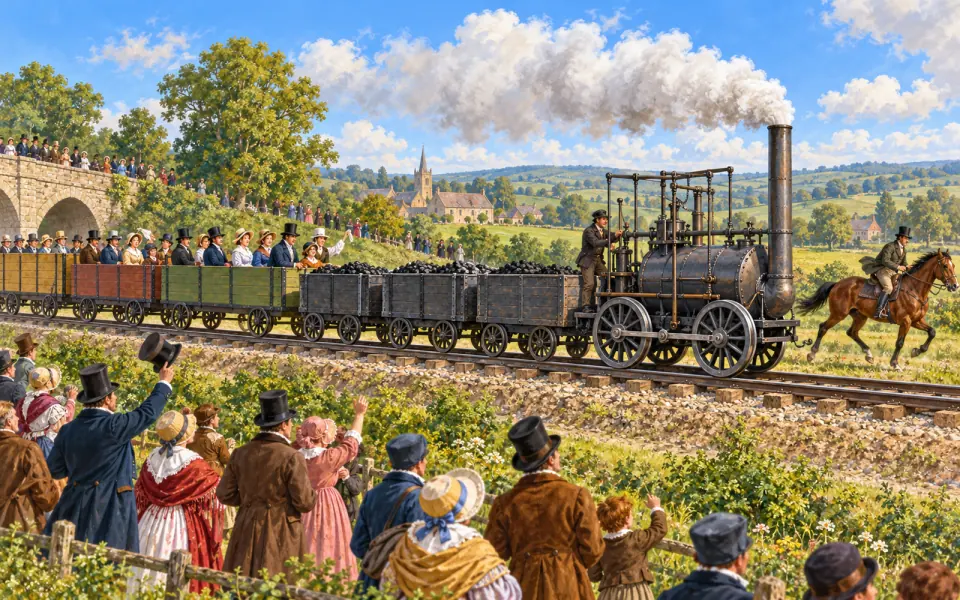 AfterThe first public steam railway1825
 AfterNiépce's photographabout 1826
 AfterManzoni's The Betrothed1827
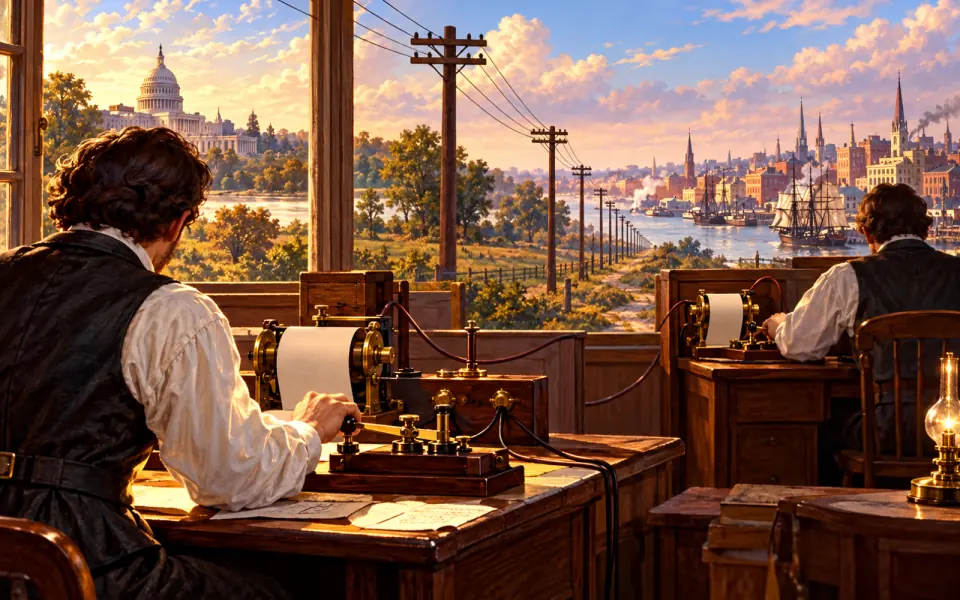 AfterThe electric telegraph1844
 AfterThe revolutions of 18481848
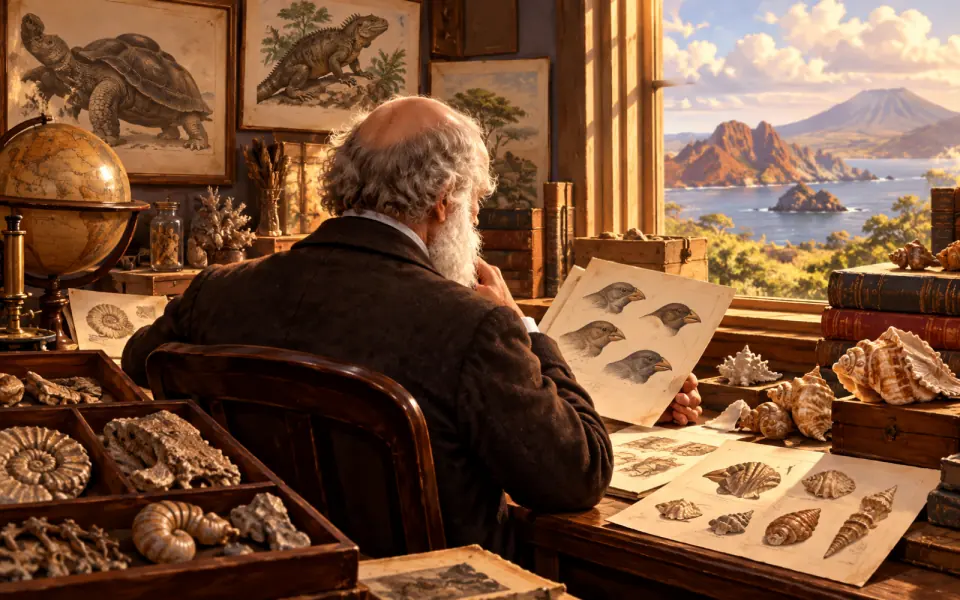 AfterDarwin publishes On the Origin of Species1859
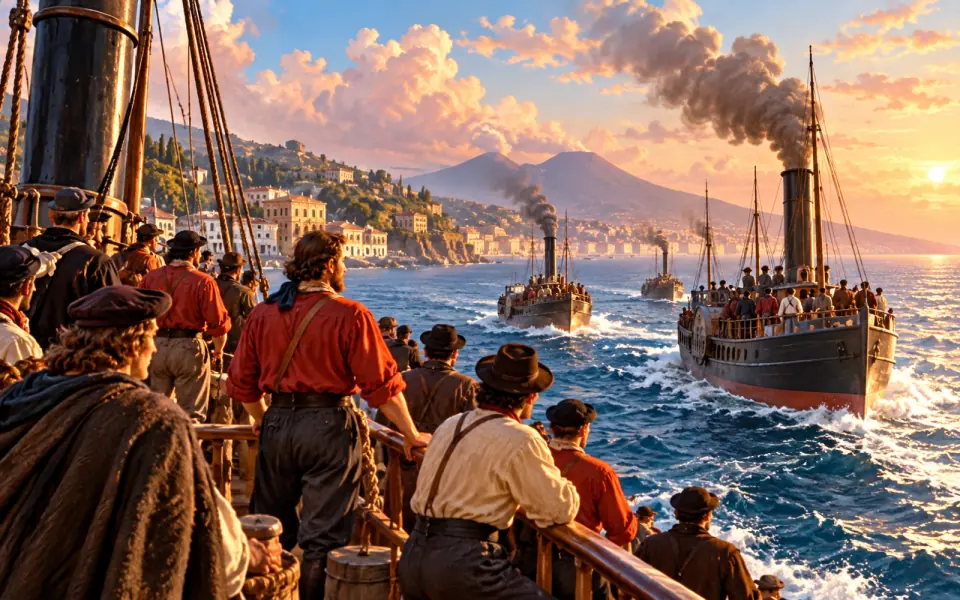 AfterThe Expedition of the Thousand1860
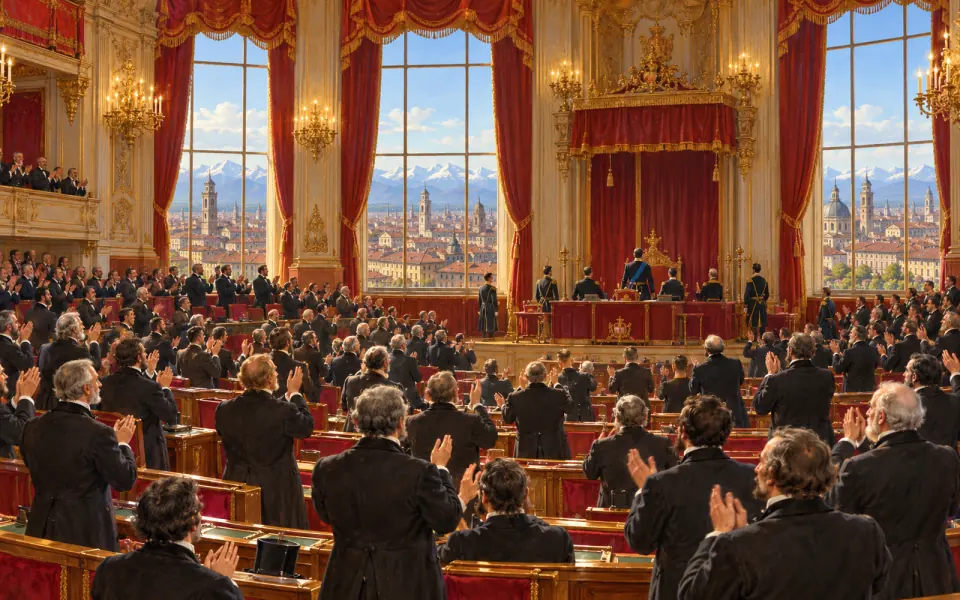 AfterThe unification of Italy1861
 AfterThe labour movementabout 1864
 AfterCompulsory primary school (Coppino law)1877
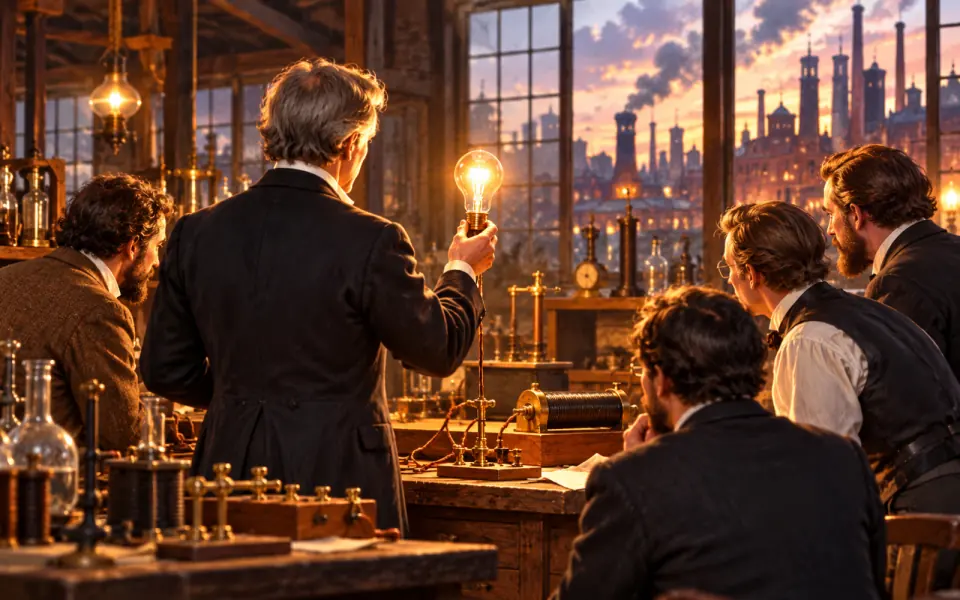 AfterA practical electric light bulb1879
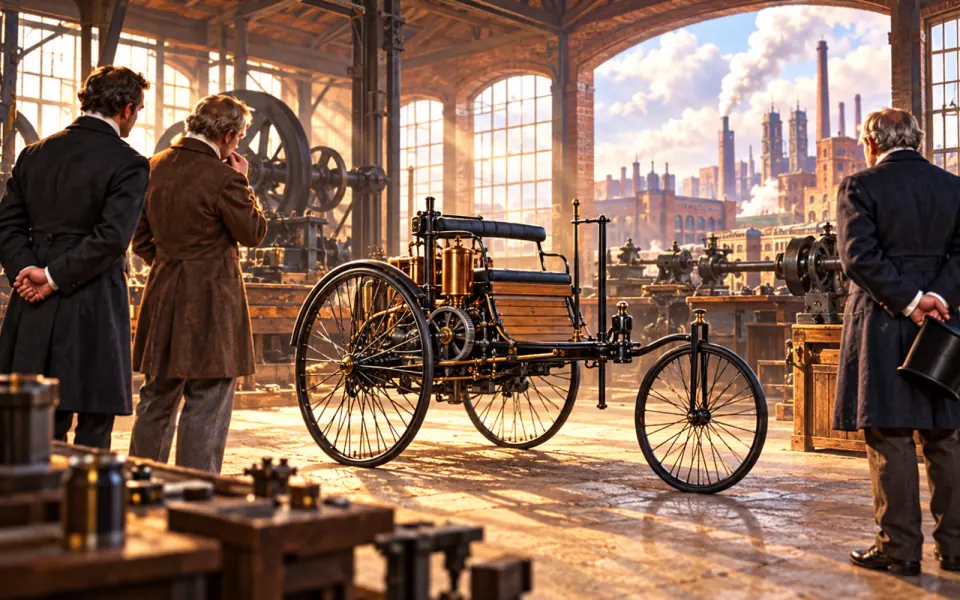 AfterThe first modern motor car1886
 AfterThe Lumière brothers' cinema1895
Listen / Read next
- Music to read by: Cinematic JourneyEpic film-style music, no lyrics, by Ciro Simone IrmiciSpotifyYouTube Music
Meanwhile, elsewhere in the world
Other events of the era “Age of revolutions”
- Newcomen's steam engine
- The European Enlightenment
- Diderot's Encyclopédie
- Watt's steam engine
- The American Revolution
- The first hot-air balloon flight
- The French Revolution
- The metric system
- Jenner's vaccine
- Napoleon becomes emperor
- The Congress of Vienna
- The first public steam railway
- Niépce's photograph
- Manzoni's The Betrothed
- The electric telegraph
- The revolutions of 1848
- Darwin publishes On the Origin of Species
- The Expedition of the Thousand
- The unification of Italy
- The labour movement
- Compulsory primary school (Coppino law)
- A practical electric light bulb
- The first modern motor car
- The Lumière brothers' cinema
