The metric system
1795 Paris, France
In short
Before the Revolution, every region of France had its own measures, and a pound or a foot changed from one town to another. Scientists proposed a system that was the same for everyone, based on multiples of ten. The metre was defined as one ten-millionth of the distance from the North Pole to the equator, and two astronomers spent years measuring the meridian between Dunkirk and Barcelona. A law of 1795 introduced the metre, the litre and the gram.
Why it matters Today almost the whole world measures with the same system, and science and trade understand each other more easily.
Source: Bureau International des Poids et Mesures (BIPM), history of the International System of Units
Study card about 5 minutes of reading
The story
A chaos of measures
Imagine going to the market and not knowing how long an “arm” of cloth is, how much a “pound” of meat weighs or how much a “brenta” of wine holds. Until a little over two hundred years ago, in France and all over Europe, every region and even every town had its own measures, with the same name but different values. According to some estimates, in 18th-century France there were hundreds of thousands of different units of measurement. In Italy too there was the Florentine braccio, the Neapolitan canna, the Venetian foot and the Milanese pertica, all different.
This chaos caused constant problems: merchants were cheated, engineers and scientists could not compare their results, and peasants complained of being swindled by their lords, who used larger measures when collecting taxes and smaller ones when paying. Those who governed understood that measures were needed that were the same for everybody.
“For all times, for all peoples”
With the French Revolution the chance came. In 1790 the National Assembly asked the Academy of Sciences to invent a new system, rational, simple and the same for everyone. The commission included some of the greatest scientists of the age: the chemist Antoine Lavoisier, the mathematicians Pierre-Simon Laplace and Joseph-Louis Lagrange, and the Marquis de Condorcet. They decided that measures must be based on something natural and unchanging, that did not depend on a king or a country: the Earth itself. The slogan was: “For all times, for all peoples”.
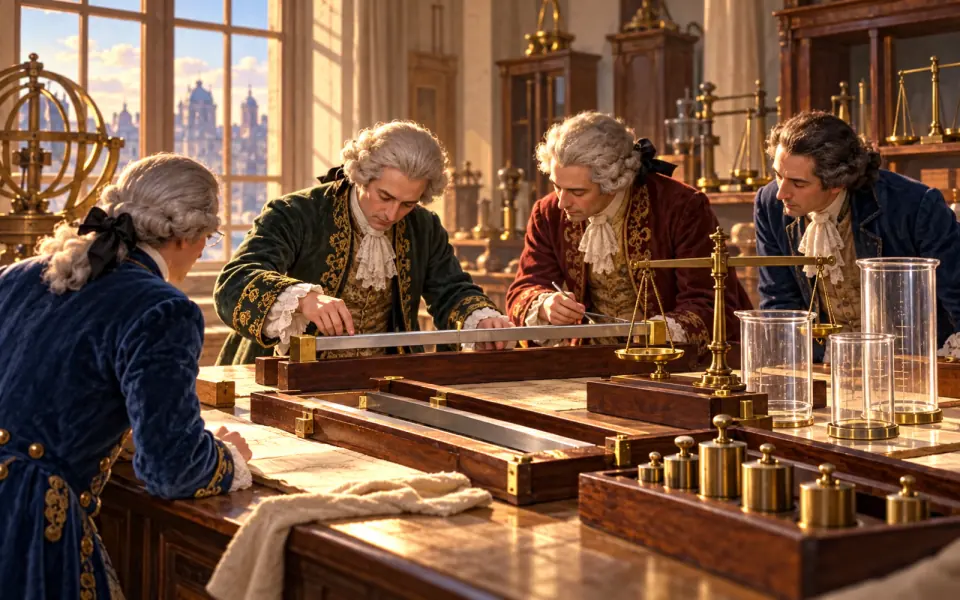
It was decided that the unit of length, the metre, would be one ten-millionth of the distance from the North Pole to the equator, measured along the meridian that passes through Paris. The other values would be derived from the metre in a decimal way, that is, in groups of ten: for volume, the litre would be a cubic decimetre; for weight, the kilogram would be the weight of a litre of pure water. For multiples and fractions, fixed prefixes would be used: kilo, hecto, deca, deci, centi, milli.
Measuring the Earth
To find out how long the metre really was, in 1792 two astronomers, Jean-Baptiste Delambre and Pierre Méchain, set out to measure a long stretch of the meridian, from Dunkirk, on the North Sea, to Barcelona, in Spain, with a method called triangulation: measuring the angles between towers, bell towers and hilltops, and working out the distances with trigonometry. It was an adventurous undertaking that lasted seven years, amid wars, arrests, illness and suspicion: in several countries the scientists were mistaken for spies, and Méchain tormented himself for years over a small error in measurement that he had discovered and kept secret.
In the meantime, on 7 April 1795 (18 Germinal, year III of the revolutionary calendar) the law officially adopted the decimal metric system. In 1799 the final platinum standards of the metre and the kilogram were made and placed in the Archives of France. Meanwhile two “standard metres” were carved in marble in some Paris streets so that citizens could compare them with their own rulers: one is still preserved, in rue de Vaugirard.
How it was received
Habits, however, do not change in a day. People went on using the old measures, and in 1812 Napoleon had to allow the traditional ones to be used again, in a metric version (old names, but values tied to the metre). Only in 1837 did the metric system become compulsory in France. The Kingdom of Sardinia adopted it in 1845, and united Italy extended it to the whole country in 1861. In 1875 seventeen countries signed the Metre Convention, and an international bureau of weights and measures was set up at Sèvres, near Paris, which looks after the standards.
Why it happened
The metric system came from the need for simplicity and fairness in trade, and from the Enlightenment faith in reason: if the laws of nature are valid for everyone, why not measures too? The revolution, which wanted to wipe out differences and privileges, offered the political chance to do it.
It was possible thanks to the science of the time, able to measure the Earth and to build precise instruments, and to a community of scientists who worked in a coordinated way, despite the war.
What changed
The metric system is now used in almost the whole world, and is the common language of scientists, engineers and merchants. In 1960 it was updated into the “International System of Units” (SI). The definitions have changed: since 1983 the metre has been defined as the distance travelled by light in a vacuum in a very short time (1/299,792,458 of a second), and since 2019 even the kilogram no longer depends on a platinum cylinder but on a constant of physics.
Countries that have not fully adopted it, like the United States, which still use miles, pounds and gallons, know this well: the metric system is convenient, because it is decimal. A muddle of units can even be dangerous: in 1999 the American space probe Mars Climate Orbiter was lost because one team of engineers had used metric units and another American units.
On 20 May, the anniversary of the Metre Convention, World Metrology Day, the day of the science of measurement, is celebrated every year.
Key people and places
People
- Antoine Lavoisier
- French chemist (1743–1794): member of the commission that defined the new system of measures.
- Pierre-Simon Laplace
- French mathematician and astronomer (1749–1827): he took part in defining the metric system.
- Jean-Baptiste Delambre
- French astronomer (1749–1822): he measured the meridian from Dunkirk to Barcelona.
- Pierre Méchain
- French astronomer (1744–1804): he measured the southern part of the meridian.
- Charles-Maurice de Talleyrand
- French bishop and politician (1754–1838): in 1790 he proposed to the Assembly that a uniform system of measures be created.
Places
- Sèvres, near Paris
- The home of the International Bureau of Weights and Measures, which looks after the standards.
- Rue de Vaugirard, Paris
- Where a marble “standard metre” from 1796 is still preserved.
Good to know
- In 18th-century France there were hundreds of thousands of different units of measurement, according to some estimates.
- The metre was meant to be one ten-millionth of the distance from the North Pole to the equator.
- The kilogram was defined as the weight of a litre of water.
- In 1999 an American probe to Mars was lost because metric and American units had been mixed up.
- Since 2019 the kilogram has been defined from a constant of physics, and no longer from a platinum cylinder.
Find out more
- Bureau International des Poids et Mesures bipm.org
- Wikipedia, “International System of Units” en.wikipedia.org
- Wikipedia, “Metre” en.wikipedia.org
- Wikipedia, “International System of Units” en.wikipedia.org
Related events
- The French Revolution1789–1799 · Age of revolutionsThe French Revolution created the metric system.
- The European Enlightenmentabout 1720 · Age of revolutionsThe Enlightenment looked for rational rules valid for everyone.
- The personal computer1977 · TodayModern computers also speak in units of the international system.
- The Congress of Vienna1815 · Age of revolutionsAfter Napoleon's fall the Congress of Vienna did not cancel the decimal measures.
Before and after, in the era “Age of revolutions”
Event 8 of 25
 BeforeNewcomen's steam engine1712
 BeforeThe European Enlightenmentabout 1720
 BeforeDiderot's Encyclopédie1751
 BeforeWatt's steam engine1769
 BeforeThe American Revolution1776–1783
 BeforeThe first hot-air balloon flight1783
 BeforeThe French Revolution1789–1799
- You are hereThe metric system1795
 AfterJenner's vaccine1796
 AfterVolta's battery1800
 AfterNapoleon becomes emperor1804
 AfterThe Congress of Vienna1815
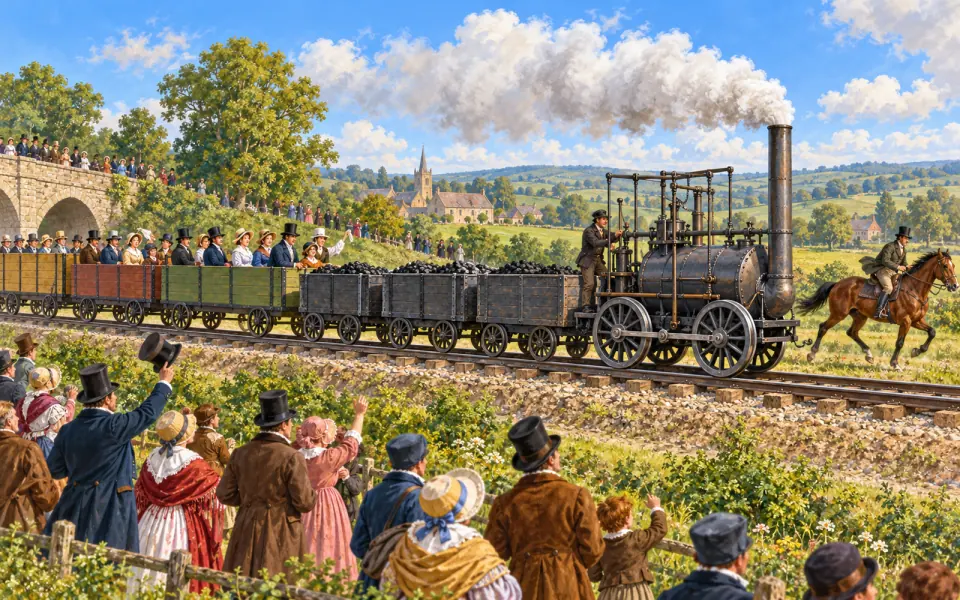 AfterThe first public steam railway1825
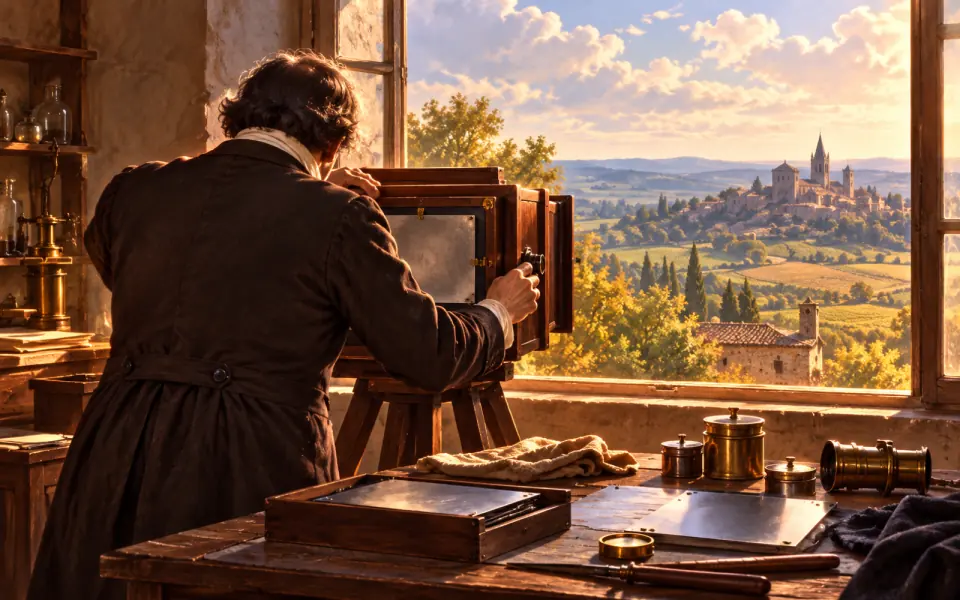 AfterNiépce's photographabout 1826
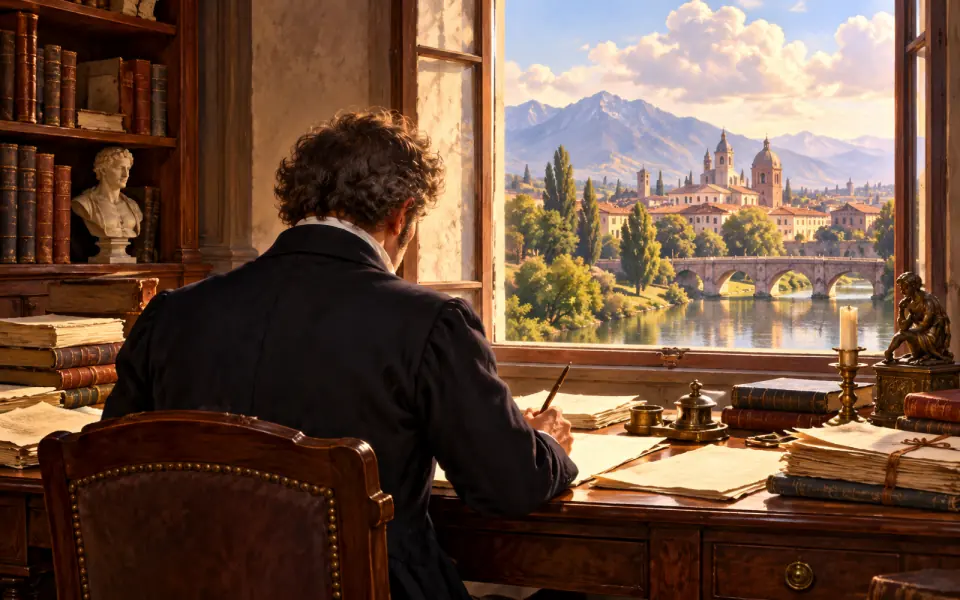 AfterManzoni's The Betrothed1827
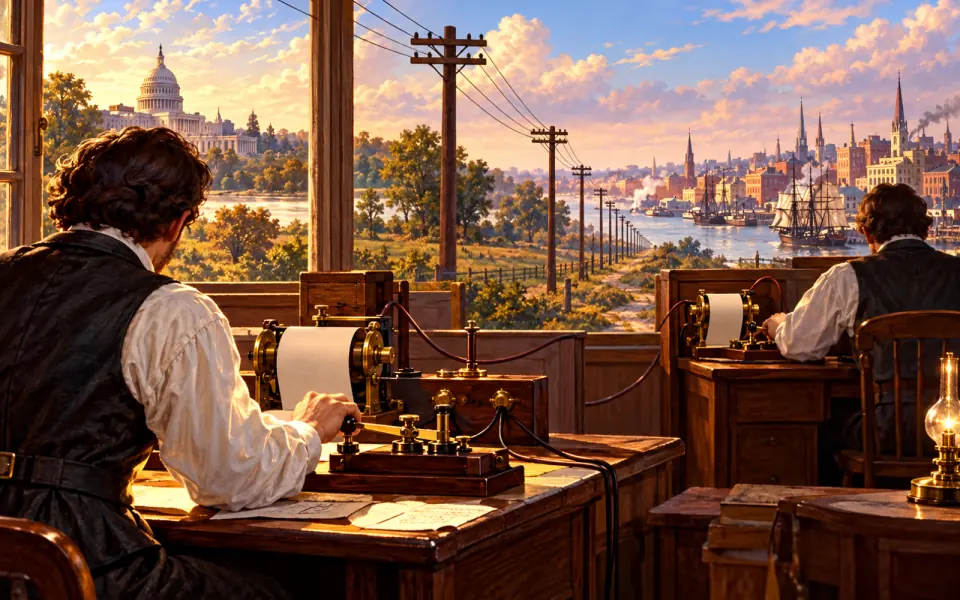 AfterThe electric telegraph1844
 AfterThe revolutions of 18481848
 AfterDarwin publishes On the Origin of Species1859
 AfterThe Expedition of the Thousand1860
 AfterThe unification of Italy1861
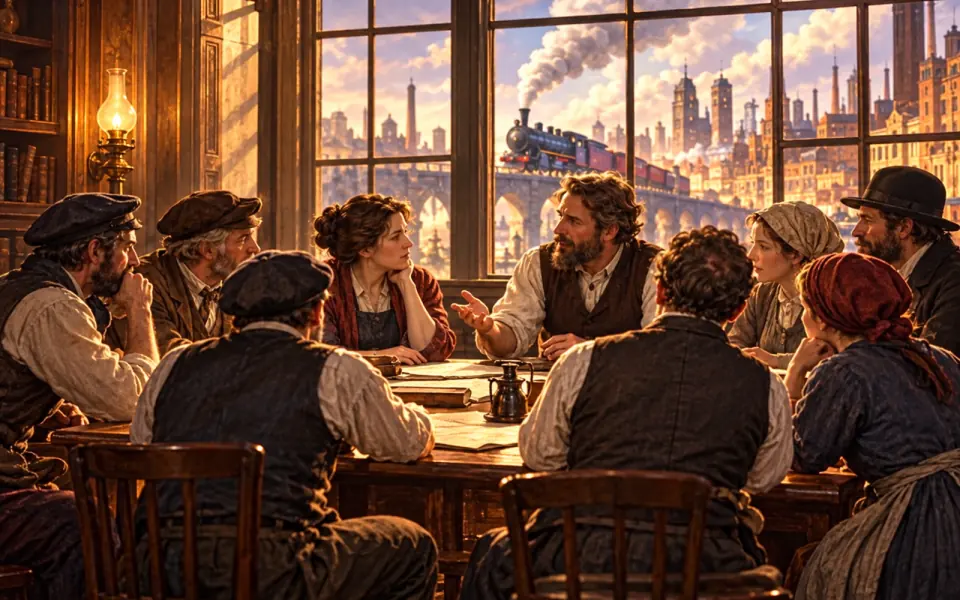 AfterThe labour movementabout 1864
 AfterCompulsory primary school (Coppino law)1877
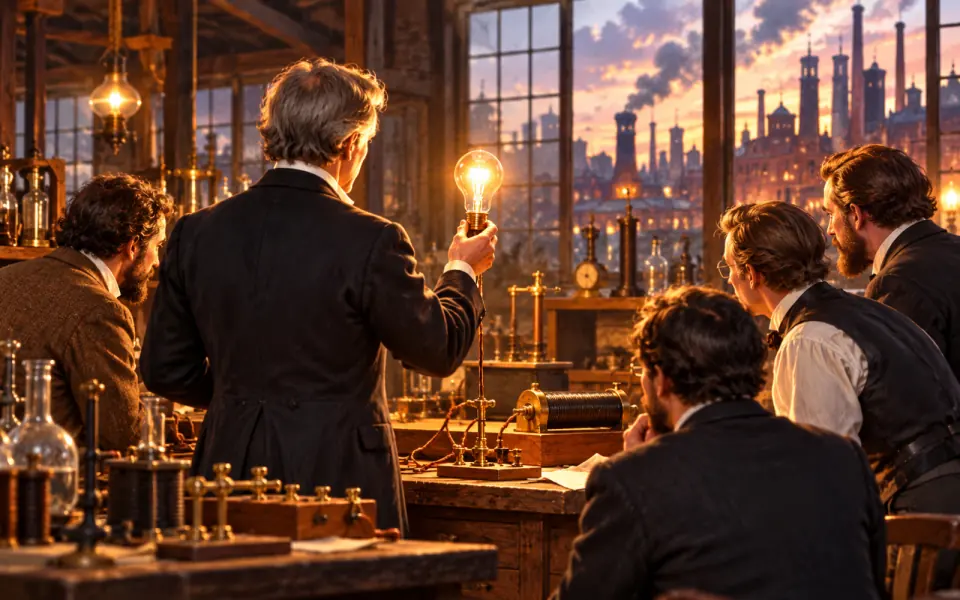 AfterA practical electric light bulb1879
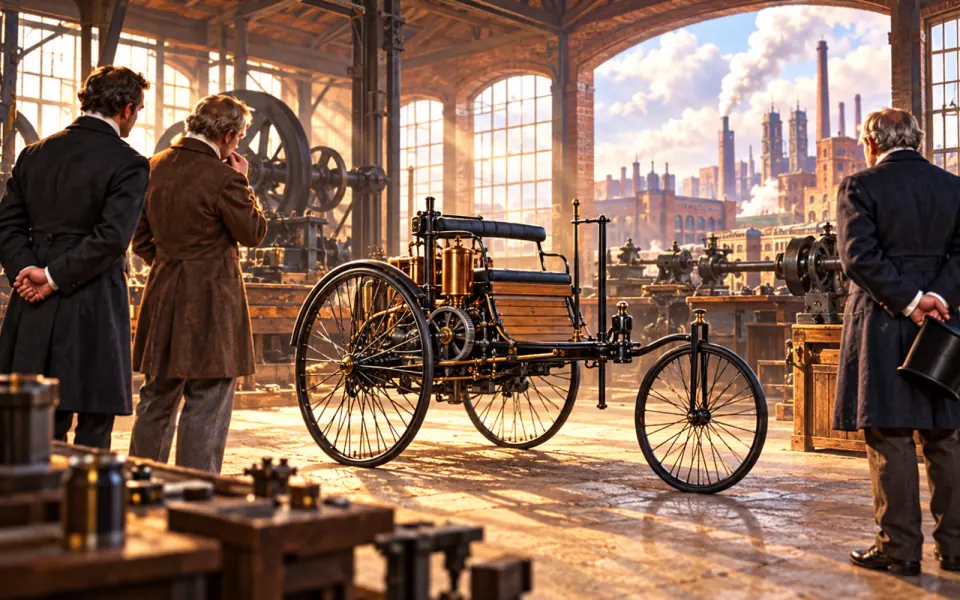 AfterThe first modern motor car1886
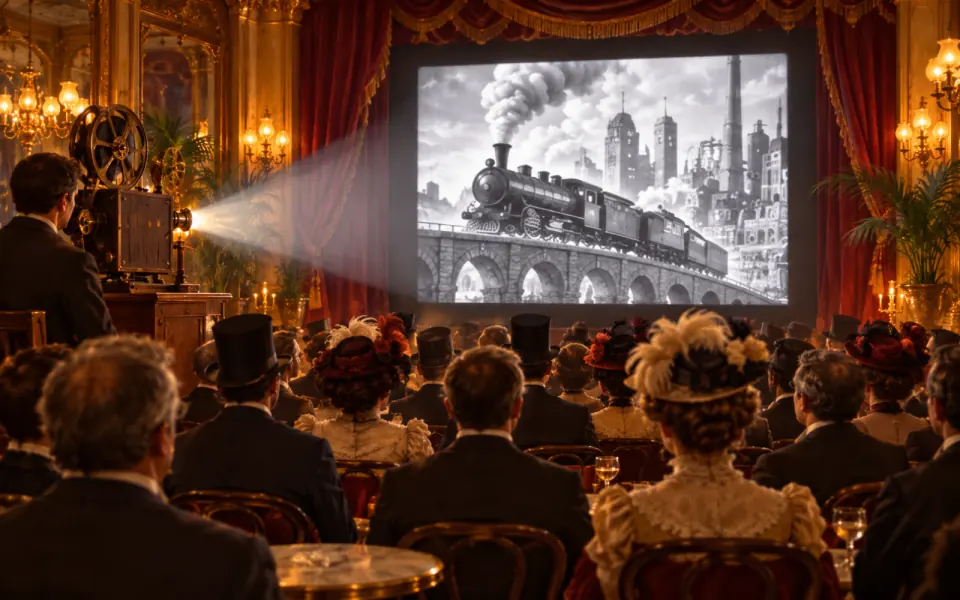 AfterThe Lumière brothers' cinema1895
Listen / Read next
- Music to read by: Cinematic JourneyEpic film-style music, no lyrics, by Ciro Simone IrmiciSpotifyYouTube Music
Meanwhile, elsewhere in the world
Other events of the era “Age of revolutions”
- Newcomen's steam engine
- The European Enlightenment
- Diderot's Encyclopédie
- Watt's steam engine
- The American Revolution
- The first hot-air balloon flight
- The French Revolution
- Jenner's vaccine
- Volta's battery
- Napoleon becomes emperor
- The Congress of Vienna
- The first public steam railway
- Niépce's photograph
- Manzoni's The Betrothed
- The electric telegraph
- The revolutions of 1848
- Darwin publishes On the Origin of Species
- The Expedition of the Thousand
- The unification of Italy
- The labour movement
- Compulsory primary school (Coppino law)
- A practical electric light bulb
- The first modern motor car
- The Lumière brothers' cinema
