The personal computer
1977 California, United States (and earlier Ivrea, Italy)
In short
The first computers were the size of rooms and cost a fortune. As early as 1965 the Italian company Olivetti had presented the Programma 101 in New York, a programmable desktop calculator. In 1977 computers designed for homes and schools came on the market, such as the Apple II, with a keyboard and a connection to the television. They could be used for writing, doing calculations and playing the first video games.
Why it matters The computer stopped being a machine for a few experts and became a tool for everyone.
Source: Computer History Museum, “Timeline of Computer History”
Study card about 4 minutes of reading
The story
The computer was a giant
Until fifty years ago, a computer was not something you kept at home. It was a cabinet, or a whole room, full of valves and wires, found only in the big computing centres, banks and universities. It cost as much as a mansion and ran on punched cardboard cards. To use it you had to ask permission, queue up and wait for hours to see the result of a program.
Something began to change in 1971, when a small Californian company, Intel, put an entire electronic brain onto a chip the size of a fingernail, the microprocessor. With that little piece of silicon it became possible to build a small, cheaper computer. In 1975 an electronics magazine presented the Altair 8800: it was a kit to assemble, with no screen or keyboard, just a few little lights and some switches, but it was cheap. Thousands of enthusiasts bought it. Two young men, Bill Gates and Paul Allen, wrote a program in the BASIC language for the Altair and founded Microsoft.
The boys in the garage
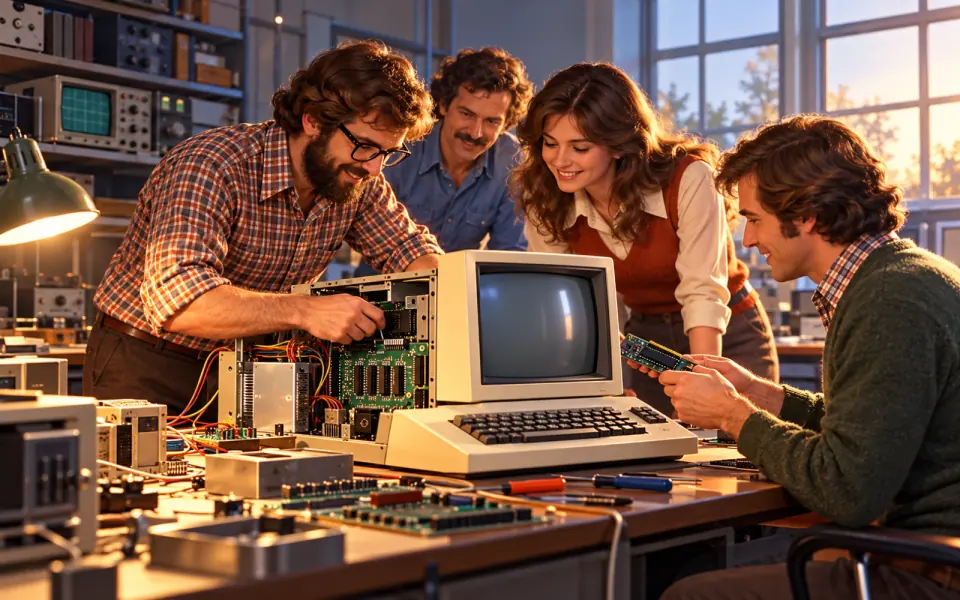
In California, around Palo Alto, a group of young enthusiasts was meanwhile forming, the “Homebrew Computer Club”, where people swapped ideas and circuits. Among them was a shy and brilliant engineer, Steve Wozniak, who loved building machines with very few components, and his friend Steve Jobs, who had another gift: he understood what ordinary people would want. Together, in 1976, they founded a company called Apple. Their first computer, the Apple I, was sold without a case, as a board to be completed.
1977: three computers for everyone
The real step forward came in 1977, when three ready-to-use machines reached the market, with a keyboard, a screen and a BASIC language for programming. The Apple II, presented in April at a California fair, had a handsome beige plastic case, showed colours on the screen and cost 1,298 dollars in its simplest version. The Commodore PET was a compact machine with keyboard and screen in a single block. Radio Shack's TRS-80 was sold in electronics shops all over the country. For the first time a family could buy a computer the way it bought a washing machine. This was the moment when the “personal computer” was born.
At first home computers were used mostly by people who loved programming, and for playing simple games. The next step came in 1979, with the first spreadsheet, VisiCalc, which let accountants and shopkeepers do in a few minutes sums that had once taken days. At that point companies began to buy them too.
IBM and the Macintosh
In 1981 IBM, the biggest computer company in the world, entered the market with its “Personal Computer”, built with parts from other firms, including an operating system written by Microsoft, MS-DOS. Because its circuits could be copied, other companies built compatible machines, and the “PC” became a standard. In 1984 Apple presented the Macintosh, which for the first time brought a graphical interface with icons and a mouse to an affordable, hugely successful computer: instead of typing commands you could click, and this made the computer easy even for people who could not program. The idea of the mouse and windows came from the Xerox laboratories in Palo Alto.
Italy also had an important tradition: Olivetti of Ivrea had presented the Programma 101 in 1965, a desktop calculator regarded as one of the first personal computers in the world, and in 1982 it launched the M20.
Why it happened
Personal computers came from the combination of a new technology, the microprocessor, which made computers small and cheap, and a movement of enthusiasts who wanted to free the computer from the big computing centres. Many of the first builders were young people working in a garage or a bedroom.
The school of thought in California in those years also mattered, joining technology with an idea of freedom: the computer seen as a personal tool, like a book or a typewriter, and not as a power in the hands of the state or of big companies.
What changed
The personal computer changed work, school and home life. Writing a text, drawing a picture, keeping accounts and playing games became possible at home. With the spread of the Internet and the Web, in the 1990s, every PC also became a window on the world.
The companies born in that period, Apple and Microsoft, became among the biggest in the world, and their founders symbols of a new way of doing business, based on innovation. Today computers are everywhere: in phones, cars, household appliances and watches.
The change also had a cost: part of traditional work disappeared, and today we must learn to protect our data and to use screens in moderation. But it has made an enormous amount of knowledge available to millions of people.
Key people and places
People
- Steve Wozniak
- American engineer (born 1950): he designed the Apple I and the Apple II.
- Steve Jobs
- American entrepreneur (1955–2011): co-founder of Apple, he understood that computers had to be easy to use.
- Bill Gates
- American entrepreneur (born 1955): co-founder of Microsoft.
- Paul Allen
- American entrepreneur (1953–2018): co-founder of Microsoft with Bill Gates.
- Pier Giorgio Perotto
- Italian engineer (1930–2002): he designed Olivetti's Programma 101.
Places
- Palo Alto and Silicon Valley, California
- The area where many electronics companies and the enthusiasts' club were born.
- Ivrea, Piedmont
- The home of Olivetti, where the Programma 101 was born in 1965.
Good to know
- The Altair 8800 of 1975 had neither screen nor keyboard: you programmed it by flipping switches.
- The Apple II of 1977 cost 1,298 dollars in its simplest version.
- Olivetti's Programma 101, from 1965, is regarded as one of the first personal computers in the world.
- The Macintosh of 1984 was the first very successful computer with a mouse and windows.
- The Intel 4004 microprocessor of 1971 was as big as a fingernail.
Find out more
- Computer History Museum, “Timeline of Computer History” computerhistory.org
- Wikipedia, “Apple II” en.wikipedia.org
- Wikipedia, “Personal computer” en.wikipedia.org
- Wikipedia, “Programma 101” en.wikipedia.org
Related events
- The first general-purpose electronic computer1946 · Early 20th centuryThe first electronic computers of the 1940s were giants.
- The internet's first ARPANET links1969 · TodayMeanwhile computers were beginning to connect to each other through ARPANET.
- The World Wide Web1991 · TodayThe Web turned the PC into a window on the world.
- The modern smartphone2007 · TodayThe smartphone is the computer we carry in our pocket.
Before and after, in the era “Today”
Event 12 of 25
 BeforeThe double helix of DNA1953
 BeforeThe polio vaccine1955
 BeforeBirth of the European Community1957
 BeforeThe first artificial satellite1957
 BeforeThe first human in space1961
 BeforePop artabout 1962
 BeforeThe Beatles1963
 BeforeMartin Luther King and civil rights1963
 BeforeThe Moon landing1969
 BeforeThe internet's first ARPANET links1969
 BeforeEarth Day and the environmental movement1970
- You are hereThe personal computer1977
 AfterThe fall of the Berlin Wall1989
 AfterThe World Wide Web1991
 AfterThe European Union1993
 AfterNelson Mandela becomes president1994
 AfterThe International Space Station1998
 AfterEuro notes and coins arrive2002
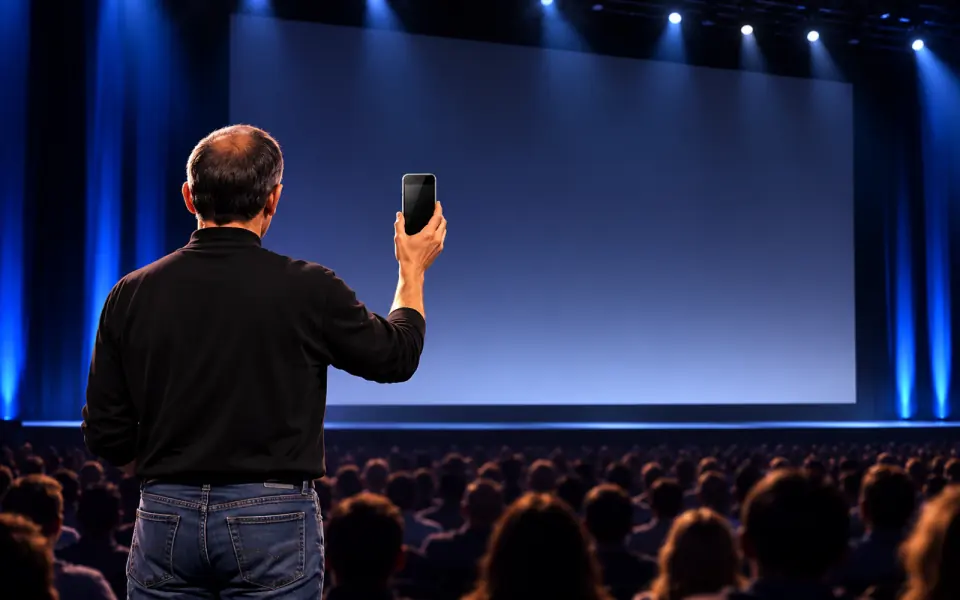 AfterThe modern smartphone2007
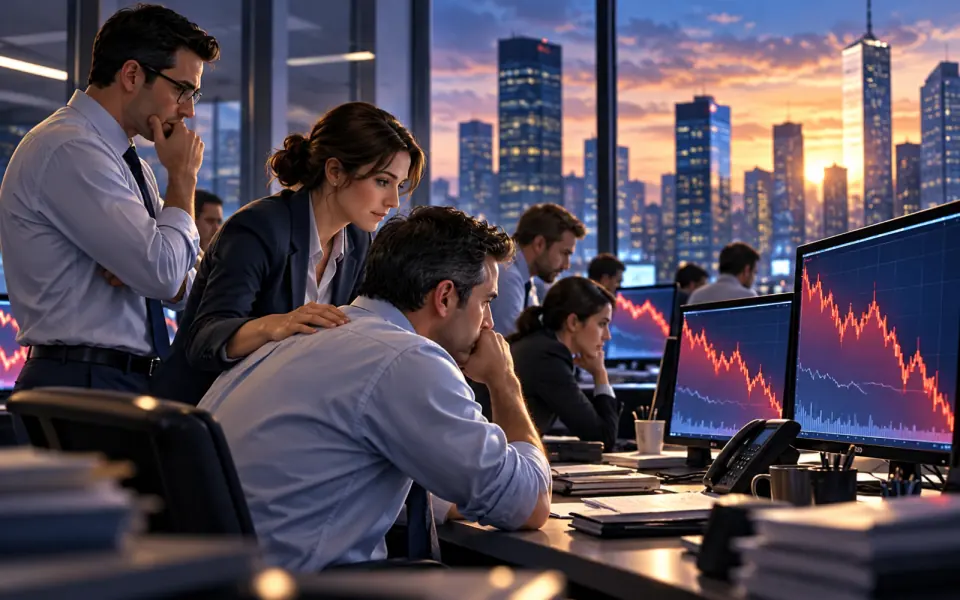 AfterThe global financial crisis2008
 AfterMalala wins the Nobel Peace Prize2014
 AfterThe Paris Agreement on climate2015
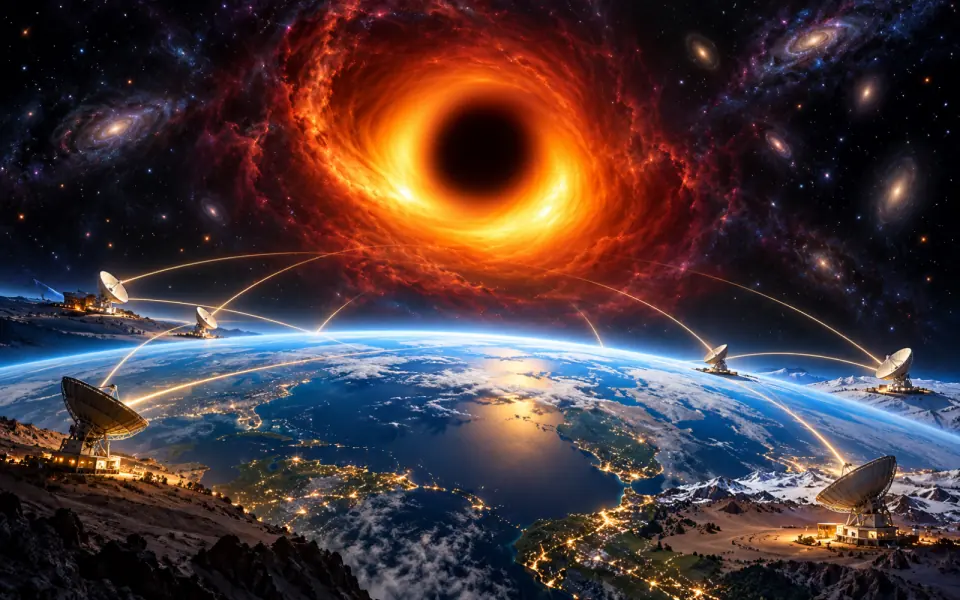 AfterThe first image of a black hole2019
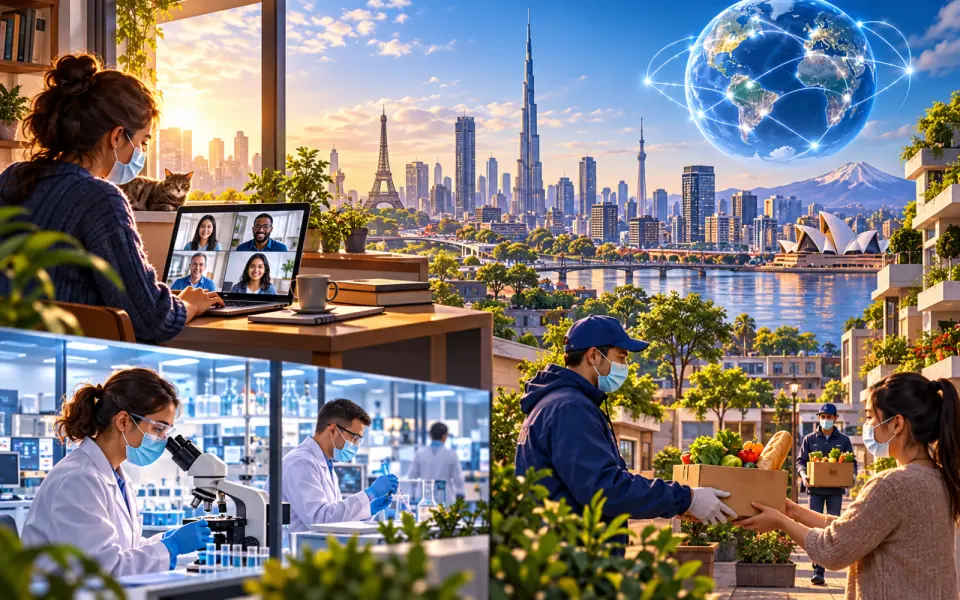 AfterThe COVID-19 pandemic2020
 AfterThe Webb telescope starts observing2022
Listen / Read next
- Music to read by: Cinematic JourneyEpic film-style music, no lyrics, by Ciro Simone IrmiciSpotifyYouTube Music
Meanwhile, elsewhere in the world
Other events of the era “Today”
- The double helix of DNA
- The polio vaccine
- Birth of the European Community
- The first artificial satellite
- The first human in space
- Pop art
- The Beatles
- Martin Luther King and civil rights
- The Moon landing
- The internet's first ARPANET links
- Earth Day and the environmental movement
- The fall of the Berlin Wall
- The World Wide Web
- The European Union
- Nelson Mandela becomes president
- The International Space Station
- Euro notes and coins arrive
- The modern smartphone
- The global financial crisis
- Malala wins the Nobel Peace Prize
- The Paris Agreement on climate
- The first image of a black hole
- The COVID-19 pandemic
- The Webb telescope starts observing
