The global financial crisis
2008 New York, United States (and then the whole world)
In short
In the United States many banks had given mortgages, loans to buy a home, even to people who would struggle to pay them back. When house prices fell, those loans became an enormous problem. On 15 September 2008 the big bank Lehman Brothers collapsed, and fear spread through stock markets all over the world. Years of crisis followed, with companies closing and many people out of work, in Italy too.
Why it matters It showed how connected the world economy is and led to stricter rules for banks.
Source: Encyclopaedia Britannica, “Financial crisis of 2007–08”

Study card about 5 minutes of reading
The story
A home for everyone
At the end of the 1990s and in the early 2000s, in the United States, buying a house seemed a safe deal. Prices rose every year, and banks competed to grant mortgages, that is, loans for buying a home, even to people with low incomes and little security. These risky loans were called “subprime”. Many people took advantage, convinced that the house would keep on being worth more and more: if they could not pay, they could just sell it at a higher price.
The banks, however, did not keep those mortgages. They bundled them together into big packages, turned them into financial securities, hard to understand even for experts, and sold them on to other banks, investment funds and insurance companies, in America and all over the world. Those who bought them thought they were making a good deal, because the rating agencies gave those securities very high marks. Meanwhile many banks were borrowing money to invest more and more.
The bubble bursts
In 2006 house prices stopped rising and began to fall. At that point many people could no longer pay their instalments, especially when the interest on their mortgages went up. Foreclosed homes, that is, homes taken over by the banks, numbered in the millions. The securities based on those mortgages lost value, and the people who held them found they had lost a lot of money. But nobody knew which banks had the most, so the banks stopped trusting one another and stopped lending each other money.
On 9 August 2007 a big French bank, BNP Paribas, froze three of its investment funds: this is seen as the start of the crisis. In March 2008 a New York investment bank, Bear Stearns, was rescued and quickly sold to another bank with the help of the American central bank. But the worst was still to come.
15 September 2008
Lehman Brothers was a Wall Street bank that had existed for more than a hundred and fifty years. It had invested heavily in mortgages and risky securities, and was full of debts. The American government decided not to save it. On 15 September 2008 Lehman declared bankruptcy: it was the biggest bankruptcy in the history of the United States, with assets of over 600 billion dollars. Within a few days fear spread all over the world.
Stock markets crashed. A big insurance group, AIG, was rescued by the government with 85 billion dollars. Banks almost completely stopped lending to one another, and even ordinary businesses struggled to get credit. The American government approved a 700-billion-dollar plan to support the banks. In Europe too several institutions were rescued with public money.
The Great Recession
The crisis turned from a financial one into an economic one. Businesses cut production, many closed, and millions of people lost their jobs: in the United States unemployment reached 10% in 2009. In many countries the economy shrank, and world trade also suffered its sharpest fall since the Second World War (about 12% in 2009). People spoke of the “Great Recession”.
From 2010 the crisis moved to Europe, where some countries with high public debts, such as Greece, Ireland, Portugal, Spain and Italy, struggled to find anyone to lend them money at affordable rates. International loans and programmes of cuts and reforms were needed, often very harsh. In July 2012 the president of the European Central Bank, Mario Draghi, said that the bank would do “whatever it takes” to save the euro: the tension on the markets calmed down.
Why it happened
The crisis came from a combination of factors. Very low interest rates after 2001 encouraged families and banks to borrow. Mortgages granted too easily, finance that turned loans into ever more complicated securities, and the agencies' over-optimistic ratings hid the risks.
The rules on banks were too light: many had little money of their own compared with the loans they made, and so they could fail even with small losses. In a world where banks are closely linked to one another, one bank's problem spread quickly to the others.
What changed
After the crisis governments and central banks changed the rules: banks were required to hold more capital of their own, there were stricter checks (in the United States the Dodd-Frank Act of 2010, in Europe the banking union) and new tools, such as central banks buying securities to support the economy.
For many families the consequences were hard: homes lost, jobs lost, young people with few prospects and, in some countries, cuts to services and pensions. Distrust of banks and politicians grew, and protest movements were born, such as “Occupy Wall Street” in 2011.
The crisis also showed that countries are far more closely linked than we think: a problem in one neighbourhood of an American city can reach a pensioner on another continent. It is a lesson we remember today when we talk about global financial risks.
Key people and places
People
- Ben Bernanke
- American economist (born 1953): chair of the Federal Reserve from 2006 to 2014, he led the response to the crisis.
- Henry Paulson
- American banker and politician (born 1946): Treasury Secretary during the crisis.
- Richard Fuld
- American executive (born 1946): the last head of Lehman Brothers.
- Mario Draghi
- Italian economist (born 1947): president of the European Central Bank from 2011 to 2019.
- Christine Lagarde
- French politician (born 1956): France's finance minister in 2008, later president of the ECB.
Places
- Wall Street, New York
- The street in New York's financial district where many banks and the Stock Exchange are based.
- Frankfurt am Main, Germany
- The seat of the European Central Bank, which handled the euro crisis.
Good to know
- The bankruptcy of Lehman Brothers on 15 September 2008 is the biggest in the history of the United States.
- The word “subprime” refers to mortgages granted to people with little security that they could repay them.
- In 2009 American unemployment reached 10%.
- The American bank rescue plan was worth 700 billion dollars.
- In July 2012 Draghi said the ECB would do “whatever it takes” to defend the euro.
Find out more
- Federal Reserve History, “The Great Recession and Its Aftermath” federalreservehistory.org
- Wikipedia, “2008 financial crisis” en.wikipedia.org
- Wikipedia, “Great Recession” en.wikipedia.org
- Wikipedia, “Lehman Brothers” en.wikipedia.org
Related events
- Euro notes and coins arrive2002 · TodayThe euro was tested by the debt crisis.
- The Great Depression1929 · Early 20th centuryThe Great Depression of 1929 was the most serious financial crisis before this one.
- The European Union1993 · TodayThe European Union had to create new rescue tools.
- The COVID-19 pandemic2020 · TodayThe 2020 pandemic hit the world economy again.
Before and after, in the era “Today”
Event 20 of 25
 BeforeThe double helix of DNA1953
 BeforeThe polio vaccine1955
 BeforeBirth of the European Community1957
 BeforeThe first artificial satellite1957
 BeforeThe first human in space1961
 BeforePop artabout 1962
 BeforeThe Beatles1963
 BeforeMartin Luther King and civil rights1963
 BeforeThe Moon landing1969
 BeforeThe internet's first ARPANET links1969
 BeforeEarth Day and the environmental movement1970
 BeforeThe personal computer1977
 BeforeThe fall of the Berlin Wall1989
 BeforeThe World Wide Web1991
 BeforeThe European Union1993
 BeforeNelson Mandela becomes president1994
 BeforeThe International Space Station1998
 BeforeEuro notes and coins arrive2002
 BeforeThe modern smartphone2007
- You are hereThe global financial crisis2008
 AfterMalala wins the Nobel Peace Prize2014
 AfterThe Paris Agreement on climate2015
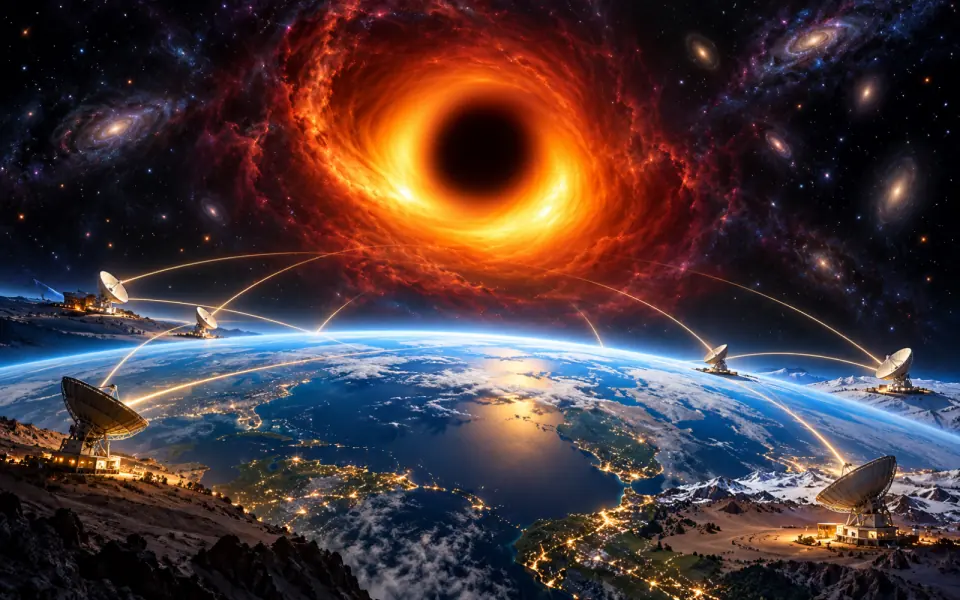 AfterThe first image of a black hole2019
 AfterThe COVID-19 pandemic2020
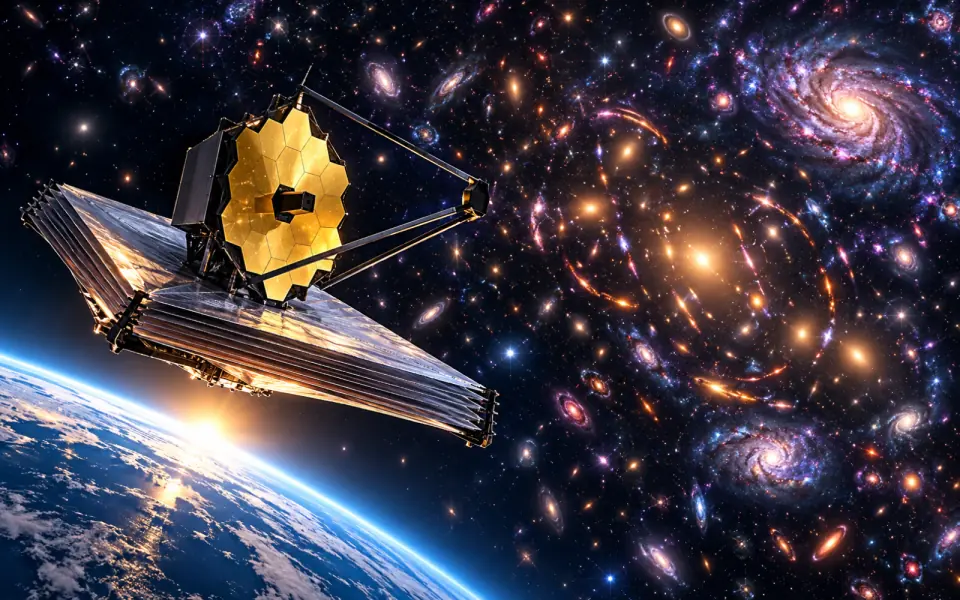 AfterThe Webb telescope starts observing2022
Listen / Read next
- Music to read by: Cinematic JourneyEpic film-style music, no lyrics, by Ciro Simone IrmiciSpotifyYouTube Music
Meanwhile, elsewhere in the world
Other events of the era “Today”
- The double helix of DNA
- The polio vaccine
- Birth of the European Community
- The first artificial satellite
- The first human in space
- Pop art
- The Beatles
- Martin Luther King and civil rights
- The Moon landing
- The internet's first ARPANET links
- Earth Day and the environmental movement
- The personal computer
- The fall of the Berlin Wall
- The World Wide Web
- The European Union
- Nelson Mandela becomes president
- The International Space Station
- Euro notes and coins arrive
- The modern smartphone
- Malala wins the Nobel Peace Prize
- The Paris Agreement on climate
- The first image of a black hole
- The COVID-19 pandemic
- The Webb telescope starts observing
