The European Union
1993 Maastricht, Netherlands
In short
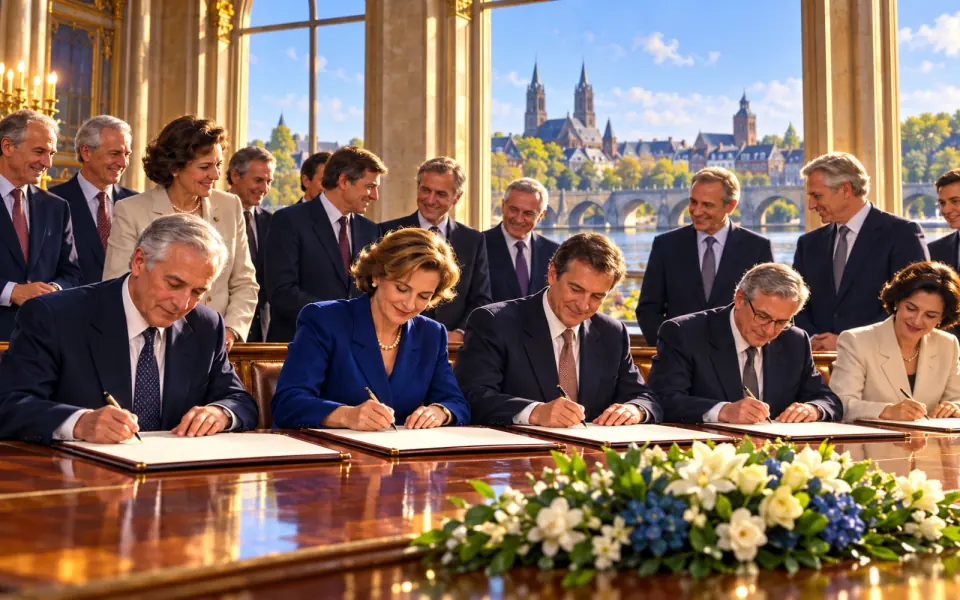
In February 1992, in the Dutch city of Maastricht, twelve countries of the European Community signed a new treaty. When it came into force on 1 November 1993, the European Union was born. Since then anyone who is a citizen of a member country is also a European citizen and can live, study and work in the other countries of the Union. The treaty also prepared the way for the single currency. Today the Union has 27 member countries.
Why it matters The Union allows millions of people to move and study in other countries, for example with the Erasmus programme.
Source: European Union, “Storia dell'Unione europea”
Study card about 5 minutes of reading
The story
From a common market to something more
At the end of the 1980s the European Community had twelve countries and a big market in which goods and people moved with fewer and fewer obstacles. But the leaders felt that this was no longer enough. In 1989 the Berlin Wall had fallen, and Germany was getting ready to reunite: neighbouring countries feared a new giant in the heart of Europe, and so they wanted to tie Germany even more closely to the others. The French president François Mitterrand and the German chancellor Helmut Kohl, with the support of the president of the European Commission, Jacques Delors, pushed for deeper integration.
It was decided to work on a new treaty that would cover not only the economy but also politics, security, justice and, above all, a common currency. After months of negotiations, on 7 February 1992 the twelve countries signed the treaty in the Dutch city of Maastricht.
What changed
The Maastricht Treaty did several new things. First of all it changed the name: the European Community became the “European Union”. Then it introduced European citizenship: every citizen of a member state also became a citizen of the Union, with the right to live, work and vote in local and European elections in all the other member countries. It strengthened the European Parliament, the assembly elected directly by citizens since 1979. It also provided for a common foreign and security policy and cooperation on justice and home affairs.
The treaty also created the European Ombudsman, whom citizens can turn to if they think an institution has made a mistake, and the Committee of the Regions, where representatives of cities and regions sit. It also introduced the principle of subsidiarity: the Union steps in only when a problem is better solved at European level than by individual states.
The most famous part was about money. Countries that wanted to adopt a single currency would have to follow some rules to keep their accounts in order: low inflation, and public debt and deficit below certain limits. These are the “Maastricht criteria”, which were talked about a great deal in Italy in the 1990s, because they forced the government to keep spending under control and to make sacrifices in order to join the euro.
A road that was not easy
Citizens did not always agree. In June 1992 the Danes voted no to the treaty in a referendum; France, in September, approved it by a whisker, with about 51% of the votes. In the end Denmark was allowed to stay out of some parts, such as the single currency, and voted again the next year, accepting. The treaty came into force on 1 November 1993: that day the European Union was officially born. The United Kingdom, for its part, obtained the right not to adopt the euro.
Shortly before, on 1 January 1993, the “single market” had started: an area with no checks on goods, in which, in theory, people, capital, goods and services could move freely. The Schengen agreements, signed in 1985 and later extended, gradually abolished border checks between most countries from 1995 onwards. And with the Erasmus programme, begun in 1987, hundreds of thousands of students were able to spend a period of study in another country.
A growing Union
After 1993 the Union grew. In 1995 Austria, Finland and Sweden joined. In 2004 came the biggest enlargement, with ten new countries, many of them from the former communist bloc; then Bulgaria and Romania arrived in 2007 and Croatia in 2013. The United Kingdom, after a referendum in 2016, left the Union on 31 January 2020, and today there are twenty-seven member states.
Why it happened
The birth of the Union came from the wish to strengthen European unity after the end of the Cold War and to prepare for German reunification. For France and Germany, and for the other countries, a common currency was also a way of tying their economic destinies together for ever.
Then there was the economy: a single market works better with a single currency, without the costs and risks of changing one currency into another every time. And with globalisation, European countries on their own risked counting for little next to giants such as the United States and China.
What changed
The Maastricht Treaty gave rise to today's European Union, with its citizenship, its Parliament, its central bank and its currency. In 1999 the euro began to exist in accounts and banks and, in 2002, in people's pockets: today twenty-one countries of the Union use it.
Europeans can travel, study, work and live in many countries without a passport or a residence permit. European rules, from data protection to product safety, affect more than 400 million people.
The Union has also faced difficult crises, such as the financial crisis of 2008, the arrival of refugees and the pandemic, and it is still discussing how much sovereignty countries should hand over. But since 1993 it has continued to attract countries that wish to join.
Key people and places
People
- Jacques Delors
- French politician (1925–2023): president of the European Commission from 1985 to 1995.
- François Mitterrand
- President of France from 1981 to 1995 (1916–1996): one of the fathers of the treaty.
- Helmut Kohl
- German chancellor (1930–2017): he backed the single currency and reunification.
- Altiero Spinelli
- Italian politician (1907–1986): author of the Ventotene Manifesto, he inspired the idea of a federal Europe.
- Ruud Lubbers
- Dutch prime minister (1939–2018): he led the country of Maastricht during the negotiations.
Places
- Maastricht, Netherlands
- The city where the treaty was signed on 7 February 1992.
- Brussels, Belgium
- The capital where the Commission, the Council and part of the European Parliament are based.
Good to know
- The Maastricht Treaty was signed on 7 February 1992 and came into force on 1 November 1993.
- In the French referendum on the treaty the yes votes were about 51%.
- Today the European Union has twenty-seven member countries.
- The Erasmus programme, born in 1987, is named after the humanist Erasmus of Rotterdam.
- In 1992 the Danes voted “no” to the treaty, then approved it in a second referendum with some exceptions.
Find out more
- European Union, “History of the EU: 1990-99” european-union.europa.eu
- Wikipedia, “Maastricht Treaty” en.wikipedia.org
- Wikipedia, “European Union” en.wikipedia.org
- Wikipedia, “Maastricht Treaty” en.wikipedia.org
Related events
- Birth of the European Community1957 · TodayIn 1957 the Treaties of Rome had founded the Community.
- Euro notes and coins arrive2002 · TodayIn 2002 the euro came into circulation.
- The fall of the Berlin Wall1989 · TodayThe fall of the Wall sped up European integration.
- The global financial crisis2008 · TodayThe 2008 crisis tested the single currency.
Before and after, in the era “Today”
Event 15 of 25
 BeforeThe double helix of DNA1953
 BeforeThe polio vaccine1955
 BeforeBirth of the European Community1957
 BeforeThe first artificial satellite1957
 BeforeThe first human in space1961
 BeforePop artabout 1962
 BeforeThe Beatles1963
 BeforeMartin Luther King and civil rights1963
 BeforeThe Moon landing1969
 BeforeThe internet's first ARPANET links1969
 BeforeEarth Day and the environmental movement1970
 BeforeThe personal computer1977
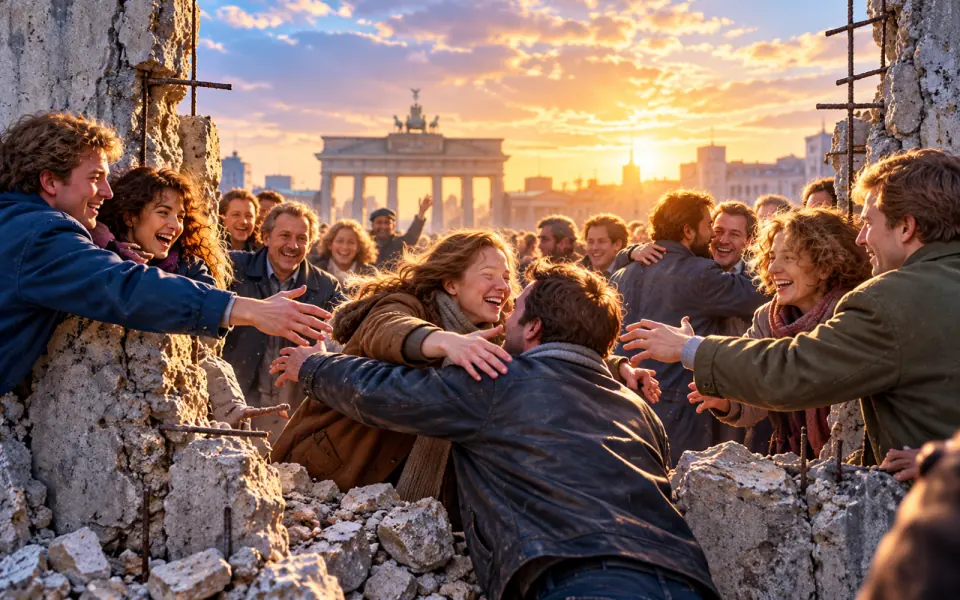 BeforeThe fall of the Berlin Wall1989
 BeforeThe World Wide Web1991
- You are hereThe European Union1993
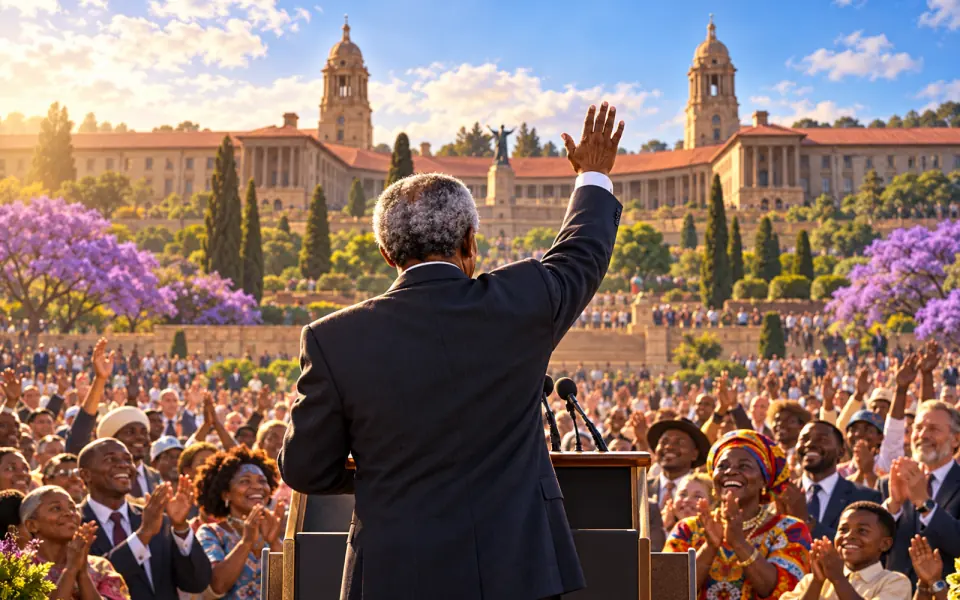 AfterNelson Mandela becomes president1994
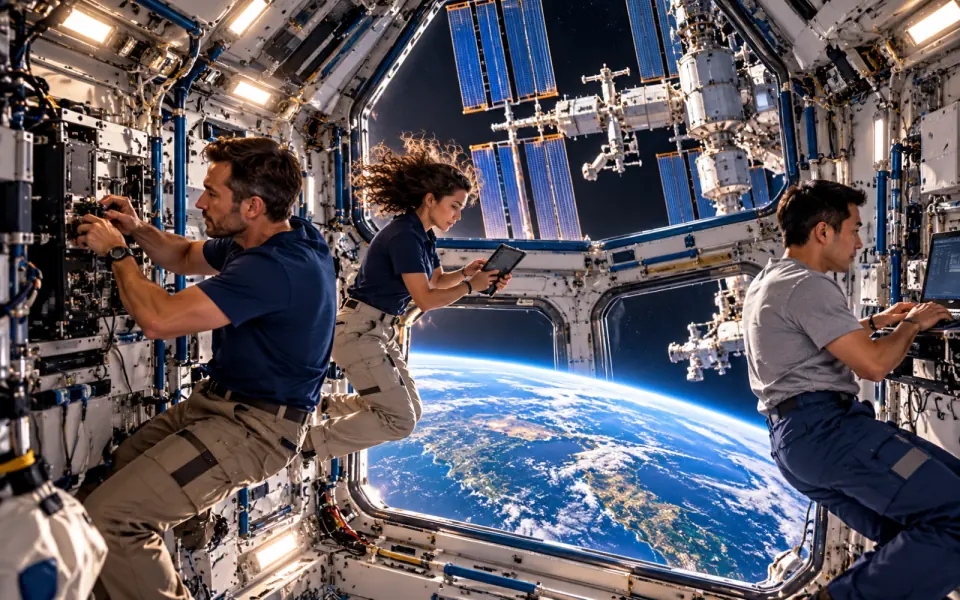 AfterThe International Space Station1998
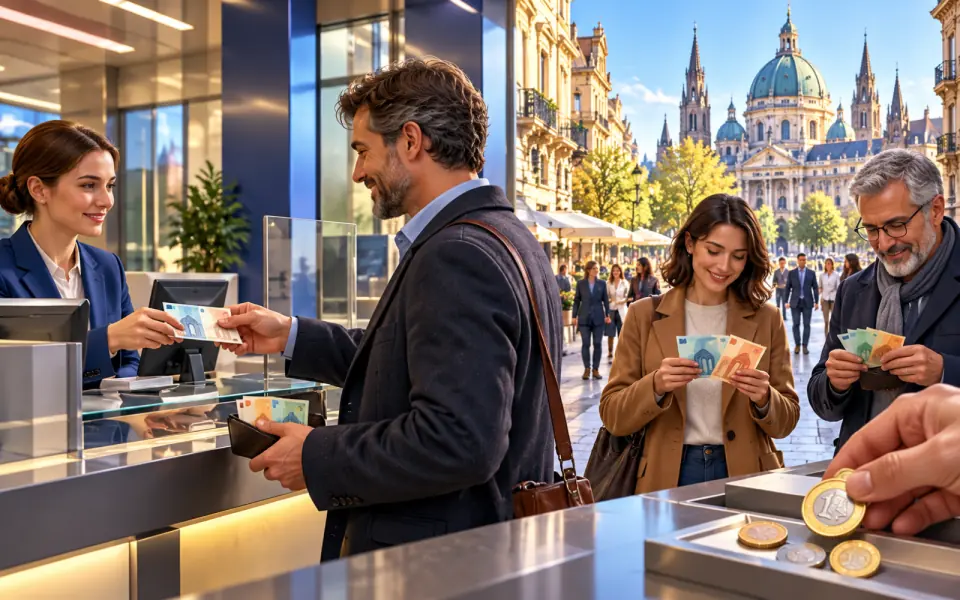 AfterEuro notes and coins arrive2002
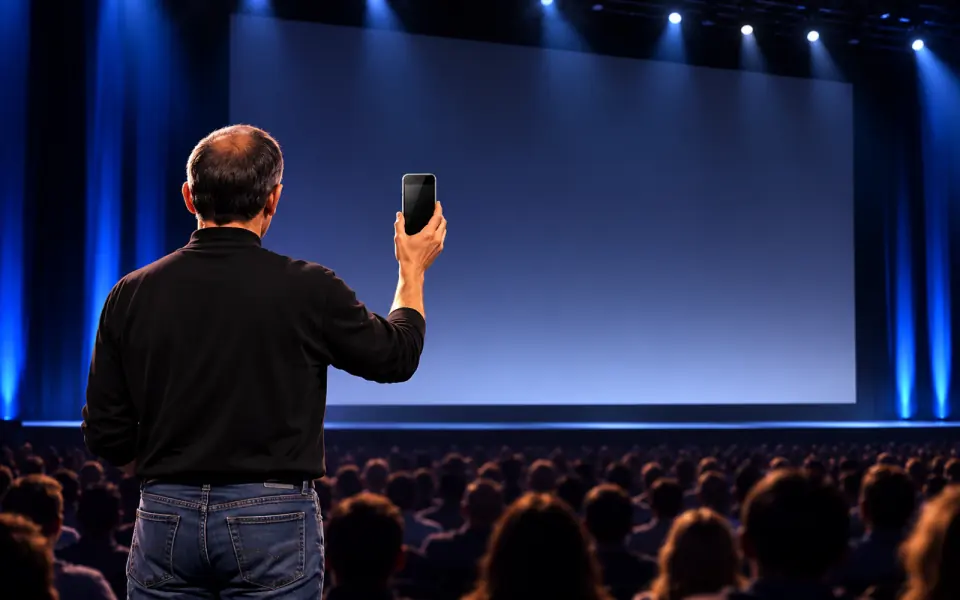 AfterThe modern smartphone2007
 AfterThe global financial crisis2008
 AfterMalala wins the Nobel Peace Prize2014
 AfterThe Paris Agreement on climate2015
 AfterThe first image of a black hole2019
 AfterThe COVID-19 pandemic2020
 AfterThe Webb telescope starts observing2022
Listen / Read next
- Music to read by: Cinematic JourneyEpic film-style music, no lyrics, by Ciro Simone IrmiciSpotifyYouTube Music
Meanwhile, elsewhere in the world
Other events of the era “Today”
- The double helix of DNA
- The polio vaccine
- Birth of the European Community
- The first artificial satellite
- The first human in space
- Pop art
- The Beatles
- Martin Luther King and civil rights
- The Moon landing
- The internet's first ARPANET links
- Earth Day and the environmental movement
- The personal computer
- The fall of the Berlin Wall
- The World Wide Web
- Nelson Mandela becomes president
- The International Space Station
- Euro notes and coins arrive
- The modern smartphone
- The global financial crisis
- Malala wins the Nobel Peace Prize
- The Paris Agreement on climate
- The first image of a black hole
- The COVID-19 pandemic
- The Webb telescope starts observing
