The Moon landing
1969 Sea of Tranquillity, the Moon (launched from Kennedy Space Center, Florida)
In short
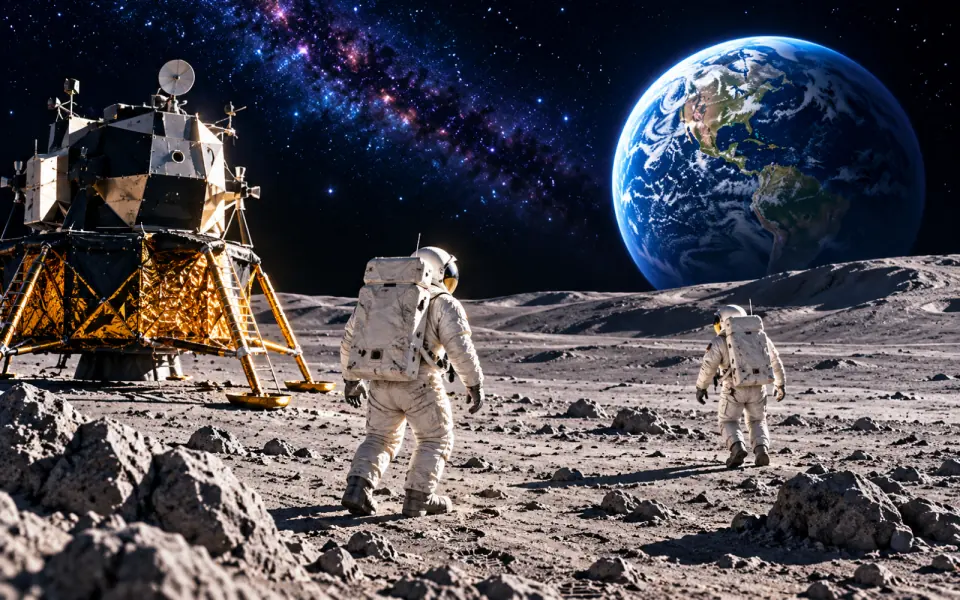
On 16 July 1969 the Saturn V rocket lifted off from Florida carrying three American astronauts on the Apollo 11 mission. Four days later the lunar module Eagle touched down in the Sea of Tranquillity, while Michael Collins stayed in orbit. Neil Armstrong was the first to step onto the Moon's surface, followed by Buzz Aldrin: they planted a flag, collected rocks and did experiments. In Italy it was the middle of the night, but millions of people watched it live on television.
Why it matters It was the first time human beings had walked on another world, and that achievement still makes people dream.
Source: NASA, “Apollo 11 Mission Overview”
Study card about 5 minutes of reading
The story
Kennedy's promise
On 25 May 1961, in front of the American Congress, President John Kennedy made a promise that seemed almost impossible: “before this decade is out, of landing a man on the Moon and returning him safely to the Earth”. A few months earlier, Yuri Gagarin had become the first man in space, and the United States felt it was behind the Soviet Union. At that moment, America had not yet sent anyone on a complete orbit around the Earth.
To keep the promise, the Apollo programme was born. It was a gigantic undertaking: about 400,000 people worked on it, engineers, technicians, workers and mathematicians, all over the country. They had to invent an enormous rocket, the Saturn V, taller than a thirty-storey building, and a vehicle able to land on the Moon and take off again. There were tragedies too: in 1967 a fire during a ground test killed three Apollo 1 astronauts. But the programme went on.
Three men, three seats
The crew of Apollo 11 was made up of three men: the commander Neil Armstrong, a former navy pilot and test pilot, Edwin “Buzz” Aldrin and Michael Collins. On 16 July 1969, from Florida, the Saturn V sent them into space with enormous power. After about three days they reached the Moon and went into orbit around it.
The spacecraft was divided into two parts. The command module, “Columbia”, would stay in orbit with Collins. The lunar module, “Eagle”, took Armstrong and Aldrin down to the surface. Collins stayed alone for twenty-one hours, 100 kilometres from the Moon, passing round the far side, where no radio signal could reach him: he was the most isolated man in history.
20 July 1969
The descent was full of problems. As the Eagle came down, the on-board computer, tiny compared with a phone today, kept sounding alarms because it was overloaded. Luckily, the engineers in Houston recognised the signal and told them to carry on. Then Armstrong saw that the planned landing spot was full of big boulders, and took the controls by hand to look for a smoother place. When he touched down, in the Sea of Tranquility, the dark plain that can be seen from Earth, there were only a few dozen seconds of fuel left in the tanks. “Houston, Tranquility Base here. The Eagle has landed,” he said.
A few hours later, Armstrong climbed down the ladder and put his foot on the lunar soil. It was 2:56 on 21 July, Greenwich time. He said: “That's one small step for man, one giant leap for mankind.” About twenty minutes later he was joined by Aldrin, who described the landscape as “magnificent desolation”. The two walked for about two and a half hours: they collected 21 kilograms of rocks, planted the American flag, set up scientific instruments and a mirror for measuring the distance to the Moon with a laser. They also left a plaque: “We came in peace for all mankind.”
Around the world, according to estimates, about six hundred million people followed the live broadcast on television: in Italy viewers stayed up all night, with the famous studio commentary by Tito Stagno and Ruggero Orlando. On 24 July the capsule with the three astronauts splashed down in the Pacific Ocean, near an American ship. As a precaution, the astronauts were kept in quarantine for three weeks, in case they had brought home lunar germs.
The other steps
After Apollo 11 there were five more missions that landed on the Moon, up to Apollo 17 in December 1972. In all, twelve men have walked on the Moon; nobody has landed there since, though in April 2026 the Artemis II mission flew around it with four astronauts.
Why it happened
The direct cause was the Cold War: the United States and the Soviet Union were competing to show who was the more advanced. After Sputnik and Gagarin, Kennedy chose a goal so difficult that neither country yet had an advantage: reaching the Moon.
What made it possible was the enormous resources devoted to the programme (about 4% of the federal budget at its peak), the work of hundreds of thousands of people and a long series of tests with no one on board. The German Wernher von Braun, a former rocket designer, also played a decisive part, leading the development of the Saturn V.
What changed
Apollo 11 showed that humanity could leave its own planet. The missions brought home almost 382 kilograms of lunar rocks, which scientists are still studying: they have helped us understand that the Moon formed billions of years ago, perhaps after a collision between the Earth and a large celestial body.
To build Apollo, materials, electronic circuits and control systems were invented that were later useful in many fields. The photograph taken by the astronauts, in which the Earth appears as a small blue sphere hanging in the darkness, also changed the way we look at our planet, and helped to give birth to the environmental movement.
Today, after the Artemis II flyby in April 2026, astronauts are getting ready to return to the Moon with the Artemis programme, and in future to travel even further. The achievement of 1969, though, remains the symbol of what can be done when many people work for a common goal.
Key people and places
People
- Neil Armstrong
- American astronaut (1930–2012): the first man to walk on the Moon.
- Buzz Aldrin
- American astronaut (born 1930): the second man on the Moon.
- Michael Collins
- American astronaut (1930–2021): he stayed in orbit in the Columbia command module.
- Wernher von Braun
- German-American engineer (1912–1977): he led the development of the Saturn V rocket.
- Margaret Hamilton
- American computer scientist (born 1936): she led the team that wrote the on-board software.
Places
- Sea of Tranquility, Moon
- The great dark plain where the Eagle landed.
- Kennedy Space Center, Florida (United States)
- The base from which the Saturn V took off on 16 July 1969.
Good to know
- Armstrong landed with only a few seconds of fuel left in the tanks.
- Apollo 11's on-board computer was much less powerful than a modern phone.
- The astronauts left a mirror on the Moon that is still used today to measure the distance to the Moon with a laser.
- After their return, the Apollo 11 astronauts spent three weeks in quarantine.
- In all, twelve men have walked on the Moon, between 1969 and 1972.
Find out more
- NASA, “Apollo 11 Mission Overview” nasa.gov
- Wikipedia, “Apollo 11” en.wikipedia.org
- Wikipedia, “Apollo program” en.wikipedia.org
Related events
- The first artificial satellite1957 · TodaySputnik had opened the space race twelve years earlier.
- The first human in space1961 · TodayGagarin was the first man in space, eight years earlier.
- The first image of a black hole2019 · TodayToday a large telescope on Earth has photographed a black hole.
- The Webb telescope starts observing2022 · TodayThe Webb telescope goes on exploring the universe from space.
Before and after, in the era “Today”
Event 9 of 25
 BeforeThe double helix of DNA1953
 BeforeThe polio vaccine1955
 BeforeBirth of the European Community1957
 BeforeThe first artificial satellite1957
 BeforeThe first human in space1961
 BeforePop artabout 1962
 BeforeThe Beatles1963
 BeforeMartin Luther King and civil rights1963
- You are hereThe Moon landing1969
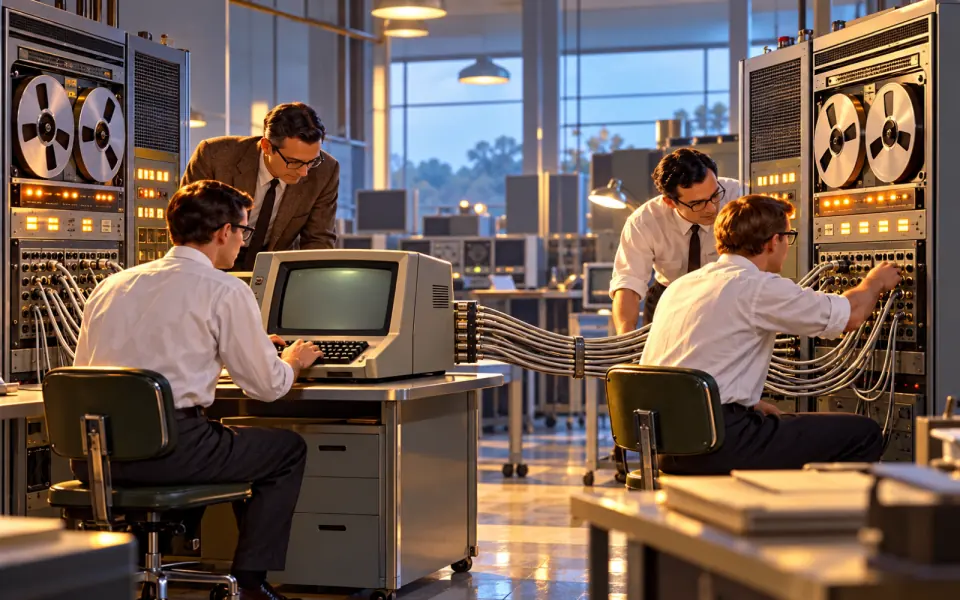 AfterThe internet's first ARPANET links1969
 AfterEarth Day and the environmental movement1970
 AfterThe personal computer1977
 AfterThe fall of the Berlin Wall1989
 AfterThe World Wide Web1991
 AfterThe European Union1993
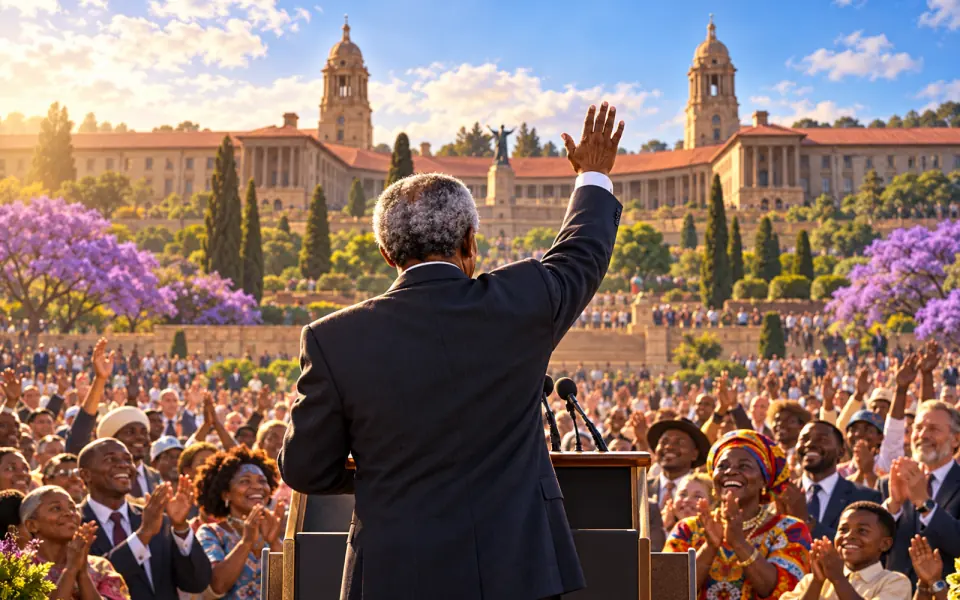 AfterNelson Mandela becomes president1994
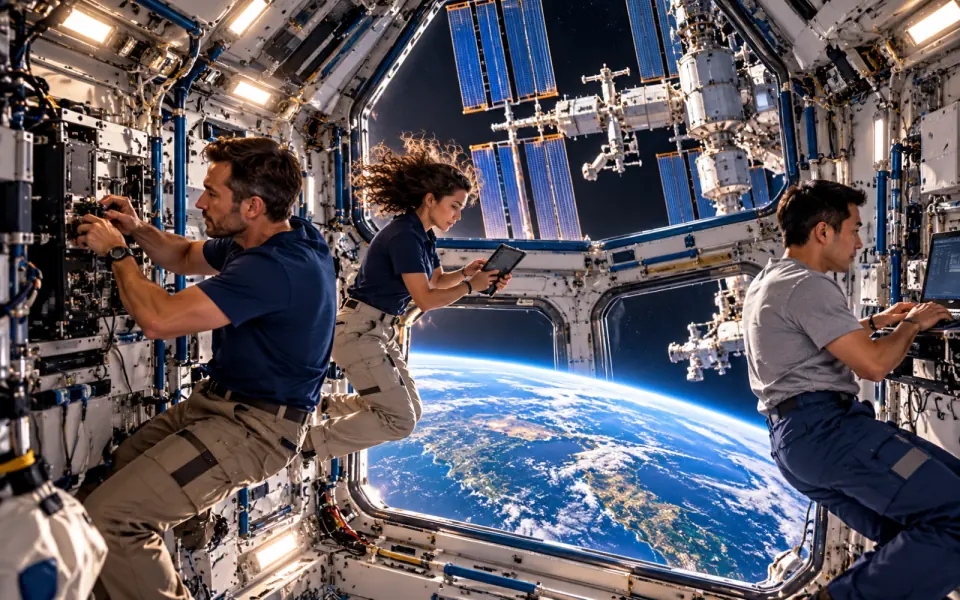 AfterThe International Space Station1998
 AfterEuro notes and coins arrive2002
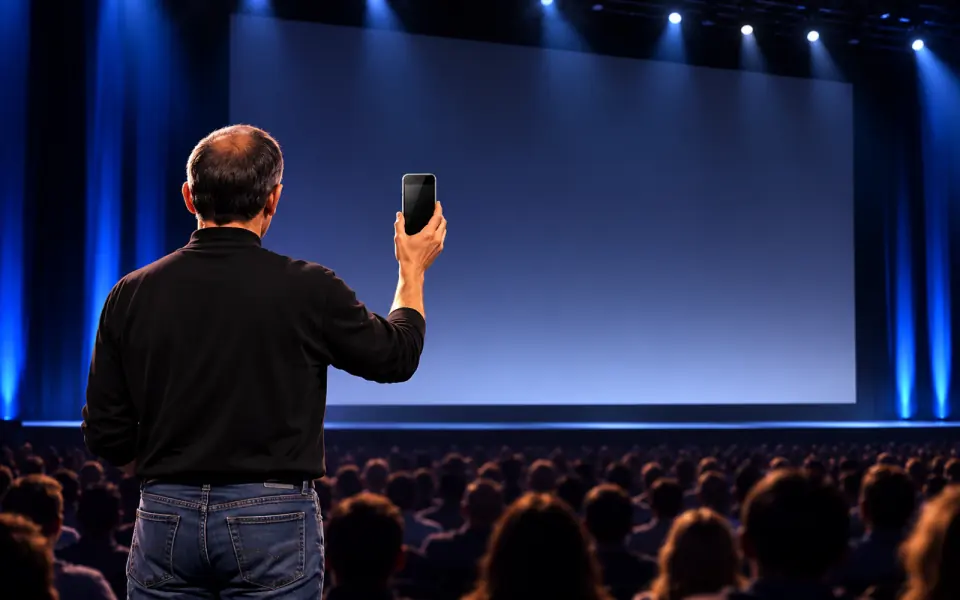 AfterThe modern smartphone2007
 AfterThe global financial crisis2008
 AfterMalala wins the Nobel Peace Prize2014
 AfterThe Paris Agreement on climate2015
 AfterThe first image of a black hole2019
 AfterThe COVID-19 pandemic2020
 AfterThe Webb telescope starts observing2022
Listen / Read next
- Music to read by: Cinematic JourneyEpic film-style music, no lyrics, by Ciro Simone IrmiciSpotifyYouTube Music
Meanwhile, elsewhere in the world
Other events of the era “Today”
- The double helix of DNA
- The polio vaccine
- Birth of the European Community
- The first artificial satellite
- The first human in space
- Pop art
- The Beatles
- Martin Luther King and civil rights
- The internet's first ARPANET links
- Earth Day and the environmental movement
- The personal computer
- The fall of the Berlin Wall
- The World Wide Web
- The European Union
- Nelson Mandela becomes president
- The International Space Station
- Euro notes and coins arrive
- The modern smartphone
- The global financial crisis
- Malala wins the Nobel Peace Prize
- The Paris Agreement on climate
- The first image of a black hole
- The COVID-19 pandemic
- The Webb telescope starts observing
