The internet's first ARPANET links
1969 Los Angeles and Menlo Park, California, United States
In short
On 29 October 1969 two computers hundreds of kilometres apart, one at the University of California, Los Angeles, and one at the Stanford Research Institute, exchanged the first message on the ARPANET network. The network was paid for by the United States Department of Defense to link research centres. Data travelled split into small packets, which were put back together on arrival. By the end of the year four sites were connected; from that network, little by little, the internet was born.
Why it matters Today the internet connects billions of people and has changed studying, working and friendships.
Source: Computer History Museum, “Internet History of 1960s”
Study card about 5 minutes of reading
The story
Computers that did not talk to each other
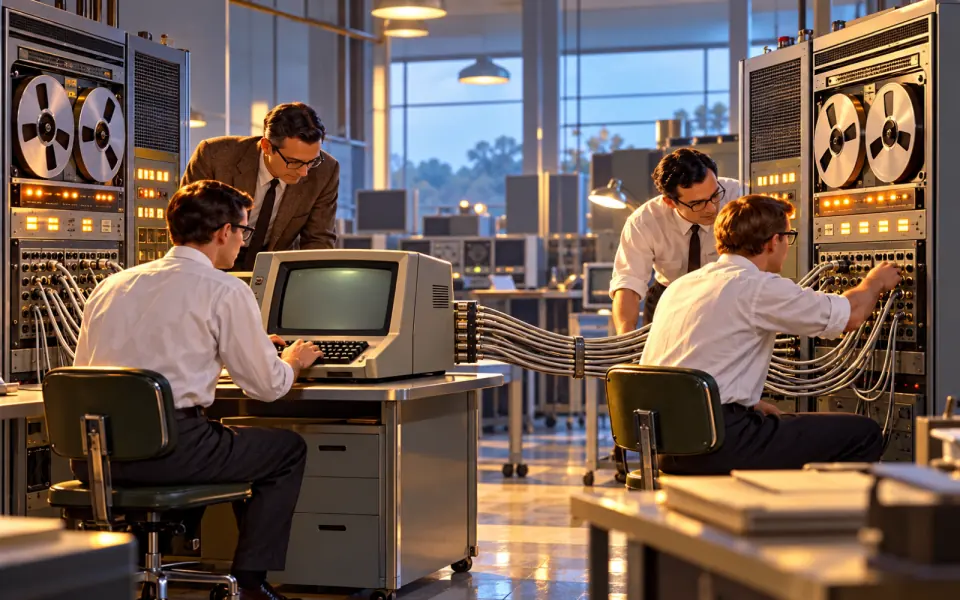
In the 1960s computers were enormous and very rare machines. They filled whole rooms, cost as much as a house and were found only in universities, laboratories and the most important offices. Every computer was an island: a researcher who wanted to use the data on another machine, far away, had to catch a plane with a magnetic tape in a suitcase, or use a different terminal for each connection. For people working in research it was a great waste of time and money.
In the United States a government agency, ARPA (the Advanced Research Projects Agency), set up in 1958 after the launch of Sputnik, funded research in the universities. One of its managers, Larry Roberts, had an idea: to connect the computers of the various research centres, so that they could exchange information and share tasks. The project was called ARPANET.
Packets of data
The problem was how to send the information. On the telephone, to talk you need a line reserved for the whole length of the call. The scientists chose a different system, studied in the 1960s by the American Paul Baran and the Welshman Donald Davies: “packet switching”. A message is broken into many small packets, each with an address; each packet chooses the clearest route by itself, and when they arrive they are put back in order, like the pieces of a jigsaw puzzle. In this way the lines are used better and, if one road is cut, the packets go by another.
To make the network work, a small company in Cambridge, Massachusetts, BBN, built special computers, called IMPs, as big as a fridge. Every connected centre had one, and it acted as a “postman” between its computer and the network.
“Lo”
The first connection was between the University of California, Los Angeles (UCLA), in Leonard Kleinrock's laboratory, and the Stanford Research Institute, more than five hundred kilometres away. On the evening of 29 October 1969 a student, Charley Kline, tried to type the word “LOGIN”. He phoned his colleagues at Stanford to check: the “L” arrived, then the “O”, and then the system crashed. So the first message on the Internet was “LO”, almost “Lo!” as in “Behold!”. After an hour the connection was fixed and the whole word arrived.
The first users were mostly researchers and university students. There were no web pages, no pictures, no search engines: only text on dark screens, typed on noisy keyboards, and connections much slower than today's, even thousands of times slower. Yet even then the network served what it still serves for: talking to each other and working together from far away.
By December 1969 the network had four nodes: UCLA, Stanford, the University of California at Santa Barbara and the University of Utah. Then it grew fast: by 1971 there were already about fifteen, and the engineer Ray Tomlinson sent the first email, choosing the “@” symbol to separate the user's name from the computer's. In 1973 the first links abroad arrived, in Norway and England.
A common language
In the meantime many different networks were being born, which could not talk to one another. In 1974 two engineers, Vint Cerf and Bob Kahn, invented a common language, called TCP/IP: a set of rules that lets different networks exchange packets. On 1 January 1983 the whole of ARPANET switched to that language: for many historians this is the true birth date of the Internet, the “network of networks”. ARPANET was switched off in 1990, but by then the Internet lived on by itself.
Italy joined the network on 30 April 1986: the first Italian connection was made from Pisa, from the CNR computing centre (CNUCE).
Why it happened
The birth of the Internet was the result of practical needs and brilliant ideas. Researchers wanted to share expensive computers and data; the American government, in the middle of the Cold War, was funding advanced research. Universities, a private company and public bodies all worked together on the project.
It is often said that the Internet was born to survive a nuclear attack: in fact the aim of ARPANET was only to get researchers to work together. The idea of the packet network, which is safe even if one stretch is cut, came instead from studies on the security of military communications. Two different stories that met.
What changed
From the few dozen computers of 1970 we have gone to billions of connected devices. Email, electronic mail, was the first successful application, and it showed that people used the network mostly to communicate. In the 1990s, with the World Wide Web, the Internet left the universities and reached people's homes.
Today the network is used for studying, working, playing, shopping, finding out the news, phoning and watching films. It has changed commerce, school, newspapers and the way we exchange news. It has created new professions, but also new problems, such as the protection of personal data, fake news and time spent in front of screens.
Nobody owns the Internet as a whole: it is a network of networks, held together by common rules, the “protocols”, that anyone can use. This is one of the reasons why it spread so fast.
Key people and places
People
- Leonard Kleinrock
- American scientist (born 1934): he studied the theory of packet networks; his laboratory sent the first message.
- Larry Roberts
- American engineer (1937–2018): he directed the ARPANET project.
- Vint Cerf
- American computer scientist (born 1943): co-author of the TCP/IP protocol.
- Bob Kahn
- American engineer (born 1938): co-author of the TCP/IP protocol.
- Ray Tomlinson
- American programmer (1941–2016): he sent the first email and chose the @ symbol.
Places
- UCLA, Los Angeles
- Here, in Kleinrock's laboratory, the first message was sent on 29 October 1969.
- CNUCE, Pisa
- From the CNR computing centre in Pisa, the first Italian connection to the Internet was made in 1986.
Good to know
- The first message on ARPANET was “LOGIN”, but the system crashed after the first two letters: only “LO” arrived.
- Ray Tomlinson chose the @ symbol for emails because it could not appear in a name.
- In December 1969 ARPANET connected only four computers.
- The special computers that formed the network, the IMPs, were as big as a fridge.
- Italy connected to the Internet on 30 April 1986, from Pisa.
Find out more
- Computer History Museum, “Internet History of 1960s” computerhistory.org
- Wikipedia, “ARPANET” en.wikipedia.org
- Wikipedia, “History of the Internet” en.wikipedia.org
- Internet Society, “Brief History of the Internet” internetsociety.org
Related events
- The World Wide Web1991 · TodayTwenty years later, the World Wide Web brought the Internet to everyone.
- The personal computer1977 · TodayAt the same time personal computers were being born.
- The modern smartphone2007 · TodayToday the smartphone puts the Internet in your pocket.
- The first artificial satellite1957 · TodayARPA's funding was created after Sputnik.
Before and after, in the era “Today”
Event 10 of 25
 BeforeThe double helix of DNA1953
 BeforeThe polio vaccine1955
 BeforeBirth of the European Community1957
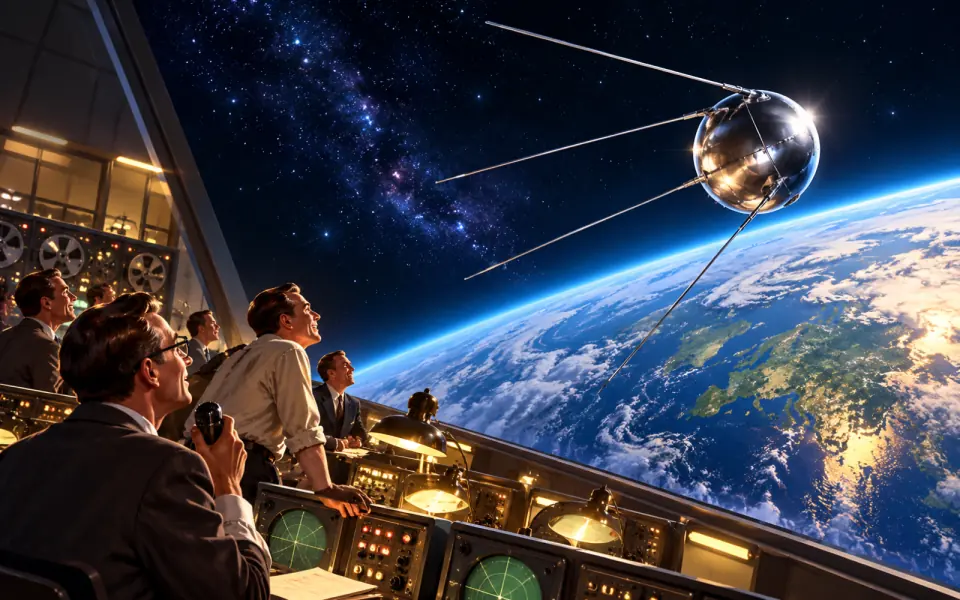 BeforeThe first artificial satellite1957
 BeforeThe first human in space1961
 BeforePop artabout 1962
 BeforeThe Beatles1963
 BeforeMartin Luther King and civil rights1963
 BeforeThe Moon landing1969
- You are hereThe internet's first ARPANET links1969
 AfterEarth Day and the environmental movement1970
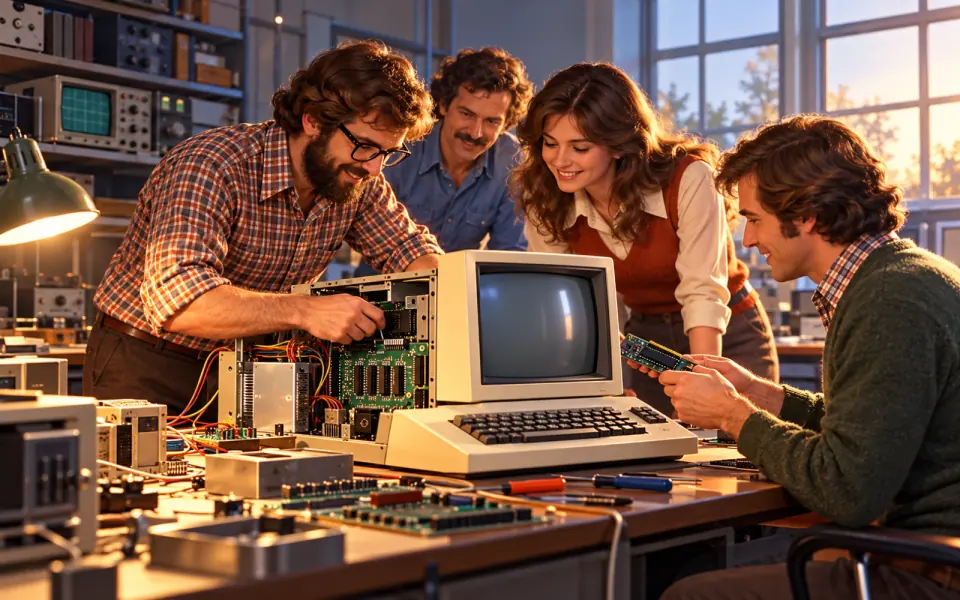 AfterThe personal computer1977
 AfterThe fall of the Berlin Wall1989
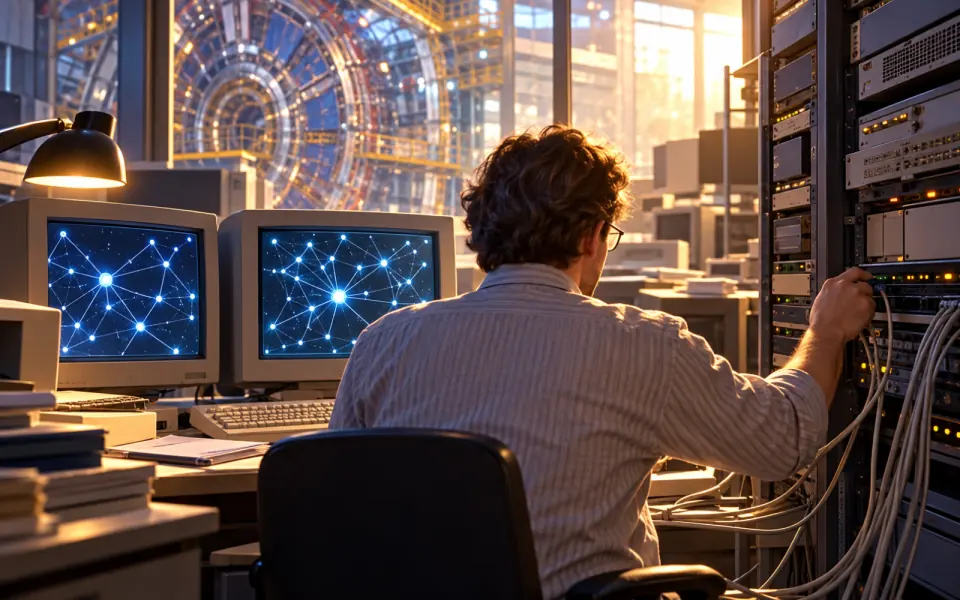 AfterThe World Wide Web1991
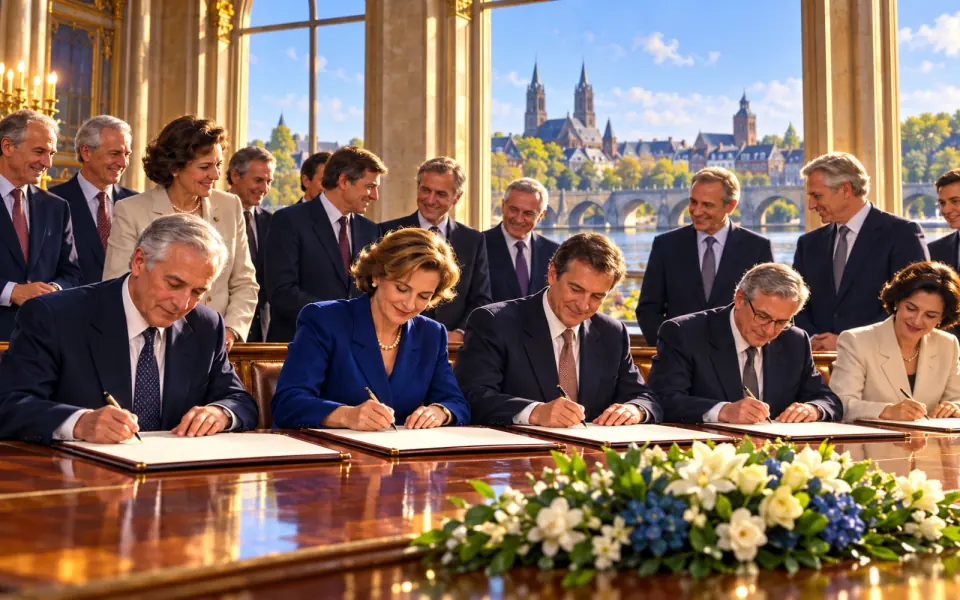 AfterThe European Union1993
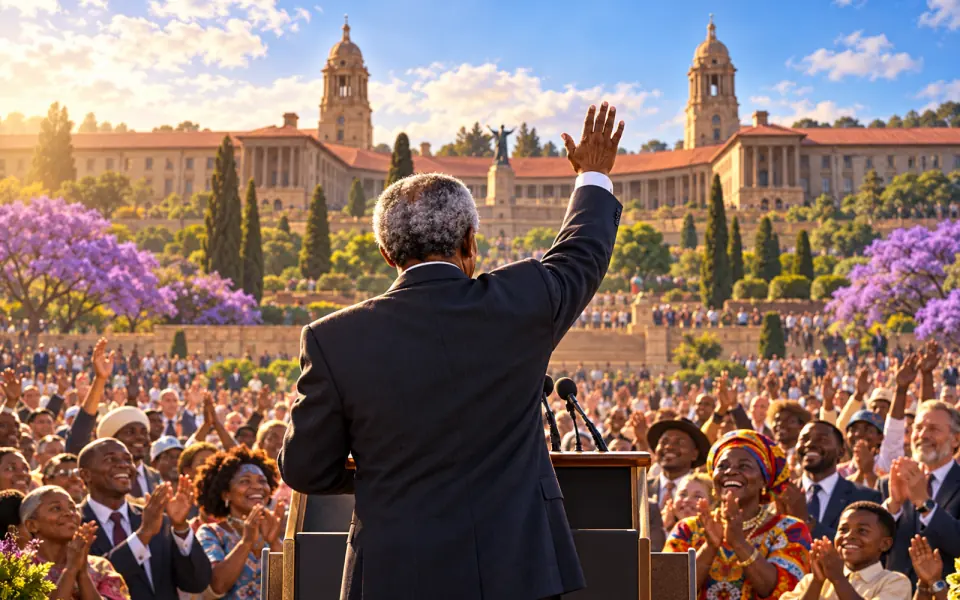 AfterNelson Mandela becomes president1994
 AfterThe International Space Station1998
 AfterEuro notes and coins arrive2002
 AfterThe modern smartphone2007
 AfterThe global financial crisis2008
 AfterMalala wins the Nobel Peace Prize2014
 AfterThe Paris Agreement on climate2015
 AfterThe first image of a black hole2019
 AfterThe COVID-19 pandemic2020
 AfterThe Webb telescope starts observing2022
Listen / Read next
- Music to read by: Cinematic JourneyEpic film-style music, no lyrics, by Ciro Simone IrmiciSpotifyYouTube Music
Meanwhile, elsewhere in the world
Other events of the era “Today”
- The double helix of DNA
- The polio vaccine
- Birth of the European Community
- The first artificial satellite
- The first human in space
- Pop art
- The Beatles
- Martin Luther King and civil rights
- The Moon landing
- Earth Day and the environmental movement
- The personal computer
- The fall of the Berlin Wall
- The World Wide Web
- The European Union
- Nelson Mandela becomes president
- The International Space Station
- Euro notes and coins arrive
- The modern smartphone
- The global financial crisis
- Malala wins the Nobel Peace Prize
- The Paris Agreement on climate
- The first image of a black hole
- The COVID-19 pandemic
- The Webb telescope starts observing
