Martin Luther King and civil rights
1963 Washington, United States
In short
In the southern United States in the 1950s, African Americans were kept apart from white people on buses, in schools and in restaurants, and often could not vote. The minister Martin Luther King led non-violent protests to win equal rights. On 28 August 1963, in Washington, in front of about 250,000 people, he gave his ‘I have a dream’ speech, in which he dreamt of a country where children would be judged by their character and not by the colour of their skin. In 1964 he was awarded the Nobel Peace Prize.
Why it matters His struggles led to new laws against discrimination, and they still inspire people who stand up for civil rights.
Source: The Nobel Prize, “Martin Luther King Jr. – Facts”
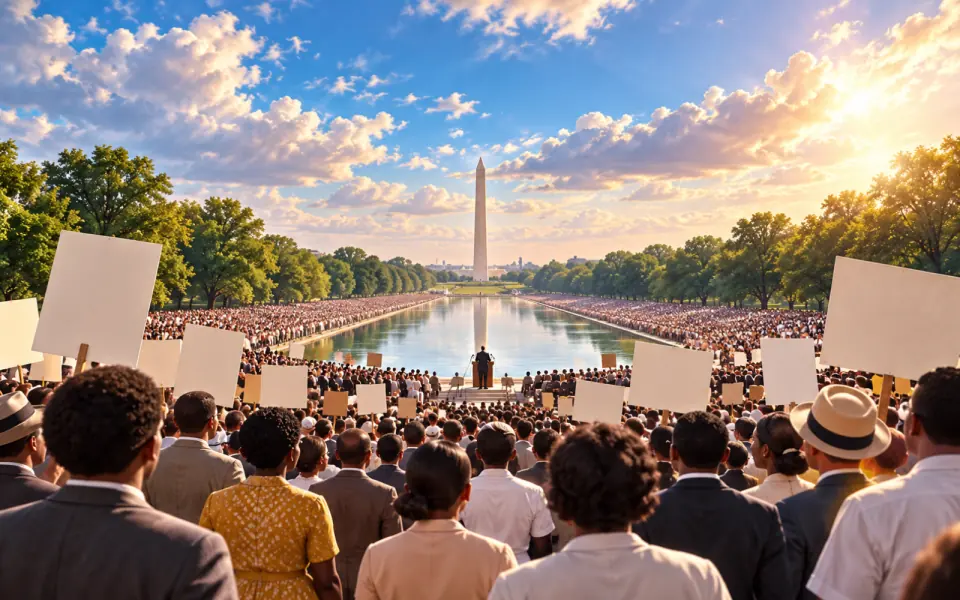
Study card about 5 minutes of reading
The story
Separate fountains
Imagine having to drink from a fountain marked “whites only”, while for you, a few metres away, there is another, older one, marked “coloured”. Imagine separate schools, buses with reserved seats, restaurants you cannot enter. Until sixty years ago, in many southern states of the United States, this was the law. It was called racial segregation, and it mostly affected African Americans, the descendants of Africans brought to the country as slaves. Slavery had ended in 1865, but the rules remained, known as the “Jim Crow laws”, which kept Black people separate and in worse conditions.
The bus in Montgomery
Things began to change with small acts of courage. On 1 December 1955, in Montgomery, Alabama, a Black seamstress named Rosa Parks refused to give up her seat on the bus to a white passenger, as local law required. She was arrested. The African Americans of the city decided to stop riding the buses. The boycott lasted 381 days: many walked for kilometres, or organised car-sharing. In the end, the Supreme Court declared segregation on buses illegal.
Leading the protest was a young Baptist minister of 26, Martin Luther King. He had been born in Atlanta in 1929, the son of a minister, had studied theology and was a powerful speaker. He had learned from Gandhi, the Indian leader, that you can fight for justice without violence: with marches, prayers, strikes and peaceful refusals. When his house was hit by a bomb, he asked his supporters not to fight back.
Birmingham and the March on Washington
In 1963, in the city of Birmingham, Alabama, the police answered the protests of young people with fire hoses and dogs. The pictures, shown on television, shocked Americans and the world. King, who had been arrested, wrote a famous letter from jail to explain why it was no longer possible to wait. President John Kennedy, in a television speech in June, said it was a moral issue and promised a new law against discrimination.
To push Congress to pass it, the leaders of the movement organised a great “March on Washington for Jobs and Freedom”. It was prepared above all by Bayard Rustin and A. Philip Randolph. On 28 August 1963 about 250,000 people, mostly Black but also many white, of every religion and age, gathered in front of the Lincoln Memorial, the monument to the president who had abolished slavery. Singers, trade unionists, priests and a very young activist, John Lewis, who was 23, spoke.
King was the last to speak. After a prepared speech, the singer Mahalia Jackson, who was standing nearby, shouted to him: “Tell them about the dream, Martin!” He put his papers aside and improvised: “I have a dream,” he said, repeating the phrase several times, “that one day this nation will rise up and live out the true meaning of its creed: we hold these truths to be self-evident, that all men are created equal.” He dreamed that his four children would one day live in a country where they would be judged not by the colour of their skin but by the content of their character. The speech lasted about sixteen to seventeen minutes and was shown on television.
The new laws
The march was an example of peaceful strength, and it brought results. In July 1964 President Lyndon Johnson, who had succeeded Kennedy after his assassination, signed the Civil Rights Act, which banned discrimination on grounds of race, colour, religion and origin in public places, schools and workplaces. In 1965 the Voting Rights Act guaranteed the right to vote, which in many southern states Black people could not really exercise. In 1964 King received the Nobel Peace Prize, at 35: the youngest person to receive it up to then. On 4 April 1968 he was killed in Memphis, Tennessee, by a rifle shot. He was 39.
Why it happened
Segregation came from a long history of slavery and discrimination. After the American Civil War and the end of slavery, Black people had won the same rights by law, but the southern states had limited them with rules that made voting difficult and separated public places.
An important step had come in 1954: the Supreme Court, in the case “Brown v. Board of Education”, had declared that separate schools could not be equal. But the ruling was applied slowly. That is why activists, often students and young people, chose to press for change with protests: they sat at the counters of restaurants where they were not served, rode integrated buses and marched.
What changed
The civil rights movement changed the United States. Segregation in schools and public places was banned by law, and Black people could vote and stand for election: in the following years many were elected mayors, representatives and senators. In 2009 Barack Obama became the country's first African American president.
The method of peaceful protest inspired many other movements, from South Africa, with the fight against apartheid, to many struggles for rights around the world. Since 1986, in the United States, the third Monday of January has been a national holiday in memory of King.
The fight against racism is not over: even today there are inequalities and discrimination, and movements such as “Black Lives Matter” remind us that King's dream calls for constant commitment.
Key people and places
People
- Martin Luther King
- American Baptist minister (1929–1968): he led the civil rights movement with non-violent methods; Nobel Peace Prize in 1964.
- Rosa Parks
- American seamstress and activist (1913–2005): her refusal to give up her bus seat in Montgomery started the boycott.
- Bayard Rustin
- American activist (1912–1987): he organised the 1963 March on Washington.
- John Lewis
- American activist and later congressman (1940–2020): at 23 he spoke at the March on Washington.
- Mahalia Jackson
- American gospel singer (1911–1972): she sang at the march and encouraged King to “tell them about the dream”.
Places
- Lincoln Memorial, Washington
- The monument in front of which King gave his “I have a dream” speech on 28 August 1963.
- Montgomery, Alabama (United States)
- The city where, in 1955–56, the bus boycott marked the start of the great protests.
Good to know
- The Montgomery bus boycott lasted 381 days.
- The “I have a dream” speech lasted about sixteen to seventeen minutes: the part about the dream was largely improvised.
- About 250,000 people took part in the March on Washington.
- King received the Nobel Peace Prize in 1964, at 35: then the youngest ever.
- Since 1986 the third Monday of January has been a national holiday in the United States in memory of Martin Luther King.
Find out more
- The Nobel Prize, “Martin Luther King Jr. – Facts” nobelprize.org
- Wikipedia, “Martin Luther King Jr.” en.wikipedia.org
- The King Institute at Stanford University kinginstitute.stanford.edu
- Wikipedia, “March on Washington for Jobs and Freedom” en.wikipedia.org
Related events
- The American Revolution1776–1783 · Age of revolutionsThe American Revolution proclaimed that “all men are created equal”: King recalled it in his speech.
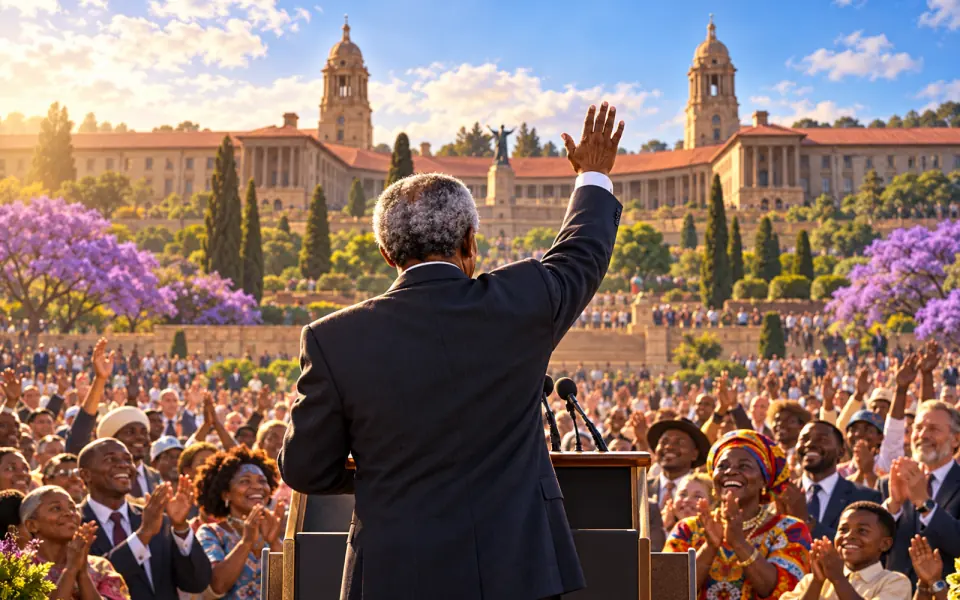
- Nelson Mandela becomes president1994 · TodayNelson Mandela, in South Africa, received the same Nobel Prize for a similar struggle.
- Malala wins the Nobel Peace Prize2014 · TodayMalala was another young voice for the right to education.
- The Italian Republic and votes for women1946 · Early 20th centuryIn Italy, votes for women were another step towards equality.
Before and after, in the era “Today”
Event 8 of 25
 BeforeThe double helix of DNA1953
 BeforeThe polio vaccine1955
 BeforeBirth of the European Community1957
 BeforeThe first artificial satellite1957
 BeforeThe first human in space1961
 BeforePop artabout 1962
 BeforeThe Beatles1963
- You are hereMartin Luther King and civil rights1963
 AfterThe Moon landing1969
 AfterThe internet's first ARPANET links1969
 AfterEarth Day and the environmental movement1970
 AfterThe personal computer1977
 AfterThe fall of the Berlin Wall1989
 AfterThe World Wide Web1991
 AfterThe European Union1993
 AfterNelson Mandela becomes president1994
 AfterThe International Space Station1998
 AfterEuro notes and coins arrive2002
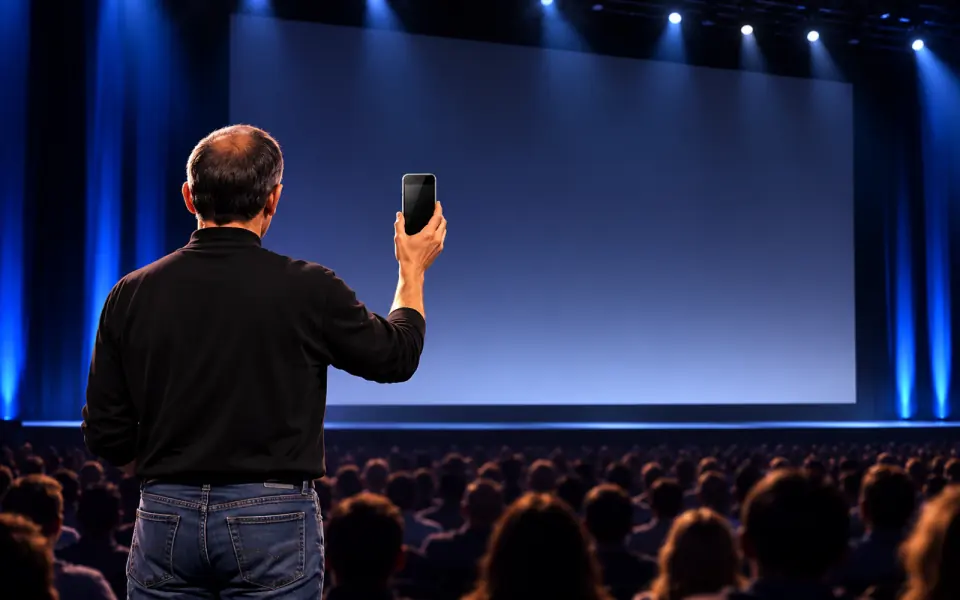 AfterThe modern smartphone2007
 AfterThe global financial crisis2008
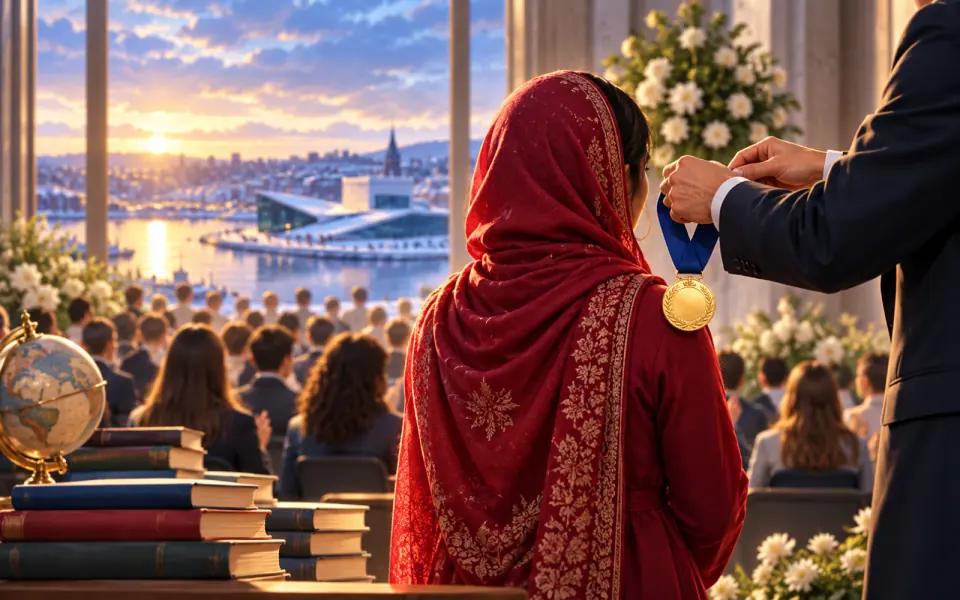 AfterMalala wins the Nobel Peace Prize2014
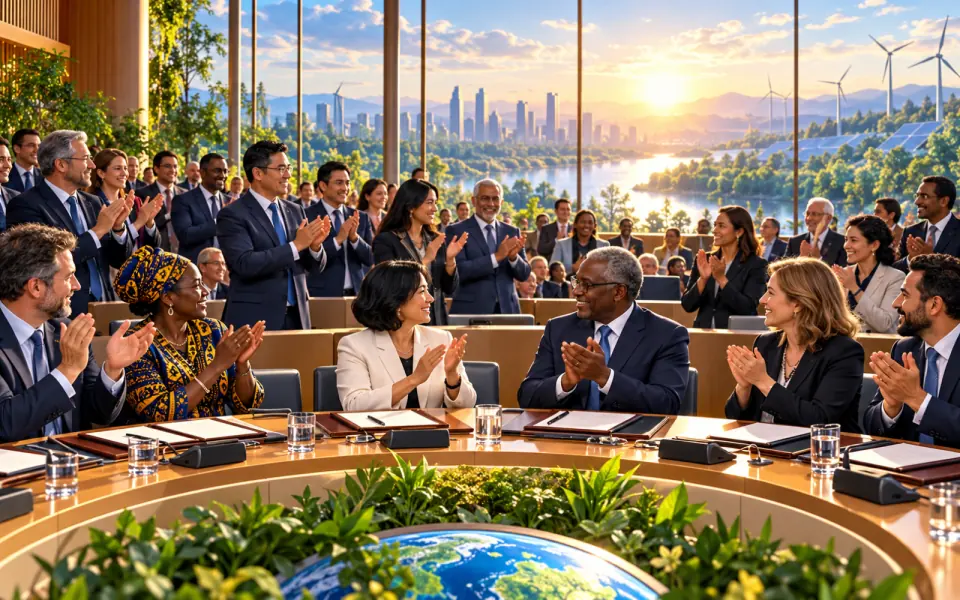 AfterThe Paris Agreement on climate2015
 AfterThe first image of a black hole2019
 AfterThe COVID-19 pandemic2020
 AfterThe Webb telescope starts observing2022
Listen / Read next
- Music to read by: Cinematic JourneyEpic film-style music, no lyrics, by Ciro Simone IrmiciSpotifyYouTube Music
Meanwhile, elsewhere in the world
Other events of the era “Today”
- The double helix of DNA
- The polio vaccine
- Birth of the European Community
- The first artificial satellite
- The first human in space
- Pop art
- The Beatles
- The Moon landing
- The internet's first ARPANET links
- Earth Day and the environmental movement
- The personal computer
- The fall of the Berlin Wall
- The World Wide Web
- The European Union
- Nelson Mandela becomes president
- The International Space Station
- Euro notes and coins arrive
- The modern smartphone
- The global financial crisis
- Malala wins the Nobel Peace Prize
- The Paris Agreement on climate
- The first image of a black hole
- The COVID-19 pandemic
- The Webb telescope starts observing
