The first artificial satellite
1957 Baikonur (now Kazakhstan)
In short
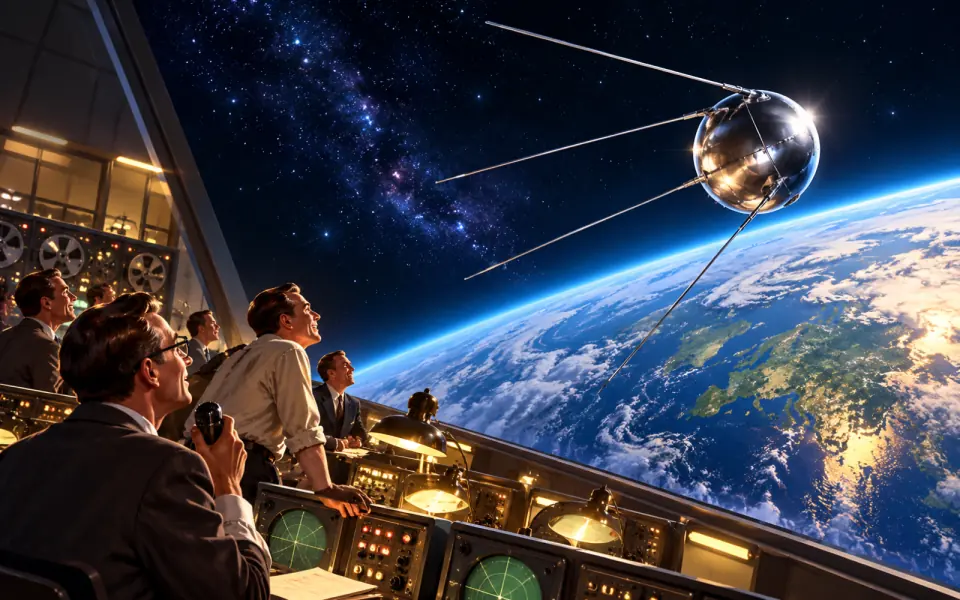
On 4 October 1957 the Soviet Union launched Sputnik 1, the first artificial satellite in history. It was a shiny metal ball the size of a beach ball, with four long antennae, and it weighed about 84 kilograms. It circled the Earth in about 96 minutes and sent out a ‘beep’ that radio amateurs all over the world could hear. A month later Sputnik 2 carried the little dog Laika into orbit.
Why it matters It began the space age and the race between the United States and the Soviet Union to conquer space.
Source: NASA, “Sputnik and the Origins of the Space Age”
Study card about 5 minutes of reading
The story
A sound in the sky
On the evening of 4 October 1957, radio amateurs all over the world tuned their sets to an unusual frequency and heard a new sound: a regular, thin “beep-beep-beep” coming from space. It was the signal of a small metal sphere circling the Earth: Sputnik 1, the first artificial satellite in history.
It had been launched by the Soviet Union from a base in the Kazakh desert, at Baikonur. Sputnik, in Russian, means “travelling companion”. It was an aluminium sphere 58 centimetres wide, weighing about 84 kilograms, with four long aerials sticking out backwards like whiskers. Inside, batteries powered a radio transmitter. It did not measure anything complicated: its only purpose was to prove that it could be done and to send that beep to everyone.
The designer without a name
The rocket that carried Sputnik into orbit, the R-7, had been designed by Sergei Korolev, a brilliant engineer who for years had been kept away from the world: the Soviet government kept the names of its scientists secret. Korolev had dreamed of exploring space since he was young and had already built rockets before the war. The R-7 was in fact born as a military missile, able to reach the United States with a warhead: the same power needed to launch a satellite could also carry weapons.
It was the time of the Cold War, the great rivalry between the United States and the Soviet Union, two superpowers that challenged each other in every field: weapons, science, sport and even cinema. In 1957–1958 the world scientific community organised the “International Geophysical Year”, to study the Earth with new instruments; both the Americans and the Soviets had announced that they would launch a satellite. The Americans were sure they would get there first. Nobody in Washington expected the Soviets to win the race: their launches had been kept secret until the last moment and were announced only after the success.
The day after
Sputnik's signal lasted about three weeks, until the batteries ran out. Then the satellite kept circling in silence, once every 96 minutes, at a speed of about 29,000 kilometres an hour. Anyone who knew where to look could spot in the sky, at dawn or dusk, the big stage of the rocket that had carried it into orbit, a slow light crossing the stars. On 4 January 1958, after 92 days and about 1,400 trips around the Earth, it re-entered the atmosphere and burned up.
About a month after the first launch, on 3 November 1957, the Soviet Union also launched Sputnik 2, with a living creature on board: a stray dog, Laika. Laika died a few hours after the launch, from the heat, although the Soviets only said so many years later. Today her story reminds everyone how much the beginnings of space exploration cost.
The American reaction
In the United States the news caused a sensation. Many people felt behind and in danger: if the Soviets could send a satellite over their heads, they could also send a missile. People spoke of the “Sputnik crisis”. The government reacted quickly. The first American satellite, Explorer 1, was launched on 31 January 1958 and discovered the belts of radiation that surround the Earth, now called the “Van Allen belts”. In 1958 the United States founded NASA, the space agency, and passed a law to fund science education in schools and universities.
The “space race” had begun, a contest that lasted more than ten years and led, step by step, to the landing on the Moon.
Why it happened
After the war both the Soviet Union and the United States had taken home German V-2 rocket scientists and plans, and had improved them. With the Cold War, rockets had become weapons: whoever could build a rocket able to cross an ocean was stronger. Sputnik's rocket was the fruit of this competition.
What made the launch possible, moreover, was Korolev's genius and the decision of the Soviet leaders, including Nikita Khrushchev, to give the project great resources. A satellite, what is more, could be used as a great piece of propaganda: showing the world the strength of Soviet science.
What changed
Sputnik opened the space age. A few years later came the first man in space, Gagarin in 1961, and the Moon landing in 1969. Today thousands of satellites circle the Earth: they give us television signals, weather forecasts, phone calls, GPS to find our way and the photographs used to monitor the climate and follow fires or floods.
The “Sputnik crisis” also changed schools and research in the United States: much more was invested in the study of mathematics, physics and engineering. NASA was born, along with other research agencies that would go on to fund, among other things, the first studies on the Internet.
Another effect was the start of a new idea: space belongs to everyone. In 1967 an international treaty laid down that no state can own the Moon or other celestial bodies, and that space must be used for peaceful purposes.
Key people and places
People
- Sergei Korolev
- Soviet engineer (1907–1966), chief designer of the R-7 rocket and of the first space flights.
- Nikita Khrushchev
- Leader of the Soviet Union from 1953 to 1964: he backed the space programme.
- Laika
- Stray dog sent into space on Sputnik 2 on 3 November 1957.
- Wernher von Braun
- German engineer (1912–1977), later in America: he led the team that launched Explorer 1.
- James Van Allen
- American physicist (1914–2006): using Explorer 1's data he discovered the belts of radiation around the Earth.
Places
- Baikonur Cosmodrome, Kazakhstan
- The base from which Sputnik 1 was launched and from which many rockets are still launched.
- Cape Canaveral, Florida (United States)
- From here, in 1958, the first American satellite, Explorer 1, was launched.
Good to know
- Sputnik's “beep” could be heard on an ordinary shortwave radio.
- Sputnik 1 weighed about 84 kilograms and was as big as a beach ball.
- After the launch, the big stage of the rocket orbiting together with Sputnik could be seen with the naked eye like a moving star.
- The word “sputnik” in Russian means “travelling companion”.
- Korolev's name was kept secret by the Soviet government until his death in 1966.
Find out more
- NASA, “Dawn of the Space Age” nasa.gov
- Wikipedia, “Sputnik 1” en.wikipedia.org
- Wikipedia, “Sputnik programme” en.wikipedia.org
- NASA, “60 Years Ago: The Space Age Began” nasa.gov
Related events
- The first human in space1961 · TodayFour years later, Gagarin was the first man in space.
- The Moon landing1969 · TodayThe space race took the first men to the Moon in 1969.
- The International Space Station1998 · TodayToday the International Space Station is an inhabited laboratory in orbit.
- The internet's first ARPANET links1969 · TodayThe research funds created after Sputnik also paid for the first ARPANET connections.
Before and after, in the era “Today”
Event 4 of 25
 BeforeThe double helix of DNA1953
 BeforeThe polio vaccine1955
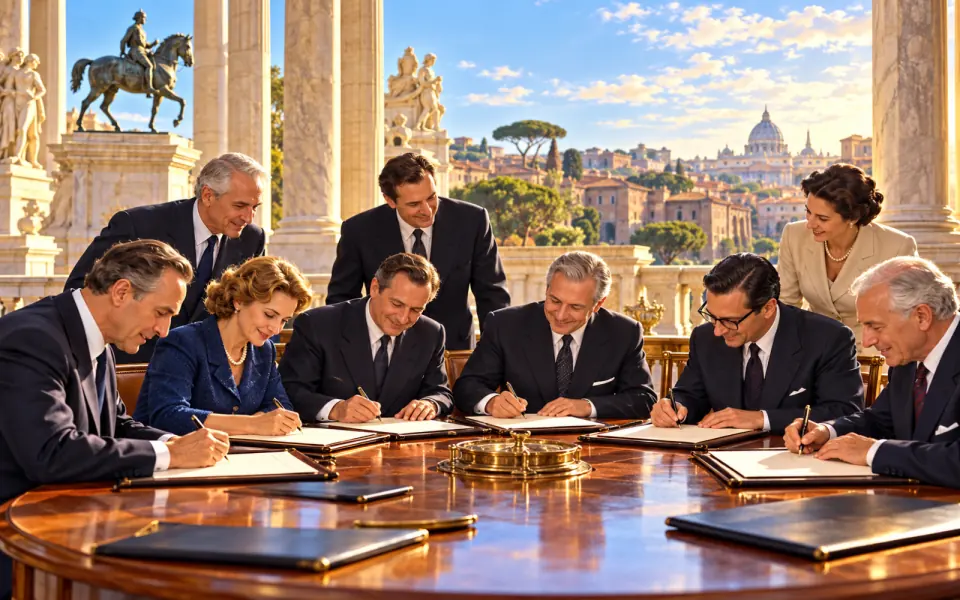 BeforeBirth of the European Community1957
- You are hereThe first artificial satellite1957
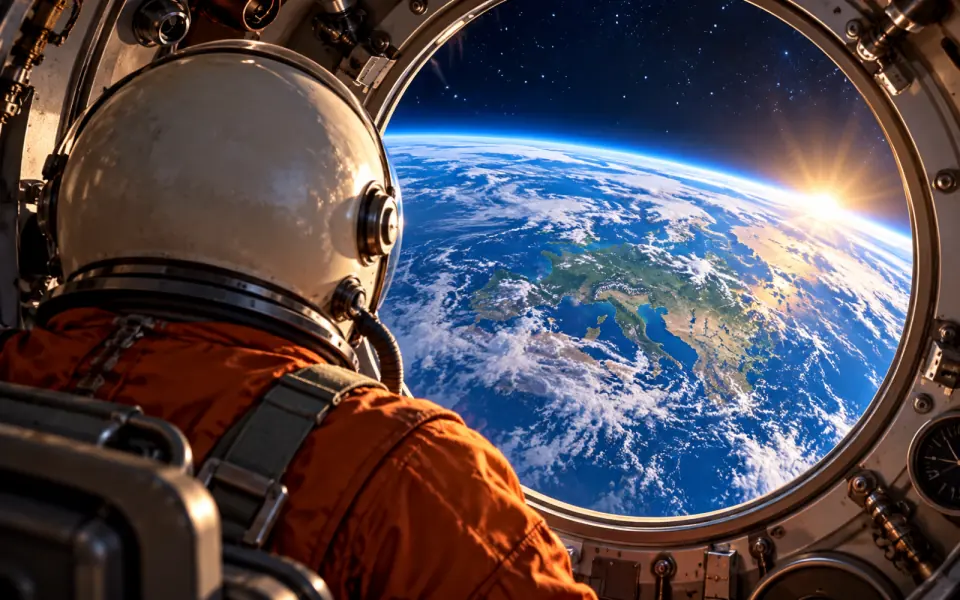 AfterThe first human in space1961
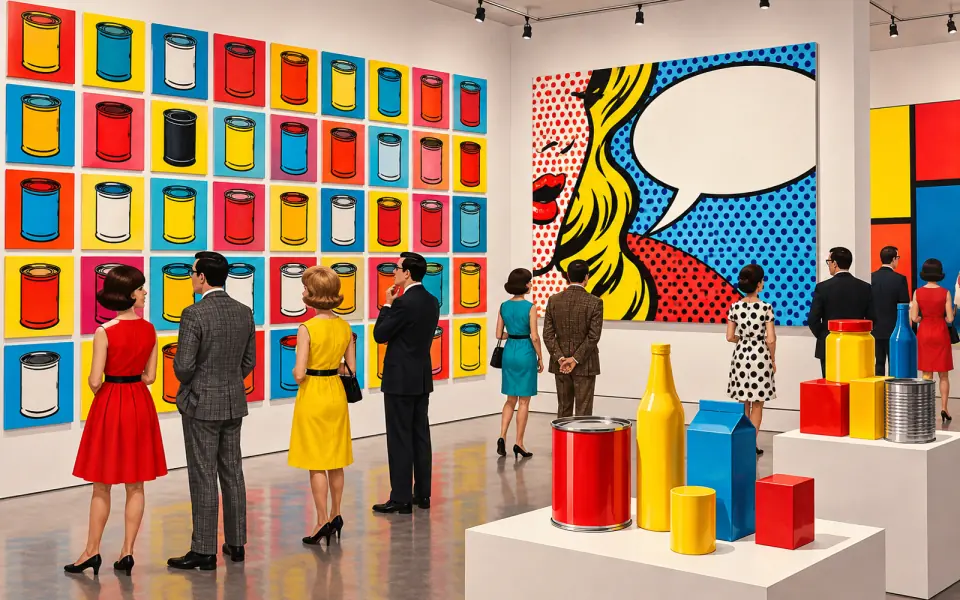 AfterPop artabout 1962
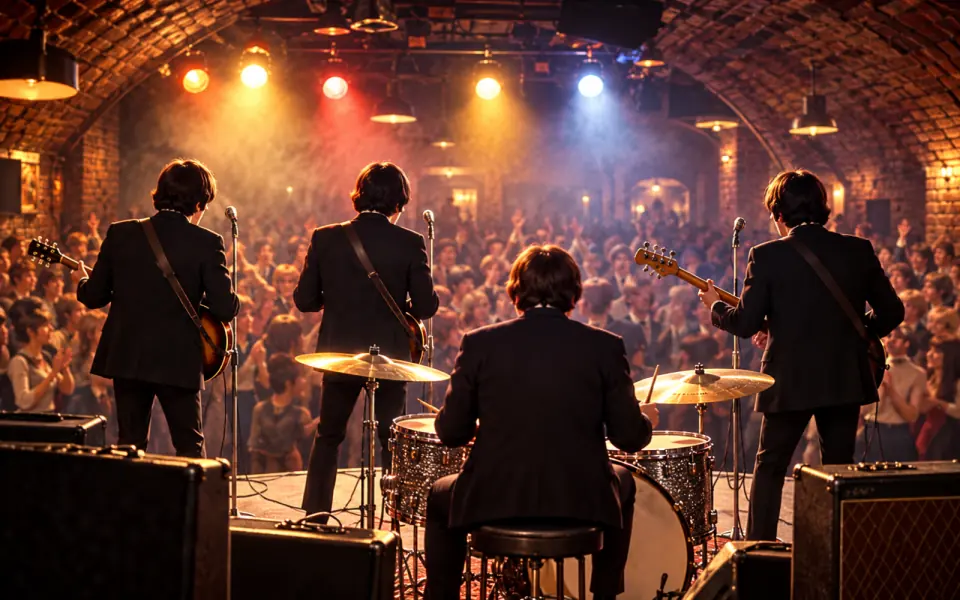 AfterThe Beatles1963
 AfterMartin Luther King and civil rights1963
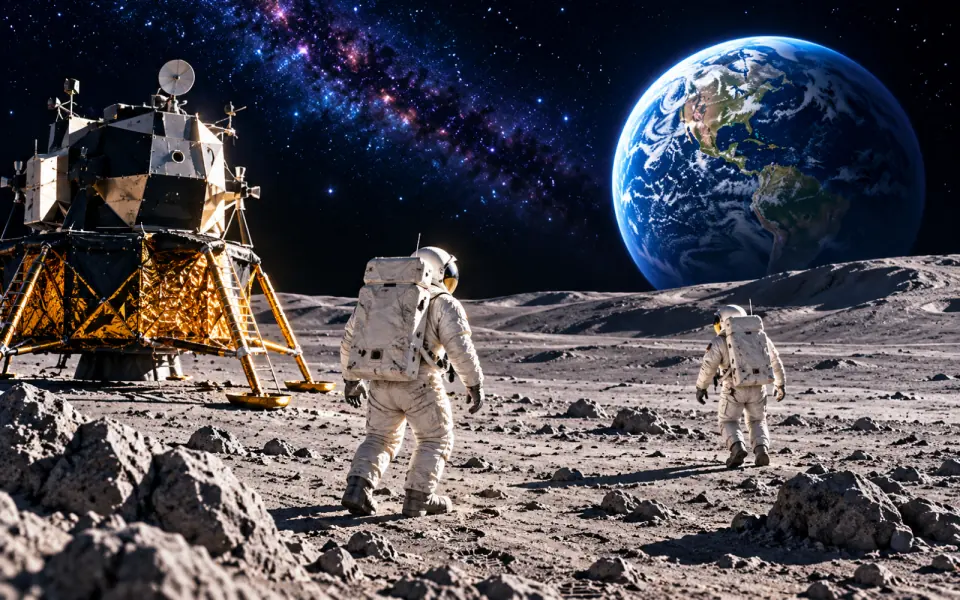 AfterThe Moon landing1969
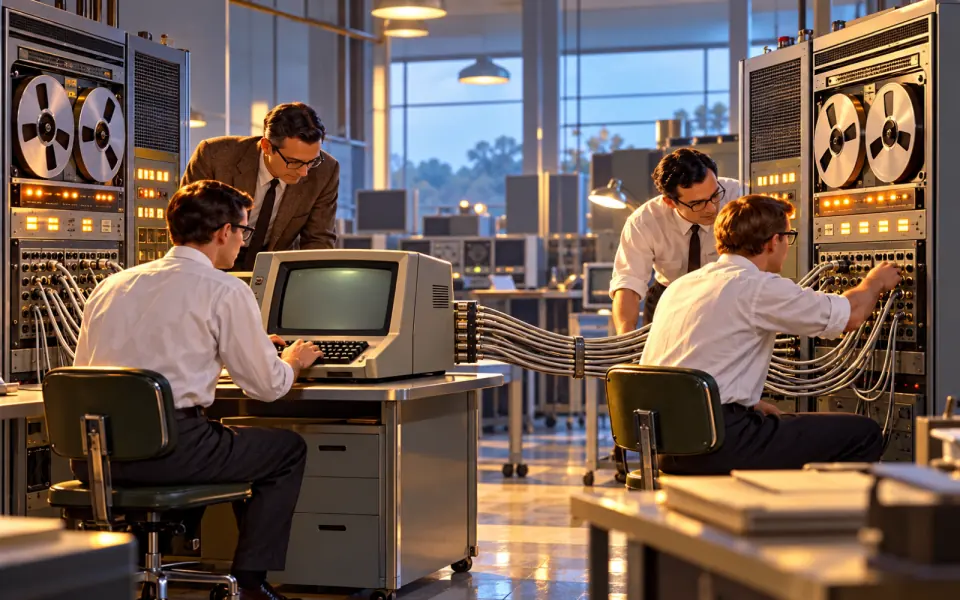 AfterThe internet's first ARPANET links1969
 AfterEarth Day and the environmental movement1970
 AfterThe personal computer1977
 AfterThe fall of the Berlin Wall1989
 AfterThe World Wide Web1991
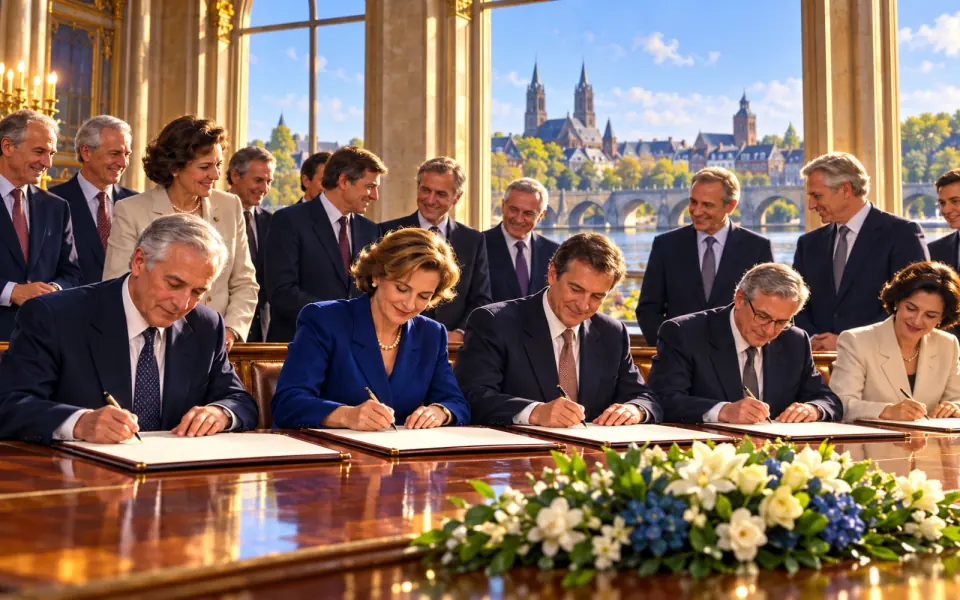 AfterThe European Union1993
 AfterNelson Mandela becomes president1994
 AfterThe International Space Station1998
 AfterEuro notes and coins arrive2002
 AfterThe modern smartphone2007
 AfterThe global financial crisis2008
 AfterMalala wins the Nobel Peace Prize2014
 AfterThe Paris Agreement on climate2015
 AfterThe first image of a black hole2019
 AfterThe COVID-19 pandemic2020
 AfterThe Webb telescope starts observing2022
Listen / Read next
- Music to read by: Cinematic JourneyEpic film-style music, no lyrics, by Ciro Simone IrmiciSpotifyYouTube Music
Meanwhile, elsewhere in the world
Other events of the era “Today”
- The double helix of DNA
- The polio vaccine
- Birth of the European Community
- The first human in space
- Pop art
- The Beatles
- Martin Luther King and civil rights
- The Moon landing
- The internet's first ARPANET links
- Earth Day and the environmental movement
- The personal computer
- The fall of the Berlin Wall
- The World Wide Web
- The European Union
- Nelson Mandela becomes president
- The International Space Station
- Euro notes and coins arrive
- The modern smartphone
- The global financial crisis
- Malala wins the Nobel Peace Prize
- The Paris Agreement on climate
- The first image of a black hole
- The COVID-19 pandemic
- The Webb telescope starts observing
