The nuraghi of Sardinia
about 1600 BC Barumini, Sardinia (Italy)
In short
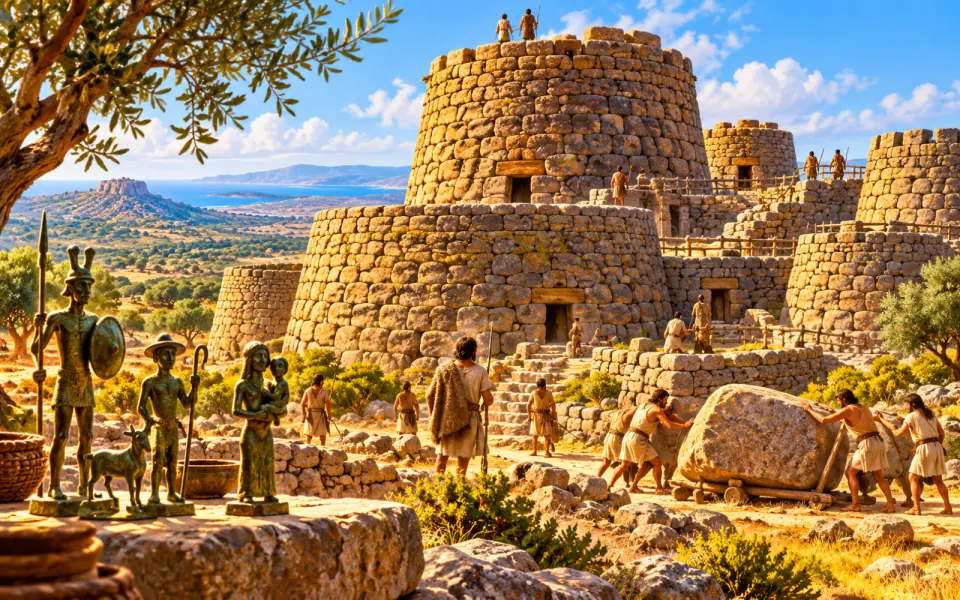
Thousands of nuraghi still stand in Sardinia: stone towers shaped like a cone with the top cut off, built without mortar. The stones, sometimes enormous, were laid in ever narrower circles until the ceiling closed. Some nuraghi grew into real fortresses with several towers joined by walls, like Su Nuraxi at Barumini. The same people also left small bronze statues, the bronzetti, showing warriors, shepherds and mothers.
Why it matters These buildings exist only in Sardinia, and the Barumini complex is a UNESCO World Heritage Site.
Source: UNESCO, “Su Nuraxi di Barumini”
Study card about 6 minutes of reading
The story
Stone towers on an island
If you cross Sardinia by car or train, among hills and pastures, every now and then you see on top of a rise a dark stone tower shaped like a cone with the top cut off. It is a nuraghe. More than seven thousand are left, about one for every three square kilometres, and this is why Sardinia is called “the island of the nuraghi”. There are no buildings like them anywhere else in the world.
The people who built them are called Nuragic. Scholars think the first nuraghi appeared in the 18th century BC (around 1800-1700 BC), or a little later, and that Nuragic civilisation lasted, depending on how you count, until the Iron Age, until the Roman conquest in 238 BC or, in some inland areas, even longer. The dates are debated and depend on the site.
How to build a nuraghe
Nuraghi are built of large blocks of stone, set one on top of another without mortar, that is, without anything to stick them together. They stand up because of their weight and the precision with which they were laid. The tower has the shape of a truncated cone, wider at the base than at the top. Inside there is a room with a false-dome ceiling, called a “tholos”: the blocks are laid in ever smaller circles, until the gap is closed by a single stone. In the biggest nuraghi up to three chambers were built one above another, joined by a staircase inside the thickness of the wall.
What they were used for is still a matter of debate. Some think of fortresses or watchtowers, others of chiefs' residences, grain stores, meeting places or places of worship. They probably served several purposes, and not all nuraghi were the same. The Nuragic people left no writing: their language is unknown, and we know about them what the stones, the bronzes and Greek and Roman authors tell us.
The complex at Barumini
The most famous nuraghe is Su Nuraxi, at Barumini, in the south of the island. It was recognised in 1950 and brought to light up to 1957 by the Sardinian archaeologist Giovanni Lilliu. In the centre is the oldest tower, the keep, more than fourteen metres high with three chambers one above another, built, according to the current dating, between the 17th and 13th centuries BC. Later, in the late Bronze Age, four corner towers were added to it, joined by a curtain wall, with an inner courtyard and a well. In the Iron Age the whole complex was surrounded by another ring of walls with towers.
Around the fortress there was a village of about fifty round huts, built of dry stone and covered by cone-shaped roofs: scholars estimate their number and that of the inhabitants differently. Around the 6th century BC there was destruction, then the area was occupied by the Carthaginians and later by the Romans. The excavations say that the place was inhabited until the 1st century BC, then abandoned. Since 1997 Su Nuraxi has been a World Heritage Site.
Tombs, wells and statuettes
The Nuragic people did not build only towers. They buried their dead in “giants' tombs”, long collective tombs with an entrance shaped like a bull's head and great upright stones in front. They also built sacred wells, dedicated to water: the well of Santa Cristina, at Paulilatino, has a monumental staircase and a domed chamber, and is laid out so that moonlight reaches it through a trapezium-shaped opening about every eighteen and a half years.
The bronze figurines are an art all their own: small bronze statues, cast by the lost-wax technique and up to thirty-nine centimetres tall. They show scenes of everyday life, people of different social classes, animals, gods and ships. They say a great deal about how those people lived. And in 1974, near Cabras, the “giants of Mont'e Prama” were discovered: stone statues of human figures up to 2.5 metres tall. There are about thirty-two or forty of them, and their date, between the 11th and 8th centuries BC, is debated; if it were confirmed, they would be among the oldest human-figure sculptures in the Mediterranean.
A seafaring people
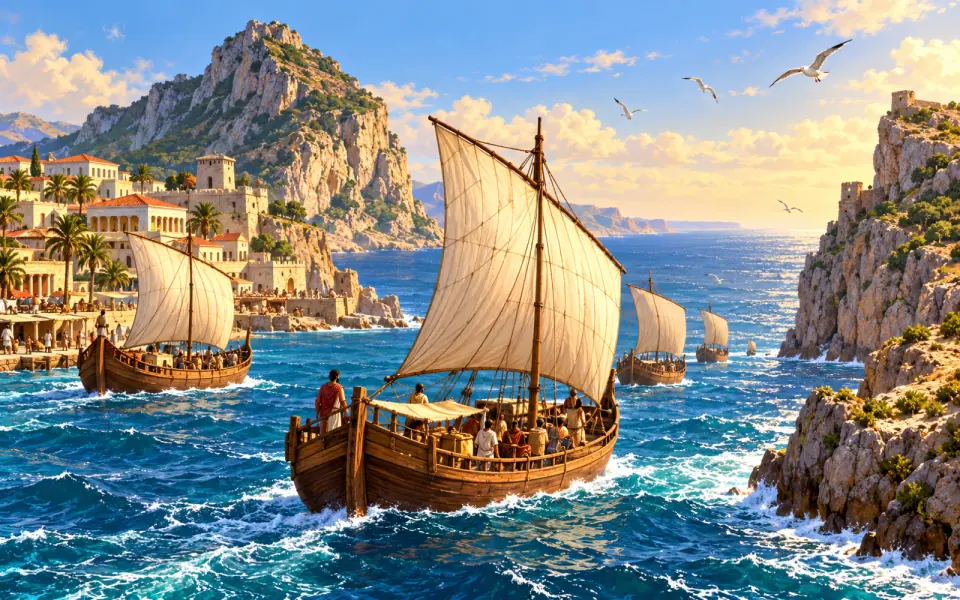
The sea was part of their world. Among the bronzes there are models of ships, and along the coasts anchors weighing up to a hundred kilograms have been found, which suggest ships about fifteen metres long. From around 900 BC the Phoenicians began to land regularly; later came the Carthaginians, in expeditions in 540 and 509 BC, and finally Rome, in 238 BC. The Greek historian Strabo writes that in the imperial age the peoples of the interior still lived very much like their ancestors.
Why it happened
To build a stone tower without mortar you need a great many people, organisation and a strong reason. Scholars think the nuraghi were born in a society of farming and herding communities with chiefs able to mobilise a lot of labour. It is still debated whether the builders came from outside or whether the culture arose on the island: a hypothesis of 1966 by Giovanni Lilliu had them arriving from the west, but other scholars prefer a local origin.
Perhaps the tower served to control the territory, protect the harvests and show a family's prestige. The island's position, in the middle of the western Mediterranean, put it in contact with seafarers of many peoples.
What changed
The nuraghi are the strongest symbol of Sardinian identity. They give Sardinia a special place in ancient history. They are also a sign of how advanced a society could be without writing and without large cities.
With the arrival of the Phoenicians, Carthaginians and Romans, Nuragic civilisation changed and then transformed, but the nuraghi stayed standing. Even today they are scattered across the countryside, and archaeologists dig them one by one.
Since 1997 the complex of Su Nuraxi at Barumini has been on the World Heritage List. Discoveries continue: the giants of Mont'e Prama, found only in 1974, have changed ideas about sculpture in Sardinia and are still the subject of study and debate.
Key people and places
People
- Giovanni Lilliu
- Sardinian archaeologist who directed the excavations at Su Nuraxi at Barumini (1950–1957) and studied Nuragic civilisation for many years.
- Strabo
- Greek geographer of the Roman age: he writes that in Sardinia, in his time, the peoples of the interior still lived in the old way.
Places
- Su Nuraxi di Barumini
- The most famous Nuragic complex, with keep, towers, walls and village; a World Heritage Site since 1997.
- Santa Cristina di Paulilatino
- A sacred well with a flight of steps and a domed chamber, aligned with the moon.
- Mont'e Prama (Cabras)
- The place where in 1974 the stone giants were discovered, statues up to 2.5 metres tall.
- Sardinia
- An island in the western Mediterranean, with more than seven thousand nuraghi still standing.
Good to know
- In Sardinia there are more than seven thousand nuraghi, about one for every three square kilometres.
- Nuragic bronze figurines are made by the lost-wax technique and reach 39 centimetres in height.
- The sacred well of Santa Cristina is built so that the moon enters through a trapezium-shaped opening every 18 and a half years.
- The Nuragic people left no writing: everything we know comes from what they built.
- The giants of Mont'e Prama are stone statues up to two and a half metres tall, found by chance in 1974.
Find out more
- Wikipedia, “Nuraghe” en.wikipedia.org
- Wikipedia, “Su Nuraxi di Barumini” en.wikipedia.org
- Wikipedia, “Giants of Mont'e Prama” en.wikipedia.org
- Wikipedia, “Nuragic civilization” en.wikipedia.org
Related events
- The Nora Stoneabout 800 BC · Sea civilisationsA Phoenician stele found in Sardinia contains the oldest written mention of the island's name.
- The Phoenicians spread outabout 1200 BC · Sea civilisationsThe Phoenicians landed in Sardinia and founded ports there.
- Traditional founding of Carthageabout 814 BC · Sea civilisationsThe Carthaginians occupied the Sardinian coasts.
- The Bronze Ageabout 5,300 years ago · PrehistoryThe nuraghi are Bronze Age buildings.
- The First Punic War264–241 BC · Ancient RomeRome conquered Sardinia after the First Punic War.
Before and after, in the era “Sea civilisations”
Event 5 of 25
 BeforeMinoan civilisation on Creteabout 2000 BC
 BeforeThe palace of Knossosabout 1900 BC
 BeforeThe Proto-Sinaitic alphabetabout 1800 BC
 BeforeThe eruption of Theraabout 1600 BC
- You are hereThe nuraghi of Sardiniaabout 1600 BC
 AfterThe gold mask of Mycenaeabout 1550 BC
 AfterLinear Babout 1450 BC
 AfterThe Lion Gate at Mycenaeabout 1250 BC
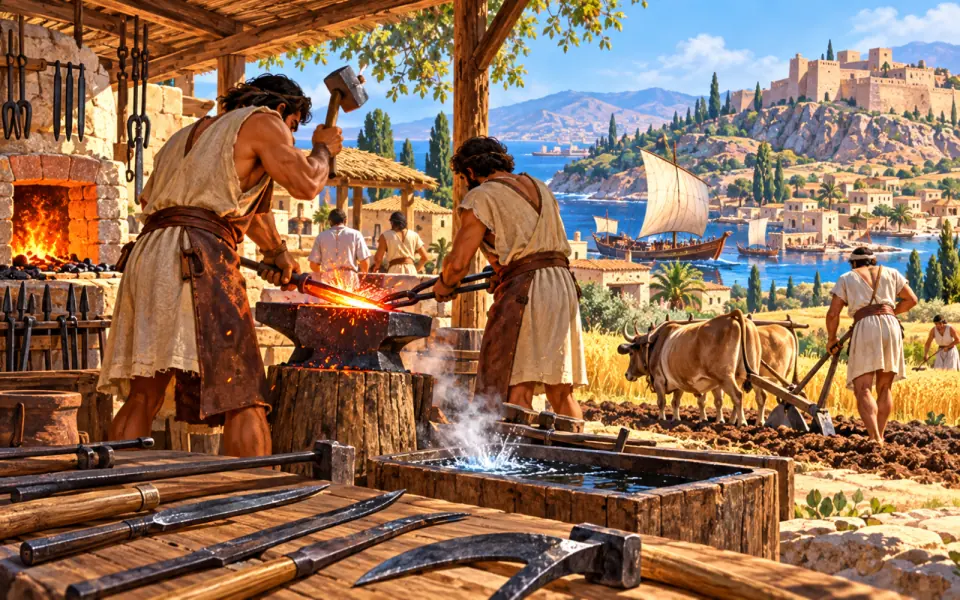 AfterThe Iron Age beginsabout 1200 BC
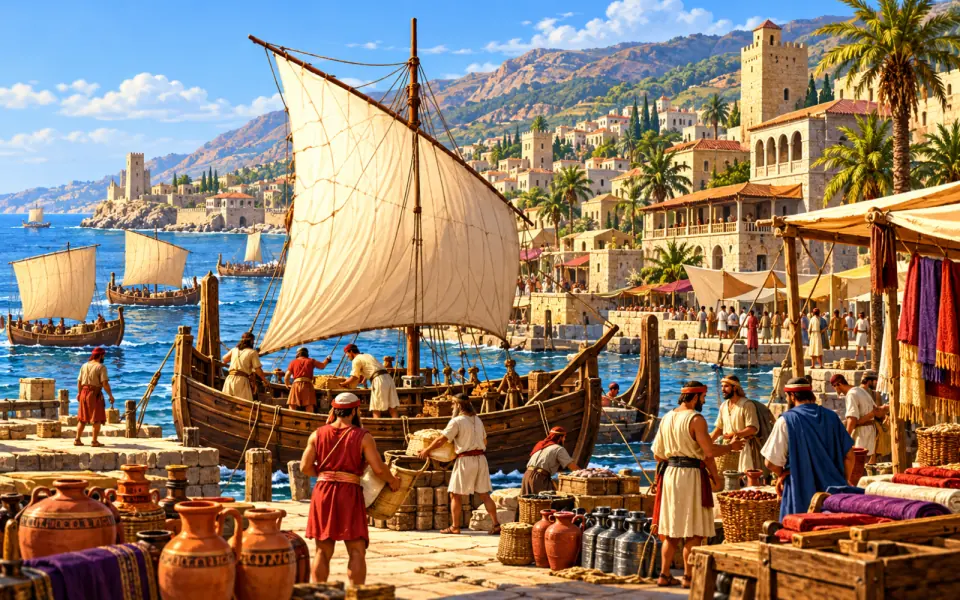 AfterThe Phoenicians spread outabout 1200 BC
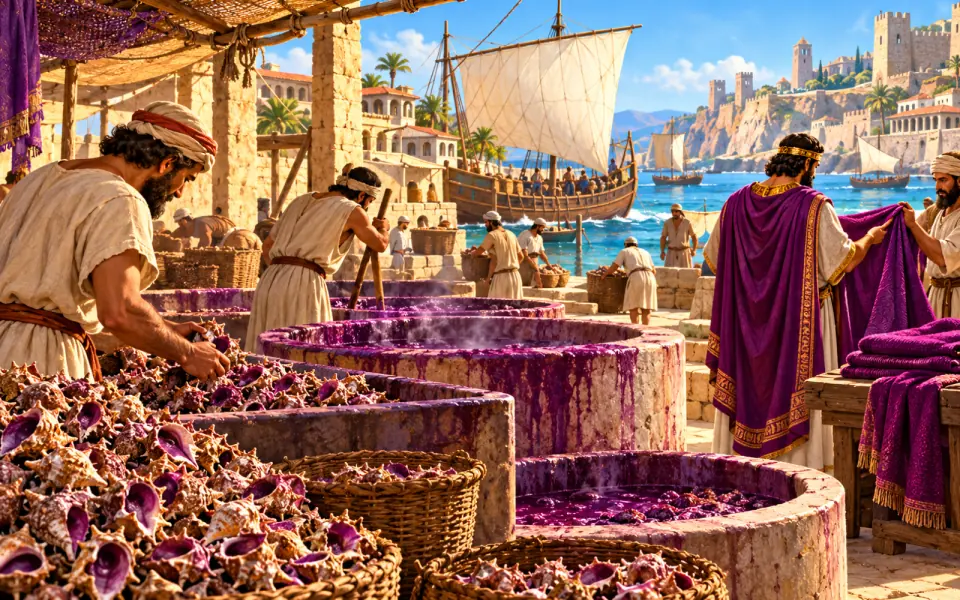 AfterPhoenician purpleabout 1100 BC
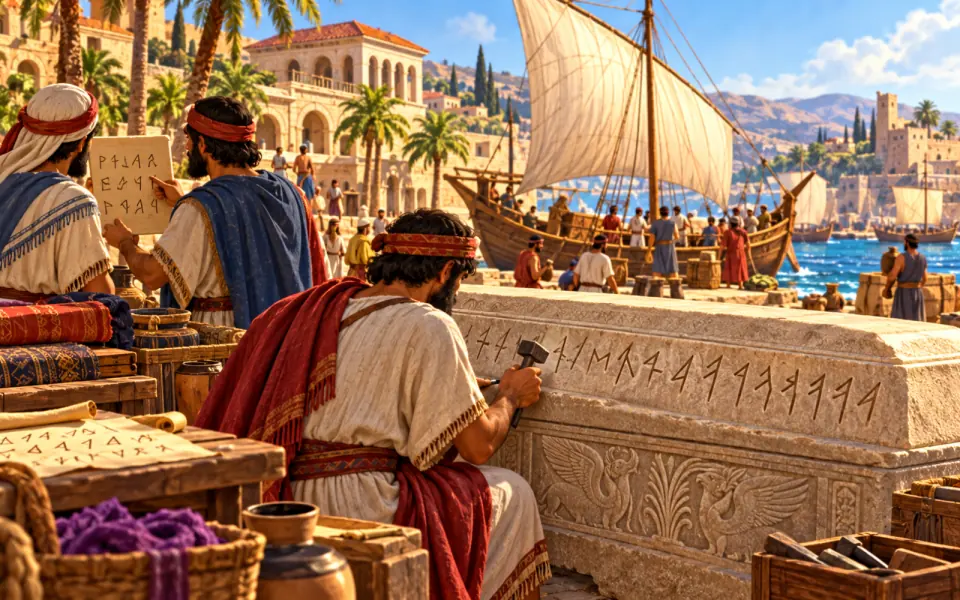 AfterThe Phoenician alphabetabout 1050 BC
 AfterThe Kingdom of Israelabout 1000 BC
 AfterPhoenician seafaringabout 1000 BC
 AfterThe Villanovan culture in Italyabout 900 BC
 AfterTraditional founding of Carthageabout 814 BC
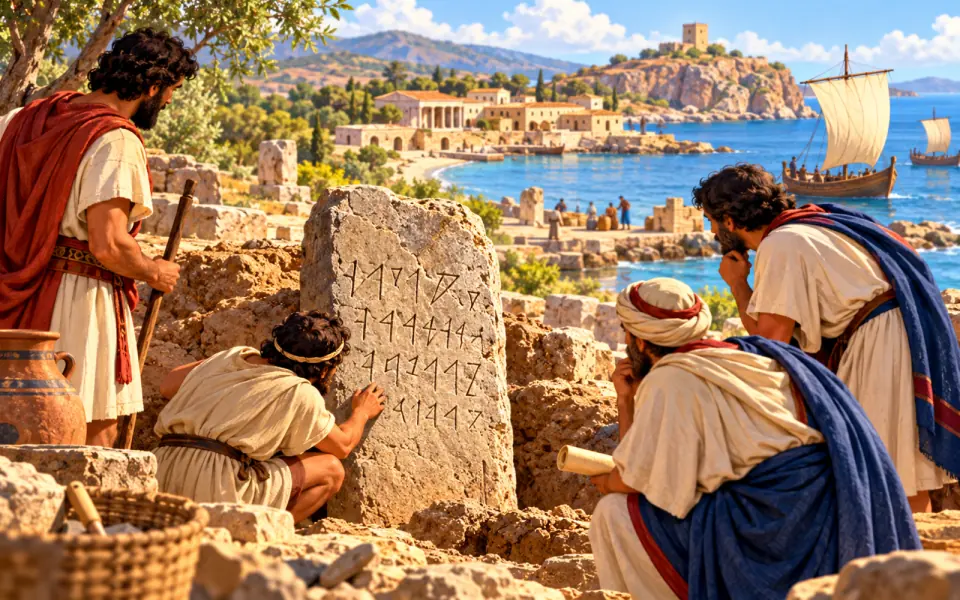 AfterThe Nora Stoneabout 800 BC
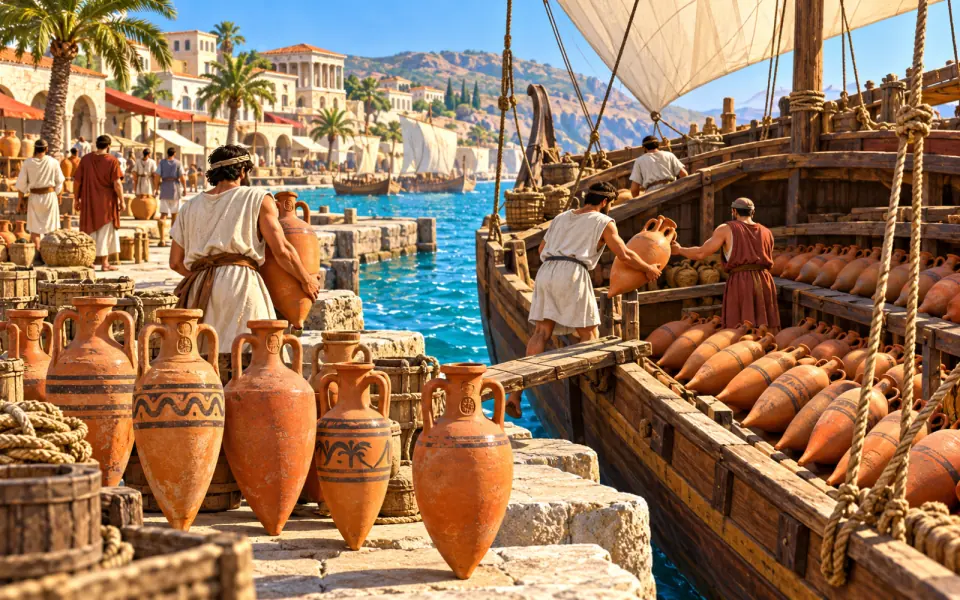 AfterAmphorae for oil and wineabout 800 BC
 AfterHomer's poems are written downabout 750 BC
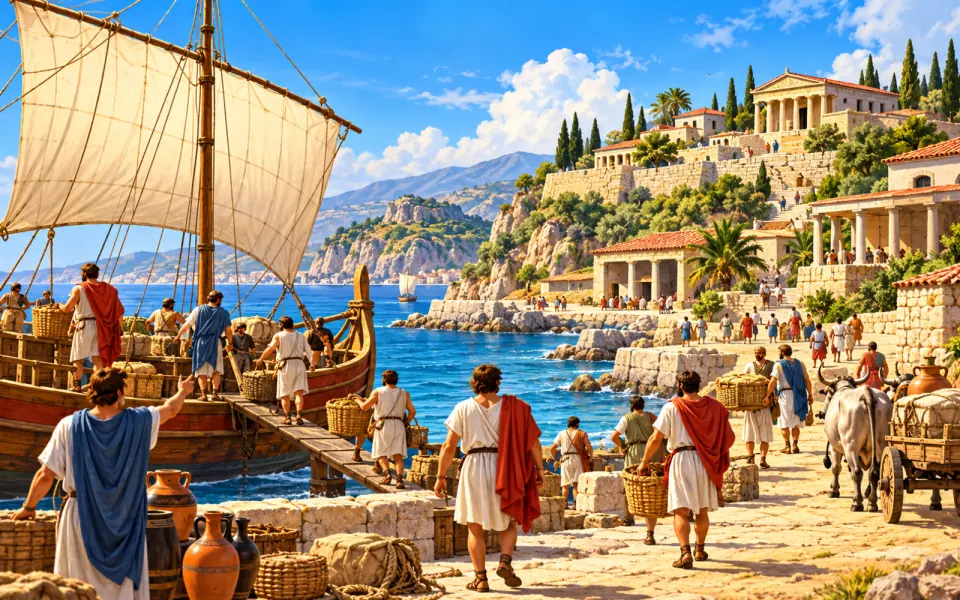 AfterGreek colonies in the Westabout 750 BC
 AfterThe Etruscans, lords of the Tyrrhenian Seaabout 700 BC
 AfterPhoenician glass spreadsabout 600 BC
 AfterCoins in the Mediterraneanabout 600 BC
 AfterThe Babylonian Exileabout 586 BC
 AfterSailing beyond Gibraltarabout 500 BC
In legend
Listen / Read next
- Music to read by: Cinematic JourneyEpic film-style music, no lyrics, by Ciro Simone IrmiciSpotifyYouTube Music
Meanwhile, elsewhere in the world
Other events of the era “Sea civilisations”
- Minoan civilisation on Crete
- The palace of Knossos
- The Proto-Sinaitic alphabet
- The eruption of Thera
- The gold mask of Mycenae
- Linear B
- The Lion Gate at Mycenae
- The Iron Age begins
- The Phoenicians spread out
- Phoenician purple
- The Phoenician alphabet
- The Kingdom of Israel
- Phoenician seafaring
- The Villanovan culture in Italy
- Traditional founding of Carthage
- The Nora Stone
- Amphorae for oil and wine
- Homer's poems are written down
- Greek colonies in the West
- The Etruscans, lords of the Tyrrhenian Sea
- Phoenician glass spreads
- Coins in the Mediterranean
- The Babylonian Exile
- Sailing beyond Gibraltar
