Minoan civilisation on Crete
about 2000 BC Crete (Greece)
In short
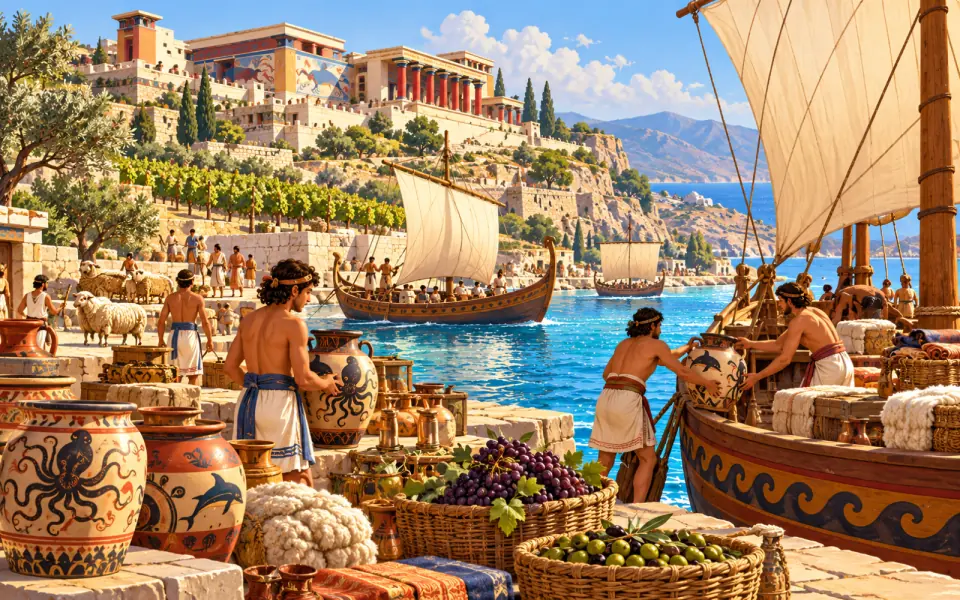
On the island of Crete, in the Aegean Sea, flourished the civilisation we now call Minoan, after the legendary King Minos. The Minoans were skilled sailors and traded with Egypt, Cyprus and the coasts of Syria. They grew olives and vines, kept sheep for wool and made pottery as thin as an eggshell. We do not know what they called themselves, because their writing, Linear A, has still not been deciphered.
Why it matters It is considered the first great civilisation of Europe.
Source: Encyclopaedia Britannica, “Minoan civilization”
Study card about 6 minutes of reading
The story
An island in the middle of the sea
Crete is the largest island in Greece and lies halfway between Europe, Africa and Asia. Anyone sailing the eastern Mediterranean four thousand years ago could hardly avoid sailing past it. It was here that a rich, refined and, at least in appearance, peaceful civilisation was born, which we now call Minoan. Its people did not choose the name: it was given by the English archaeologist Arthur Evans, at the beginning of the twentieth century, in memory of King Minos, whom the Greeks imagined as the ruler of the island and of the palace of Knossos. What the Cretans of the time really called themselves, we do not know. The Egyptians, in their documents, speak of a people called the “Keftiu”, who may well have been them; but scholars are not sure even of this.
How long it lasted
Archaeologists divide Minoan history into periods, following changes in the style of the pots. The dates are approximate and vary a little from scholar to scholar. The culture begins around 3100 BC, when people on the island still lived in villages. Around 1925 BC the first great palaces appear, and from about 1750 BC the period of the “new palaces” begins, the most splendid of all. After about 1470 BC Minoan civilisation declines, and around 1100 BC it comes to an end. This is why the date of this card, 2000 BC, should be read as a midpoint: it is the moment when the palaces are about to appear.
Sailors out of necessity
Crete is poor in metals. To make bronze you need copper and tin, and Crete does not have enough of either. The Minoans therefore had to go and get them elsewhere, and to do so they built ships and opened up routes. Archaeologists have found Minoan objects in Egypt, Cyprus, Syria and on the coasts of present-day Turkey. At Avaris in Egypt, and at Tel Kabri in Israel, wall paintings in Minoan style have been discovered: a sign that Cretan artists, or people imitating them, worked for the kings of those countries. In exchange for copper, ivory and precious stones, the island exported what it had in plenty: olive oil, wine, wool, cloth and painted pottery.
The palaces
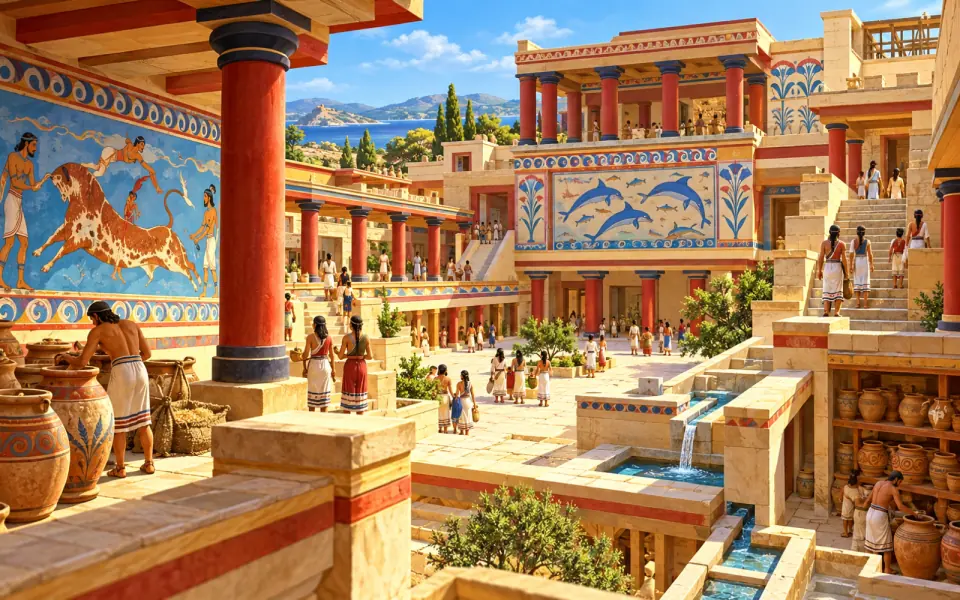
The heart of society was the palaces: Knossos, Phaistos, Malia, Zakros and others. They were not just the homes of a king. According to scholars they served at the same time as storehouse, workshop, archive and place of worship, and they gathered in the produce of the surrounding countryside. In the long storerooms stood big jars for oil, grain and wine. The walls were covered with brightly coloured frescoes: processions, flowers, sea creatures and young people leaping over a bull. This last scene makes us think that bull-leaping, perhaps linked to religion, was a ritual or a contest.
Minoan pottery is famous. With the first palaces came the potter's wheel and new, brilliant colours: this is how the pottery known as Kamares ware was born. Later, potters painted octopuses, shells and seaweed winding round the pot: this is the so-called “marine style”.
Women, writing and mysteries
One thing strikes anyone who looks at Minoan art: there are a great many women, and they are important. Priestesses, goddesses and court ladies appear everywhere, often larger than the other figures. Some scholars conclude from this that women had a leading role in society and religion; others urge caution, because the evidence is not enough to say who really ruled.
The Minoans knew how to write, but we cannot read them. They first used a script of Cretan hieroglyphs and then the so-called Linear A, two systems that nobody has managed to decipher. We know the signs, but we do not know what language they spoke. Linear A was later adapted by the Mycenaeans, a Greek people, to write their own language: this is how Linear B was born, and that one was deciphered in 1952. This is why Minoan civilisation remains partly silent: it is the objects that speak to us, not the texts.
The decline
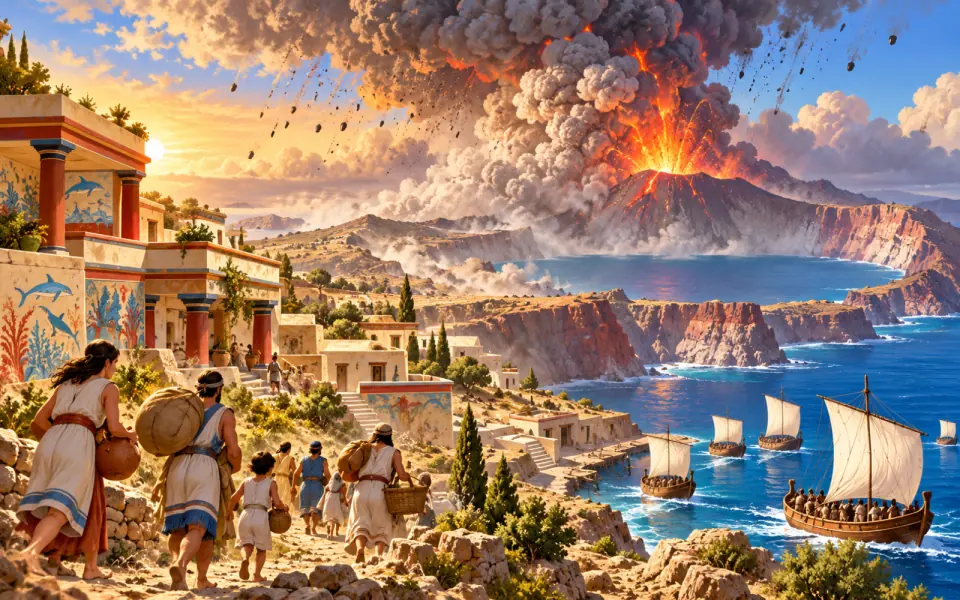
Around 1600 BC, north of Crete, the island of Thera (now Santorini) was devastated by a great volcanic eruption. The exact dates are still debated. Minoan society recovered, and indeed the following decades are considered the high point of its culture. But soon afterwards, in a period that archaeologists call Late Minoan IB, many palaces and villas were destroyed by fire: the causes are not clear, and scholars debate whether a conquest, internal revolts or something else is to blame. Around 1450 BC the Mycenaeans, that is, Greeks from the mainland, took control of Knossos. By the time the palace of Knossos was destroyed once and for all, towards the end of the Bronze Age, the great age had long been over. Around 1200 BC the people of the coasts moved to villages in the hills, easier to defend, and lived on like this for a few more centuries before Minoan culture faded away.
Why it happened
Crete was lucky to lie in a strategic spot: from here you can reach Egypt, Syria, Cyprus and the Cyclades in a few days. But there was also a problem, which turned out to be a push forward. The island has little copper and almost no tin, the two metals needed for bronze, the most important material of that age. Anyone who wanted good weapons and tools had to find the metals across the open sea.
So, to get hold of metals, the Cretans became traders. Trade needed storehouses, accounts and someone to organise the work: from this the palaces were born, and with them the island's first systems of writing. In other words, the lack of metals pushed the islanders to build ships, keep written accounts and organise themselves in a far more complex way than a village of shepherds and farmers.
What changed
The Minoans are the first civilisation in Europe with palaces, writing, long-distance trade and real art. When the Mycenaeans conquered them, they inherited a great deal from them: the ships, the ways of governing through the palace storehouses and even the writing, turned into Linear B to write Greek. Through the Mycenaeans, something of Cretan art and organisation passed on to the Greece of the following centuries.
Minoan civilisation also left a legacy in the imagination: the myth of the labyrinth and the Minotaur, King Minos, the bull-leaping. We do not know how much truth there is in these stories, but it is likely that the Greeks had heard, in a distorted form, about the great palaces of the island.
Today Crete holds the most visited Minoan sites in Greece, and the Archaeological Museum of Heraklion keeps the frescoes and vases. Evans's discovery, at the beginning of the twentieth century, showed that Europe had had a complex civilisation long before classical Greece, and it changed the history books.
Key people and places
People
- Arthur Evans
- English archaeologist (1851–1941). From 1900 he excavated the palace of Knossos and gave the civilisation the name “Minoan”.
- Minos
- Legendary king of Crete in Greek myths: the civilisation takes its name from him. We do not know whether a king with this name ever existed.
- Émile Gilliéron
- Artist who, together with his son, rebuilt and repainted the frescoes of Knossos for Evans; some of the reconstructions are criticised today.
Places
- Crete
- The largest Greek island, between Europe, Africa and Asia: the base of the whole Minoan civilisation.
- Knossos
- The biggest Bronze Age palace on Crete, near Heraklion; it was the centre of a kingdom.
- Phaistos
- The second great Minoan palace, in the south of the island, after the one at Knossos.
- Akrotiri
- A town on the island of Santorini, covered by the ash of the Thera eruption, with strong links to Crete.
Good to know
- The Egyptians called a people “Keftiu” who in all likelihood were the Cretans, although this is not entirely certain.
- The name “Minoan” is modern: in three thousand years no ancient Cretan ever called himself that.
- The two oldest scripts of Crete, Cretan hieroglyphs and Linear A, have still not been deciphered.
- Minoan painters loved sea creatures: in the “marine style” octopuses wrap themselves around whole vases.
- In many paintings the female figures are larger than the others, and many scholars think women had an important role in religion.
Find out more
- World History Encyclopedia, “Minoan Civilization” worldhistory.org
- Wikipedia, “Crete” en.wikipedia.org
- Wikipedia, “Arthur Evans” en.wikipedia.org
- Wikipedia, “Minoan civilization” en.wikipedia.org
Related events
- The palace of Knossosabout 1900 BC · Sea civilisationsThe palace of Knossos was the biggest centre of Minoan civilisation.
- The eruption of Theraabout 1600 BC · Sea civilisationsThe eruption of Thera hit the nearby island and marked the last centuries of the Minoans.
- Linear Babout 1450 BC · Sea civilisationsThe Mycenaeans adapted Minoan writing to write in Greek.
- The gold mask of Mycenaeabout 1550 BC · Sea civilisationsThe Mycenaeans of the mainland were the heirs and then the conquerors of the Minoans.
- The Bronze Age collapseabout 1200 BC · River civilisationsThe end of the Bronze Age swept away even the last Minoan villages.
Before and after, in the era “Sea civilisations”
Event 1 of 25
- You are hereMinoan civilisation on Creteabout 2000 BC
 AfterThe palace of Knossosabout 1900 BC
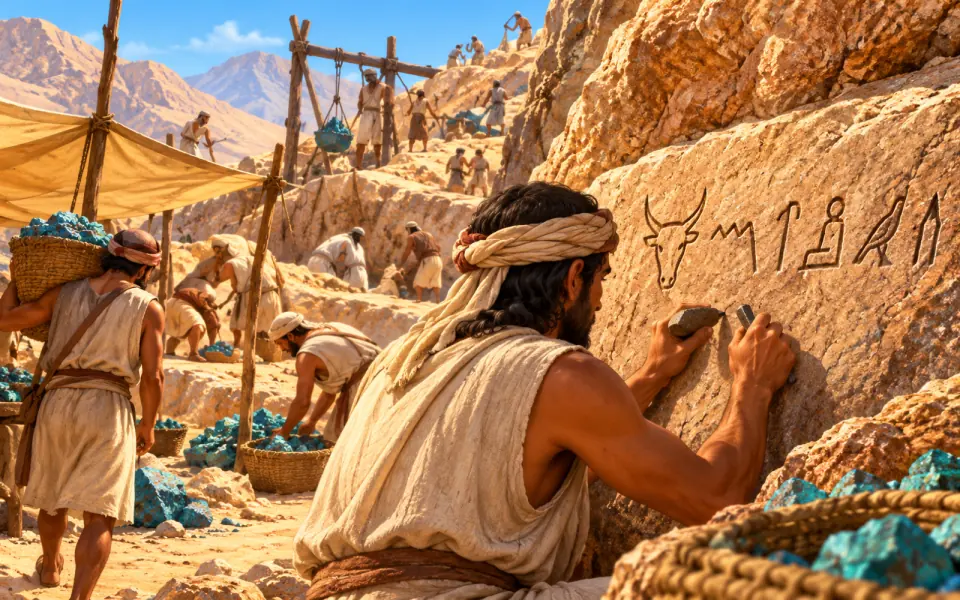 AfterThe Proto-Sinaitic alphabetabout 1800 BC
 AfterThe eruption of Theraabout 1600 BC
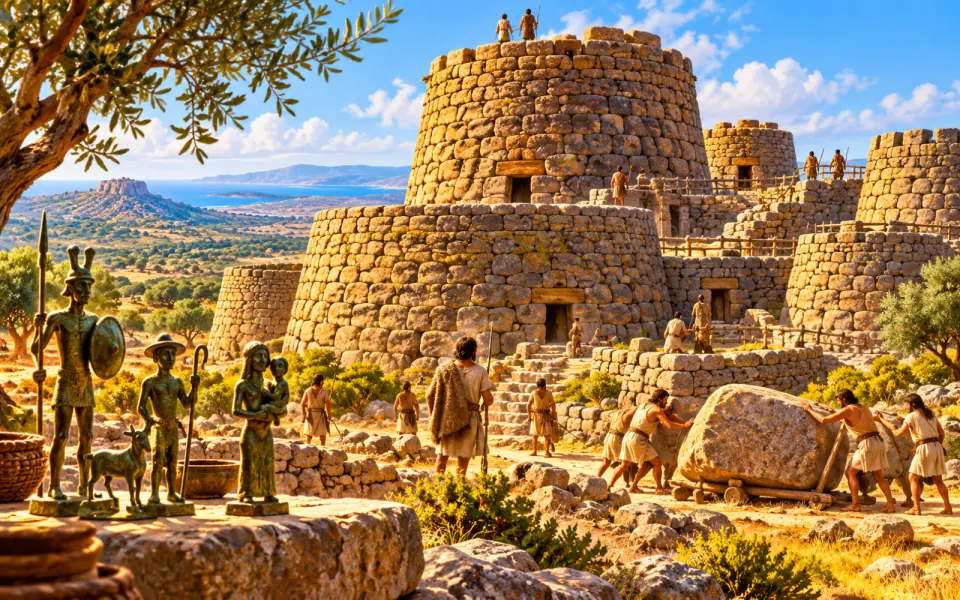 AfterThe nuraghi of Sardiniaabout 1600 BC
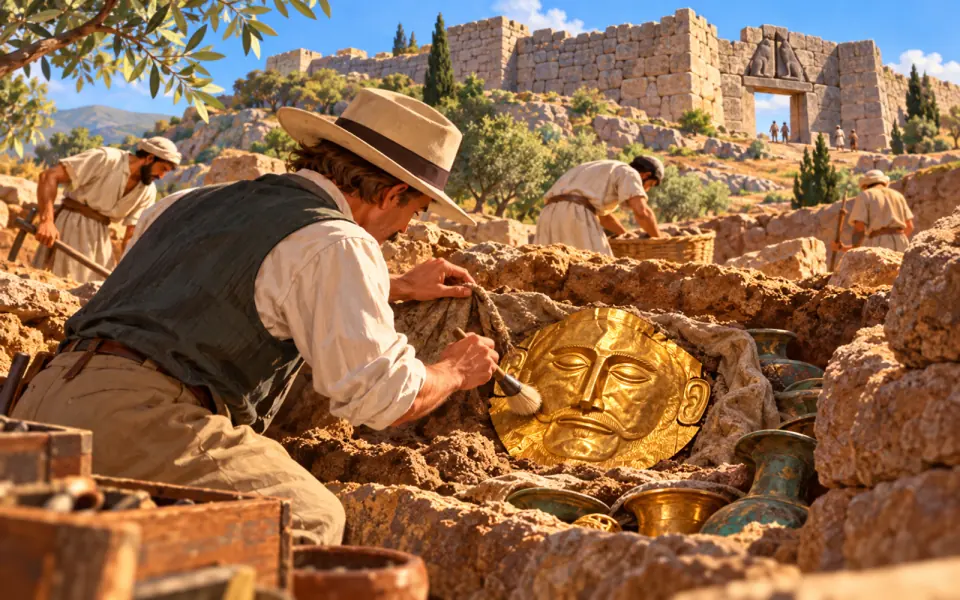 AfterThe gold mask of Mycenaeabout 1550 BC
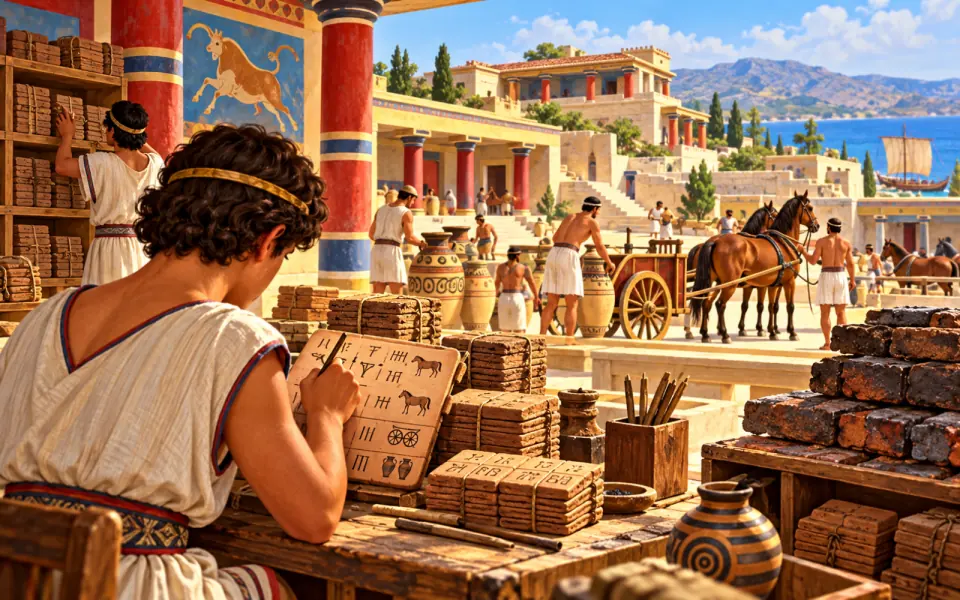 AfterLinear Babout 1450 BC
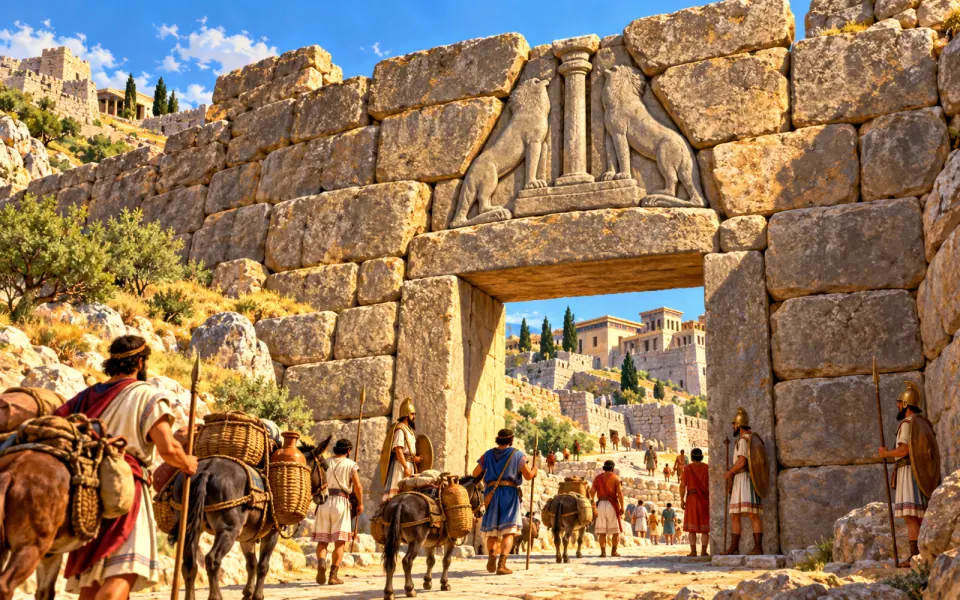 AfterThe Lion Gate at Mycenaeabout 1250 BC
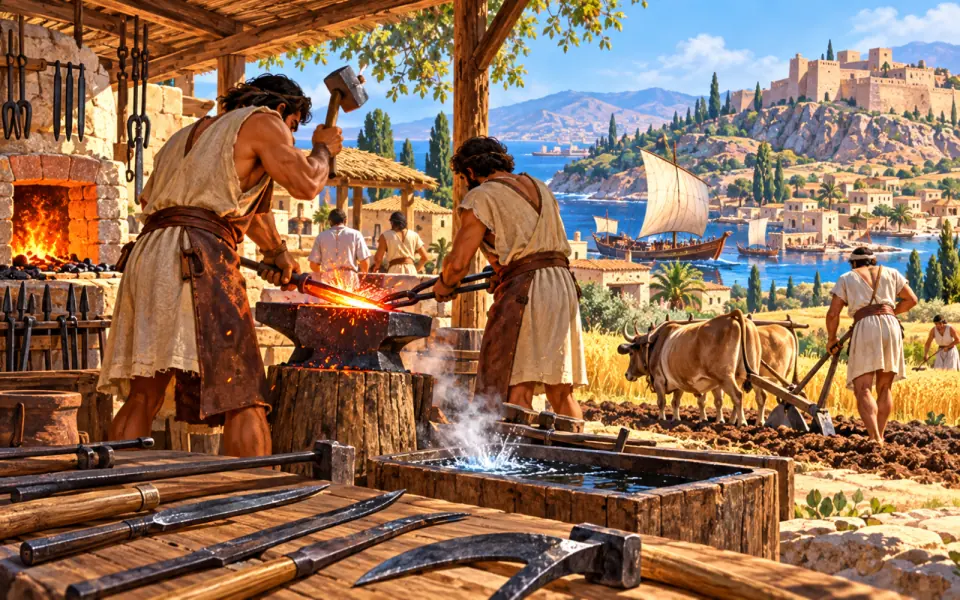 AfterThe Iron Age beginsabout 1200 BC
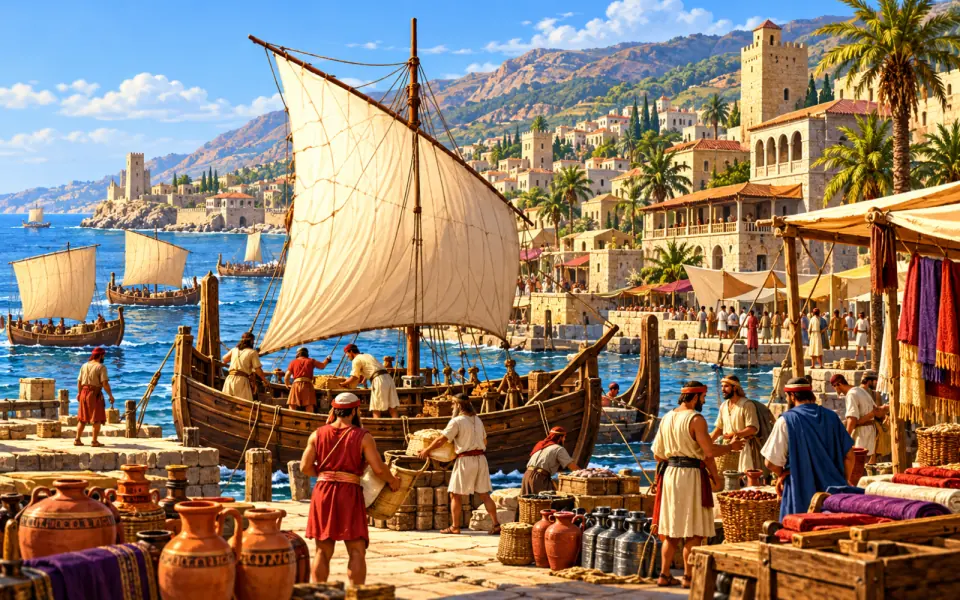 AfterThe Phoenicians spread outabout 1200 BC
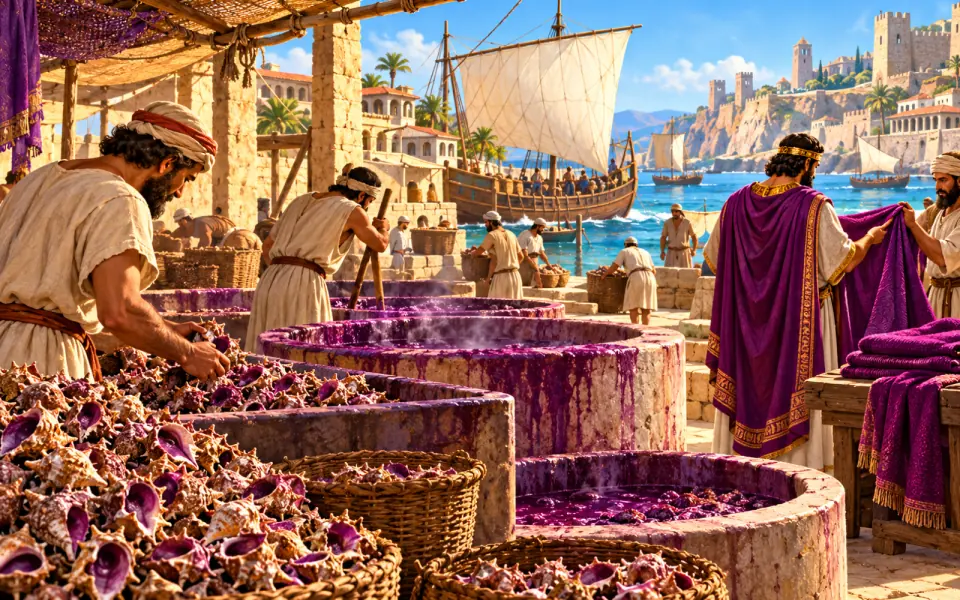 AfterPhoenician purpleabout 1100 BC
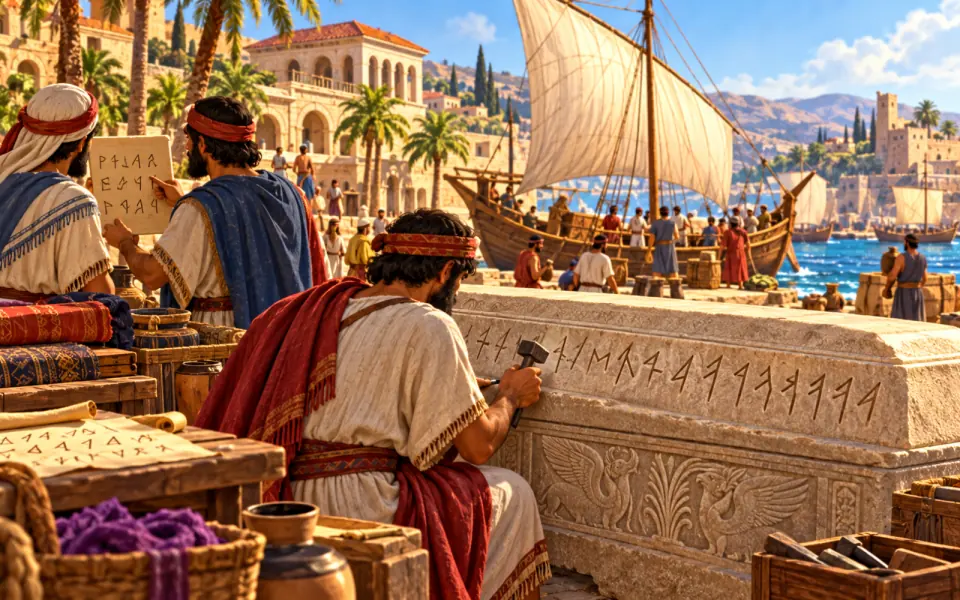 AfterThe Phoenician alphabetabout 1050 BC
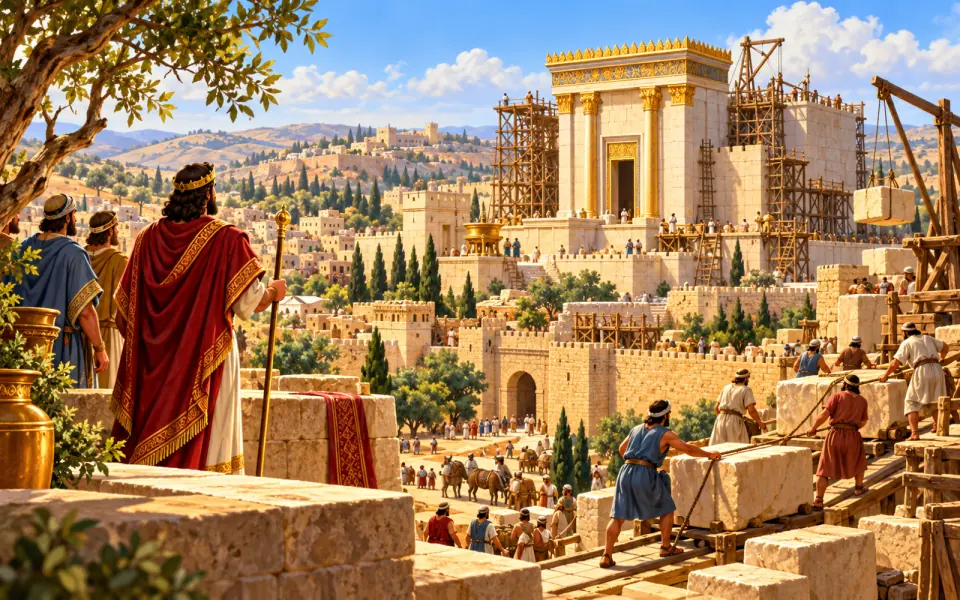 AfterThe Kingdom of Israelabout 1000 BC
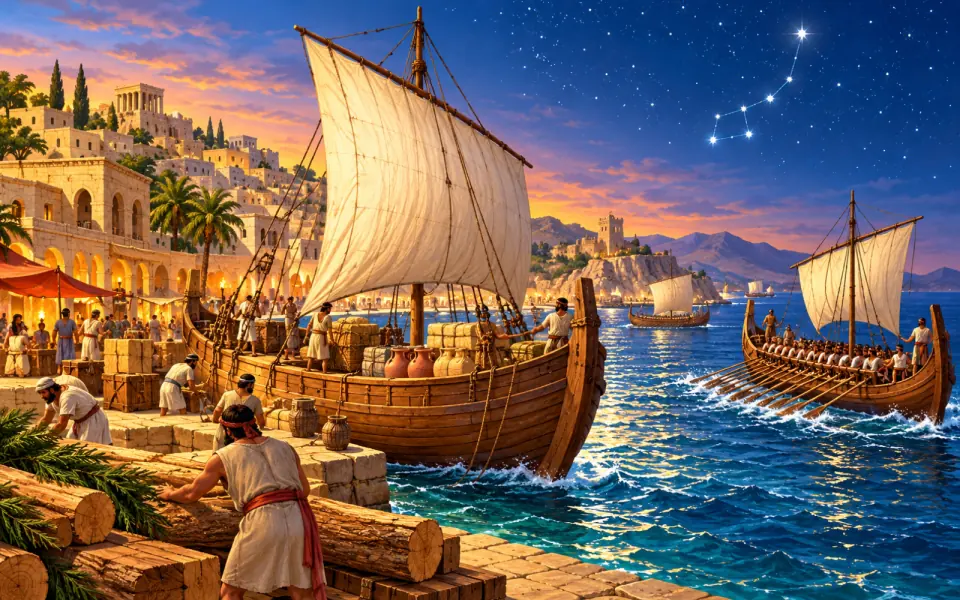 AfterPhoenician seafaringabout 1000 BC
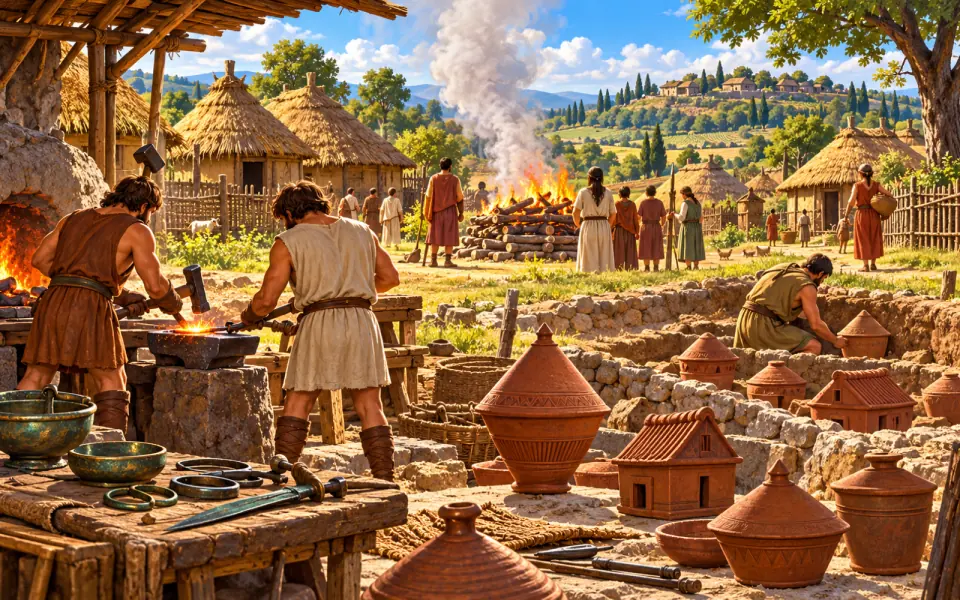 AfterThe Villanovan culture in Italyabout 900 BC
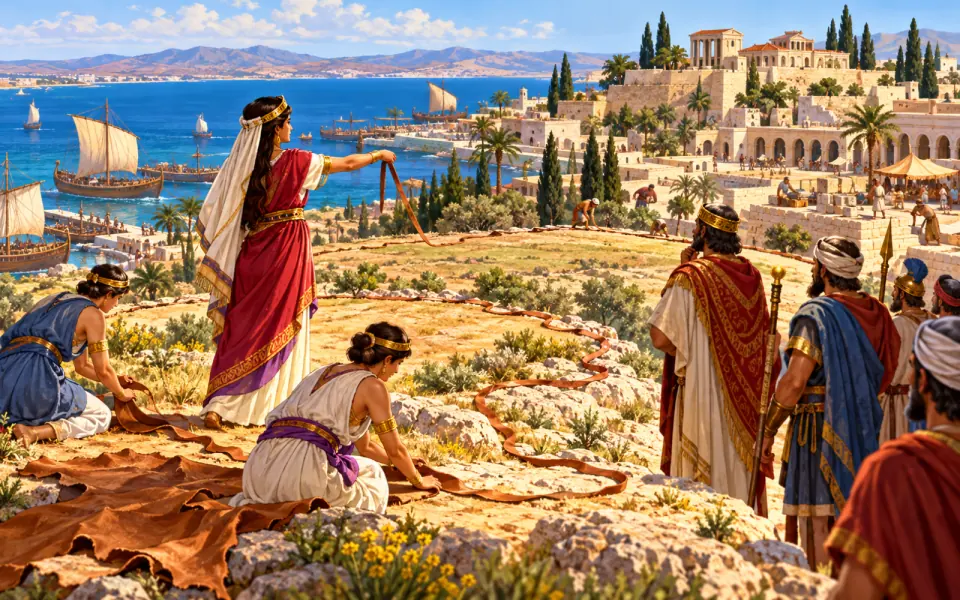 AfterTraditional founding of Carthageabout 814 BC
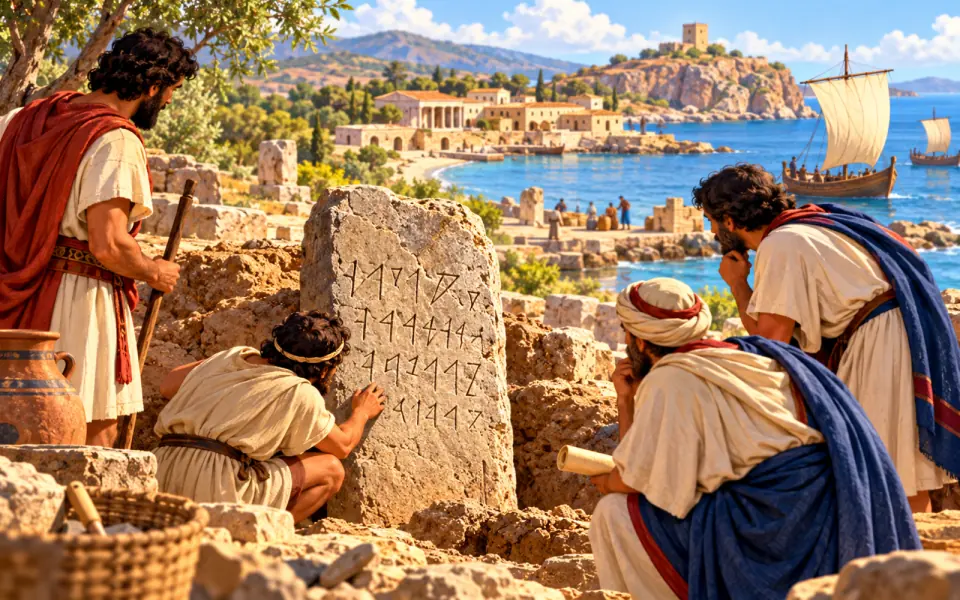 AfterThe Nora Stoneabout 800 BC
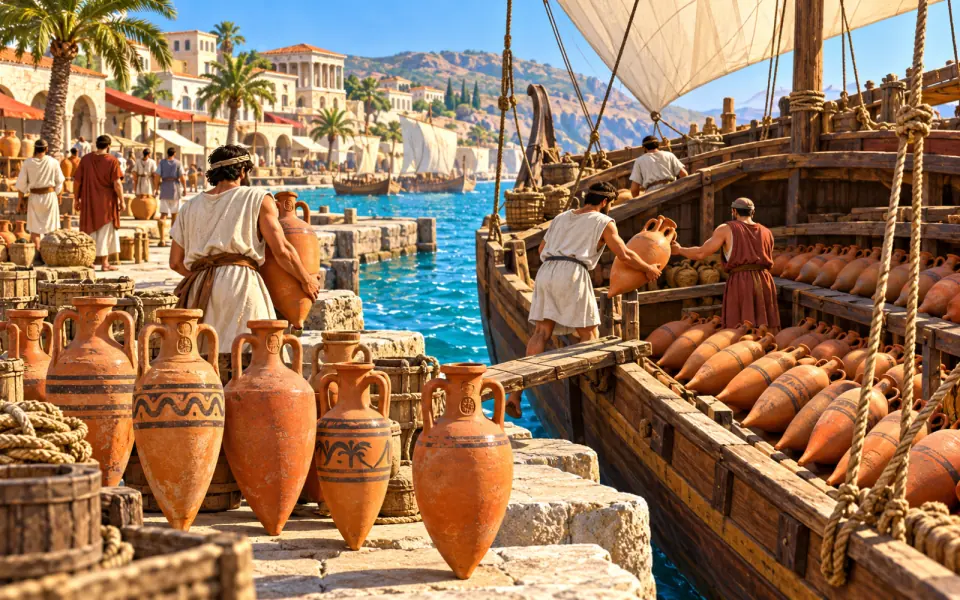 AfterAmphorae for oil and wineabout 800 BC
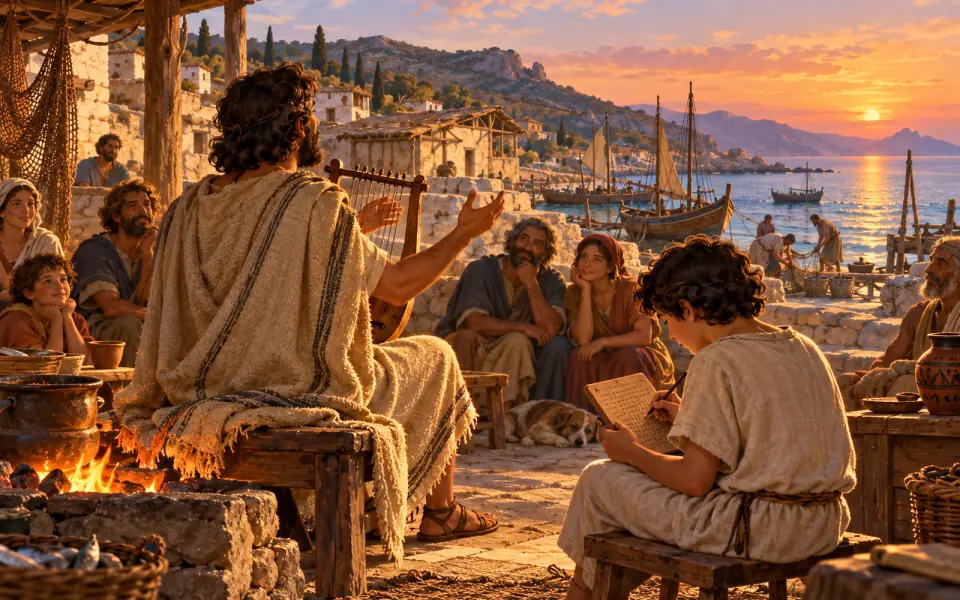 AfterHomer's poems are written downabout 750 BC
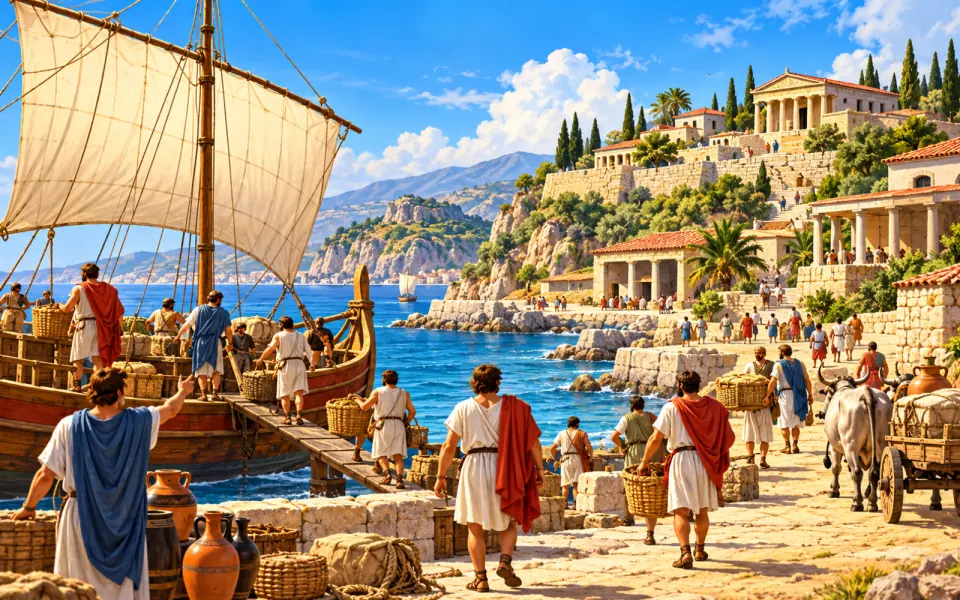 AfterGreek colonies in the Westabout 750 BC
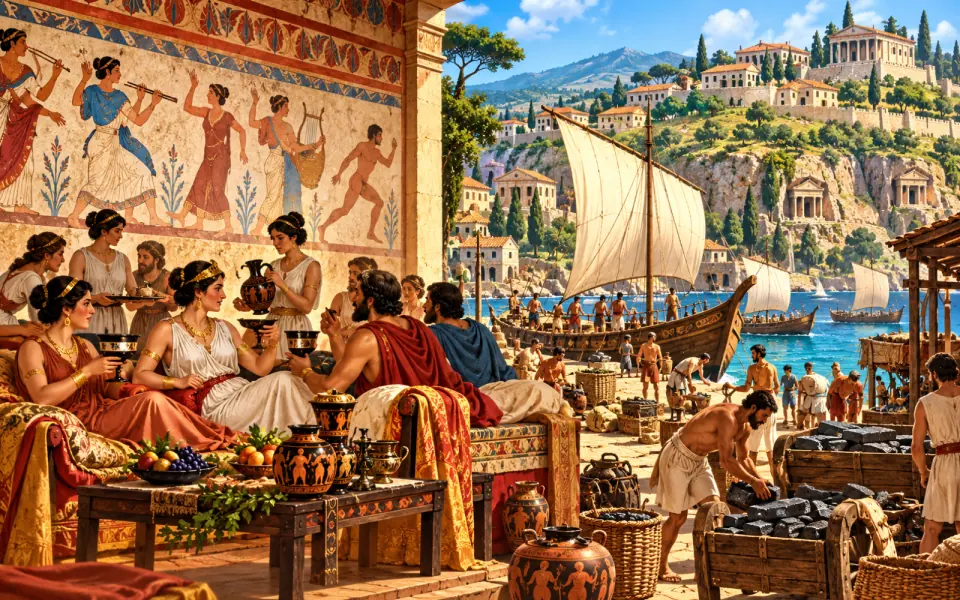 AfterThe Etruscans, lords of the Tyrrhenian Seaabout 700 BC
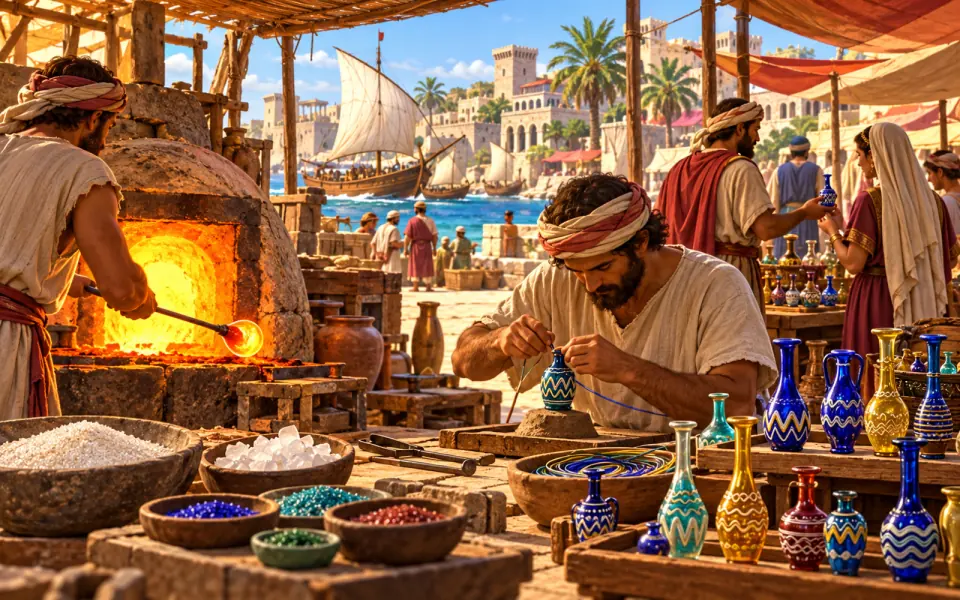 AfterPhoenician glass spreadsabout 600 BC
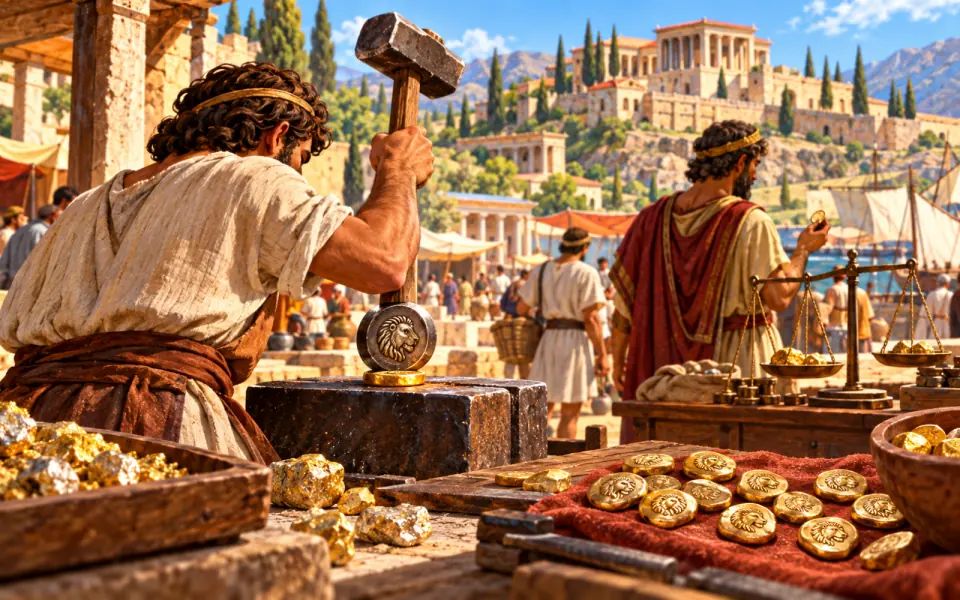 AfterCoins in the Mediterraneanabout 600 BC
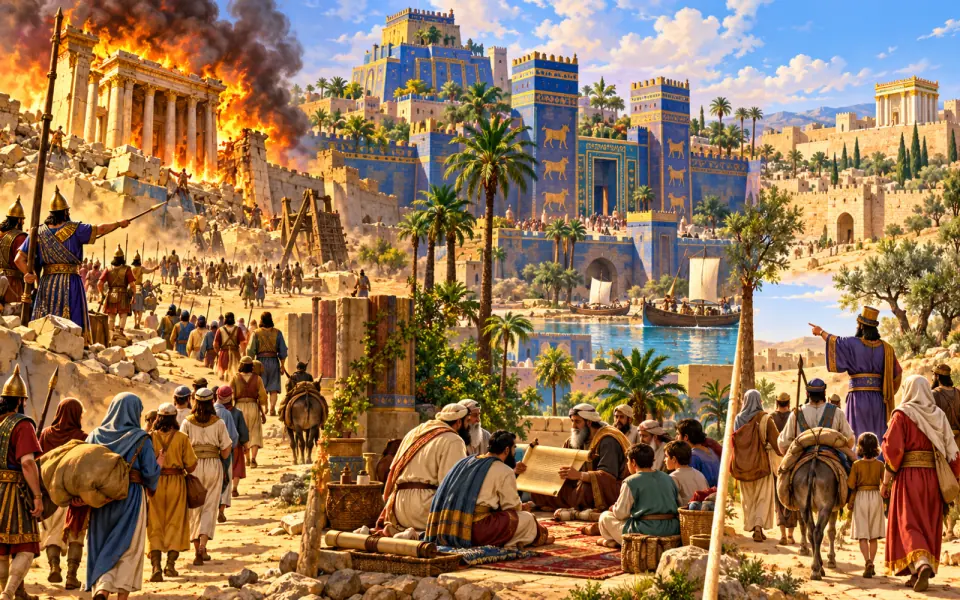 AfterThe Babylonian Exileabout 586 BC
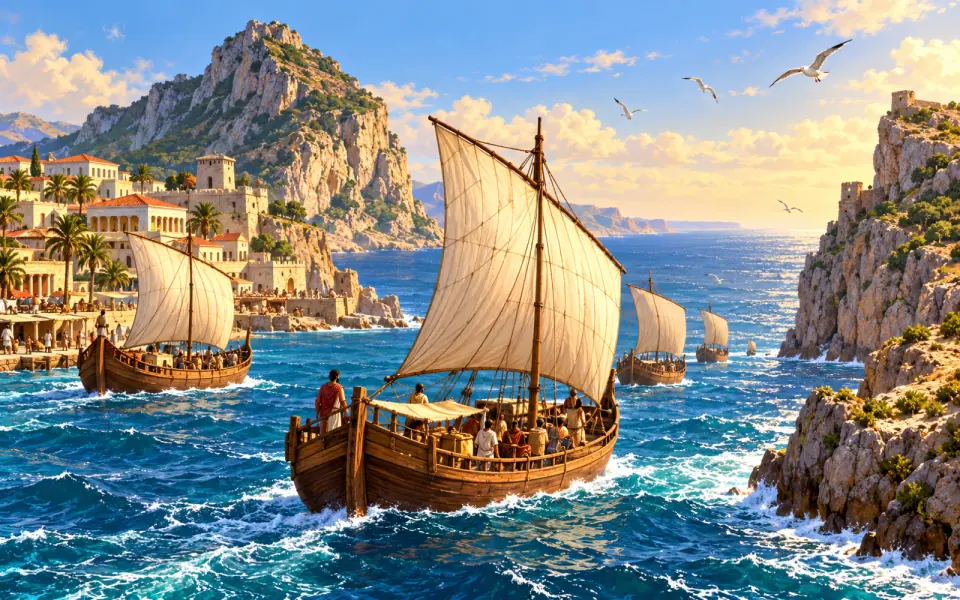 AfterSailing beyond Gibraltarabout 500 BC
Listen / Read next
- Music to read by: Cinematic JourneyEpic film-style music, no lyrics, by Ciro Simone IrmiciSpotifyYouTube Music
Meanwhile, elsewhere in the world
Other events of the era “Sea civilisations”
- The palace of Knossos
- The Proto-Sinaitic alphabet
- The eruption of Thera
- The nuraghi of Sardinia
- The gold mask of Mycenae
- Linear B
- The Lion Gate at Mycenae
- The Iron Age begins
- The Phoenicians spread out
- Phoenician purple
- The Phoenician alphabet
- The Kingdom of Israel
- Phoenician seafaring
- The Villanovan culture in Italy
- Traditional founding of Carthage
- The Nora Stone
- Amphorae for oil and wine
- Homer's poems are written down
- Greek colonies in the West
- The Etruscans, lords of the Tyrrhenian Sea
- Phoenician glass spreads
- Coins in the Mediterranean
- The Babylonian Exile
- Sailing beyond Gibraltar
