The Nora Stone
about 800 BC Nora, near Pula, Sardinia (Italy)
In short
In the 18th century, near Pula, in the south of Sardinia, a stone was found with an inscription in Phoenician letters. The text is hard to understand and scholars translate it in different ways, but it is probably a dedication to a god. It contains the word ‘Shrdn’, the oldest written evidence of the name of Sardinia. The stone is kept in Cagliari, in the National Archaeological Museum.
Why it matters It is the first time the name of Sardinia appears in writing.
Source: Treccani, entry “Nora”
Study card about 5 minutes of reading
The story
A stone used as a wall
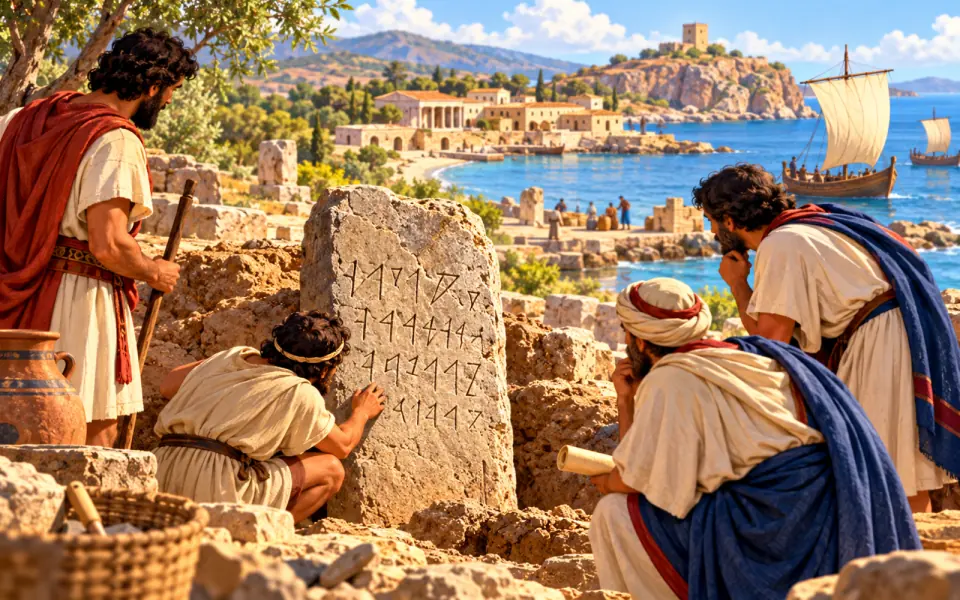
In 1773, not far from Pula, on the southern coast of Sardinia, someone noticed a large stone with signs carved on it. It was not in its original place: it had been reused as building material in a dry-stone wall, that is, a wall made of stones piled up without mortar. A professor at the University of Cagliari, Giacinto Hintz, recognised it as important. The next year, 1774, the scholar Giovanni Bernardo De Rossi published an account of it. The “Nora Stone” was born, named after the ancient city that stood nearby.
What is written on it
The writing is Phoenician, the same we saw in the cards on the alphabet. The problem is that the text is incomplete, and so scholars cannot read it with certainty. From the start the hand-made copies had mistakes: another scholar, Alberto della Marmora, judged De Rossi's drawing “extremely unfaithful”. Even today the translations differ.
The well-known American scholar Frank Moore Cross proposed a very concrete reading: the stele would commemorate a military victory by a general named Milkaton, son of Shubna, over the Sardinians at Tarshish. The last line, in his view, would name a king who would be Pygmalion of Tyre, the brother of Dido. In this case the stone would show that Tyre was sending men and ships to the western Mediterranean, and it would be evidence of the birth of the Phoenician colonies.
Another scholar, Robin Lane Fox, prefers a simpler, religious explanation: it would be a text thanking a god for having arrived safe and sound after a storm at sea. Others, such as E. Lipiński, disagree with Cross. The truth is that nobody has a final solution. We do not know.
The name of Sardinia
Why is a damaged and disputed stone so famous? Because in the text, according to many scholars, the name of Sardinia appears in writing for the first time, in the form read as “Shrdn”, because in Phoenician only the consonants were written. The Nuragic Sardinians left no writing: their civilisation, as we have seen, built thousands of nuraghi, but we have no documents written by them. Their name and the island's reach us from others. Hence the importance of the stele.
The oldest writing outside Phoenicia
According to the analysis of the shape of the letters, the stele was carved between the end of the 9th and the beginning of the 8th century BC. For this reason it is considered the oldest Phoenician inscription found outside the region of origin, the Levant. In the catalogue used by scholars of Semitic inscriptions it is listed as KAI 46. Today the stone is kept in Cagliari, in the National Archaeological Museum.
We know from other sources too, as we saw when talking about the nuraghi, that the Phoenicians were in Sardinia from the end of the 9th century BC. But written proof gives this story extra strength: it means that at that time at least someone on this island knew how to write, and wanted to leave a lasting record of their passing.
How an ancient inscription is studied
The scholars who deal with ancient inscriptions, the epigraphers, work in several ways. They look at the shape of the letters and compare it with other datable inscriptions: this is palaeographic analysis, the method that made it possible to date the stele. Then they try to work out which words are there, comparing them with other Semitic languages, such as Hebrew. Finally they propose a translation and discuss it with colleagues. In the case of Nora the work is difficult because pieces are missing and because the oldest Phoenician texts we know are few.
For young people today it is a good example of how history works: you do not always have an answer, and sometimes the beauty lies precisely in going on searching.
Why it happened
By the end of the 9th century BC the Phoenician cities had begun to found ports in the western Mediterranean, and it is likely that there was a landing place at Nora already by then. Someone felt the need to write and to leave a dedication or a memorial, perhaps for a god, perhaps for an important event.
Sardinia was an important island for the routes linking the Levant, Sicily, Africa and Spain. The Phoenicians were looking for safe landing places and contacts with the local people, and writing was an essential tool for trading and for remembering.
What changed
The stele is one of the main proofs of the Phoenician presence in Sardinia from a very early time. Important Phoenician centres later arose on the island, and the Phoenician and then Carthaginian presence changed the life of the Sardinians, mixing their customs with those that came from the sea.
The stone has also inspired debates among scholars for more than two centuries, and it shows how delicate it is to work with fragmentary texts: the same inscription can be an account of a battle or a thanksgiving to a god, depending on how it is read.
For Sardinians today the stele is a symbol: it is the first time the name of their island appears in writing, and it can be seen in the Archaeological Museum of Cagliari.
Key people and places
People
- Giacinto Hintz
- Professor at the University of Cagliari who in 1773 found the stele at Nora.
- Giovanni Bernardo De Rossi
- Scholar who in 1774 published a first description of the stone, with an imprecise drawing.
- Frank Moore Cross
- American scholar who interpreted the text as the memorial of a military victory.
- Robin Lane Fox
- Historian who proposed a religious reading: thanks for arriving safely after a storm.
Places
- Nora
- An ancient city on the southern coast of Sardinia, near Pula, where the stele was found.
- Pula
- A town in southern Sardinia, near the archaeological site of Nora.
- Cagliari
- The capital of Sardinia: the stele is kept in its National Archaeological Museum.
Good to know
- The stele was found in 1773, reused as a stone in a dry-stone wall.
- De Rossi's drawing was judged “extremely unfaithful” by another scholar.
- According to Cross, the stele commemorates a battle; for Lane Fox, a thanksgiving after a storm.
- In Phoenician only the consonants were written: “Shrdn” is the name of Sardinia written that way.
- In the catalogue of scholars of Semitic inscriptions the stone carries the code KAI 46.
Find out more
- Wikipedia, “Nora, Italy” en.wikipedia.org
- Wikipedia, “Sardinia” en.wikipedia.org
- Wikipedia, “Frank Moore Cross” en.wikipedia.org
- Wikipedia, “Nora Stone” en.wikipedia.org
Related events
- The nuraghi of Sardiniaabout 1600 BC · Sea civilisationsThe nuraghi are the other great ancient witness of Sardinia.
- The Phoenician alphabetabout 1050 BC · Sea civilisationsThe stele is written in the Phoenician alphabet.
- The Phoenicians spread outabout 1200 BC · Sea civilisationsThe Phoenicians founded colonies in Sardinia.
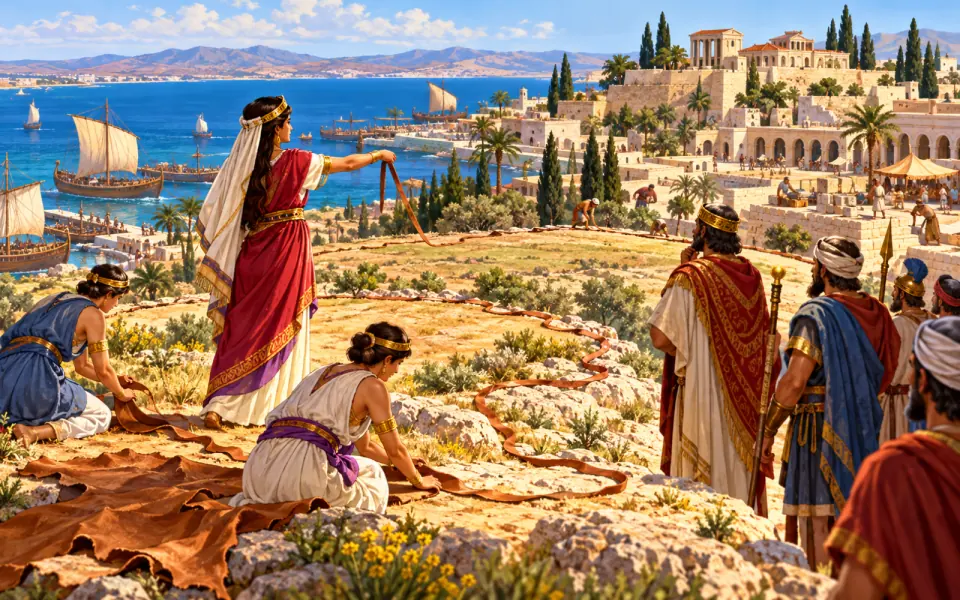
- Traditional founding of Carthageabout 814 BC · Sea civilisationsAccording to one reading, the king named would be Pygmalion of Tyre, brother of Dido.
- The Proto-Sinaitic alphabetabout 1800 BC · Sea civilisationsThe alphabet of Nora descends from the first scripts of Sinai.
Before and after, in the era “Sea civilisations”
Event 17 of 25
 BeforeMinoan civilisation on Creteabout 2000 BC
 BeforeThe palace of Knossosabout 1900 BC
 BeforeThe Proto-Sinaitic alphabetabout 1800 BC
 BeforeThe eruption of Theraabout 1600 BC
 BeforeThe nuraghi of Sardiniaabout 1600 BC
 BeforeThe gold mask of Mycenaeabout 1550 BC
 BeforeLinear Babout 1450 BC
 BeforeThe Lion Gate at Mycenaeabout 1250 BC
 BeforeThe Iron Age beginsabout 1200 BC
 BeforeThe Phoenicians spread outabout 1200 BC
 BeforePhoenician purpleabout 1100 BC
 BeforeThe Phoenician alphabetabout 1050 BC
 BeforeThe Kingdom of Israelabout 1000 BC
 BeforePhoenician seafaringabout 1000 BC
 BeforeThe Villanovan culture in Italyabout 900 BC
 BeforeTraditional founding of Carthageabout 814 BC
- You are hereThe Nora Stoneabout 800 BC
 AfterAmphorae for oil and wineabout 800 BC
 AfterHomer's poems are written downabout 750 BC
 AfterGreek colonies in the Westabout 750 BC
 AfterThe Etruscans, lords of the Tyrrhenian Seaabout 700 BC
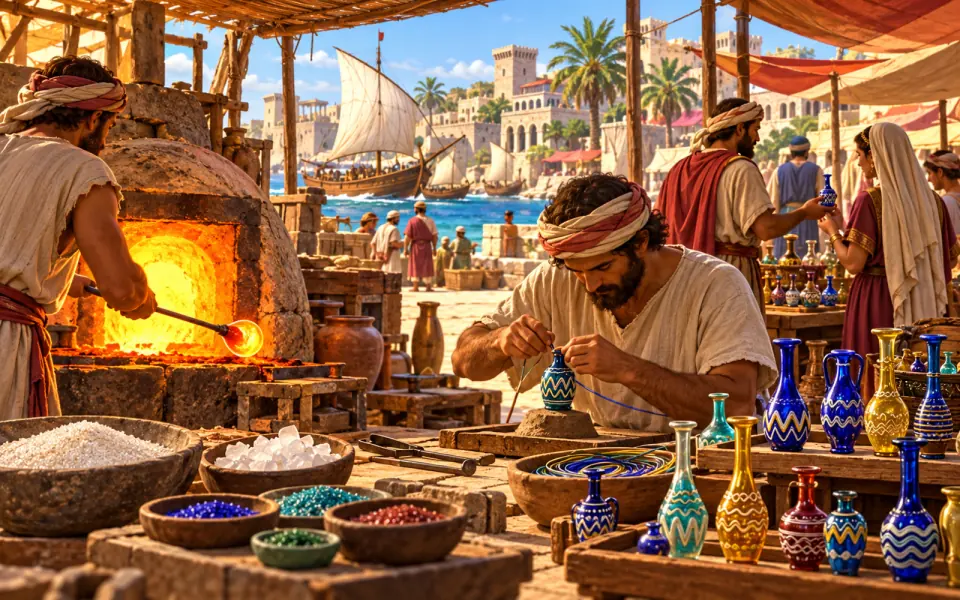 AfterPhoenician glass spreadsabout 600 BC
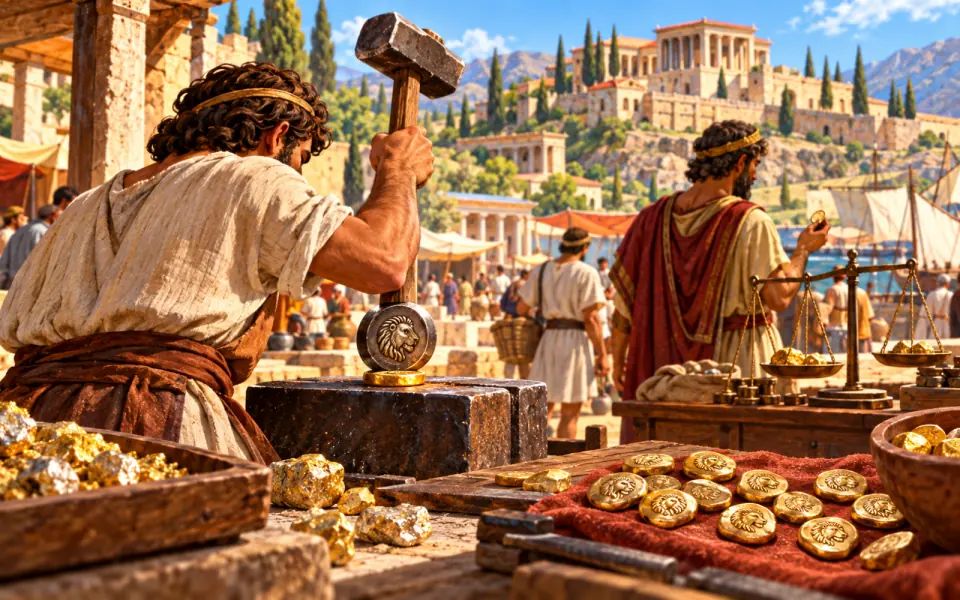 AfterCoins in the Mediterraneanabout 600 BC
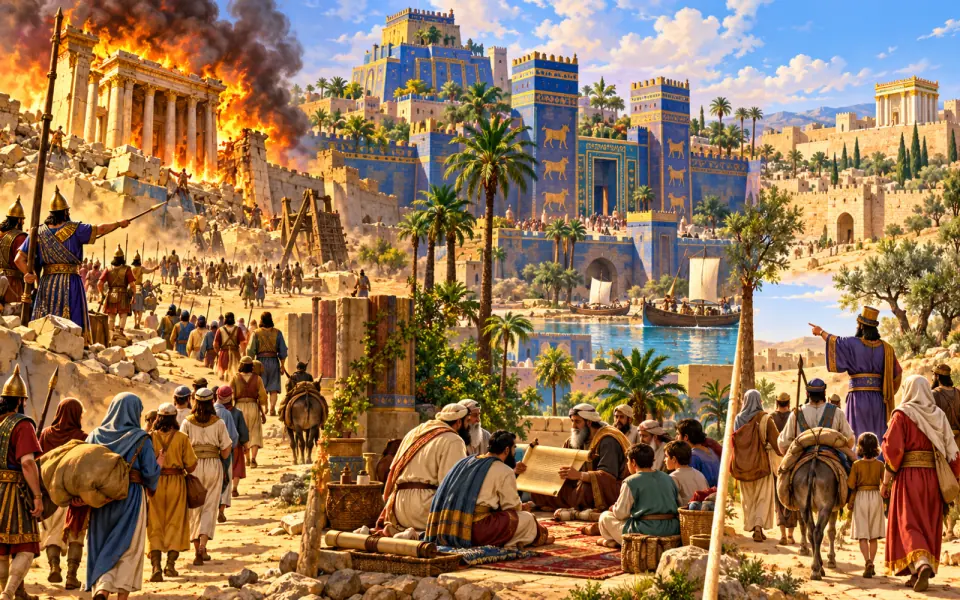 AfterThe Babylonian Exileabout 586 BC
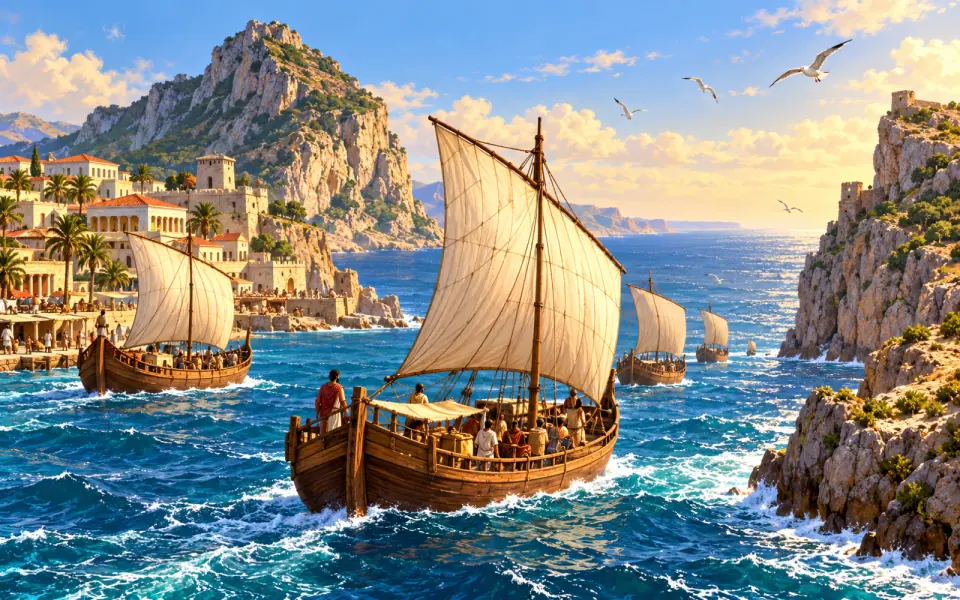 AfterSailing beyond Gibraltarabout 500 BC
Listen / Read next
- Music to read by: Cinematic JourneyEpic film-style music, no lyrics, by Ciro Simone IrmiciSpotifyYouTube Music
Meanwhile, elsewhere in the world
Other events of the era “Sea civilisations”
- Minoan civilisation on Crete
- The palace of Knossos
- The Proto-Sinaitic alphabet
- The eruption of Thera
- The nuraghi of Sardinia
- The gold mask of Mycenae
- Linear B
- The Lion Gate at Mycenae
- The Iron Age begins
- The Phoenicians spread out
- Phoenician purple
- The Phoenician alphabet
- The Kingdom of Israel
- Phoenician seafaring
- The Villanovan culture in Italy
- Traditional founding of Carthage
- Amphorae for oil and wine
- Homer's poems are written down
- Greek colonies in the West
- The Etruscans, lords of the Tyrrhenian Sea
- Phoenician glass spreads
- Coins in the Mediterranean
- The Babylonian Exile
- Sailing beyond Gibraltar
