The Kingdom of Israel
about 1000 BC Jerusalem
In short
According to the Bible, around 1000 BC King David united the tribes of Israel and made Jerusalem his capital. His son Solomon, famous for his wisdom, built the First Temple there. After him, again according to the Bible, the kingdom split in two: Israel in the north and Judah in the south. Archaeologists debate how big that kingdom was, but an inscription found at Tel Dan mentions the ‘House of David’.
Why it matters These events are at the heart of the history and faith of the Jewish people, and they matter to Christians and Muslims too.
Source: Encyclopaedia Britannica, “David”
Study card about 5 minutes of reading
The story
A story told in two ways
To understand the kingdom of David and Solomon you have to keep two things apart: the account in the Bible and what archaeologists have managed to check. The Hebrew Bible is a sacred book, for Jews and, together with other books, for Christians; and many scholars also read it as a historical source. But what it tells is not always confirmed by the digs. This is why in this card we will always say “according to the Bible” when we report the account, and we will say clearly when scholars disagree.
According to the Bible: from Saul to David
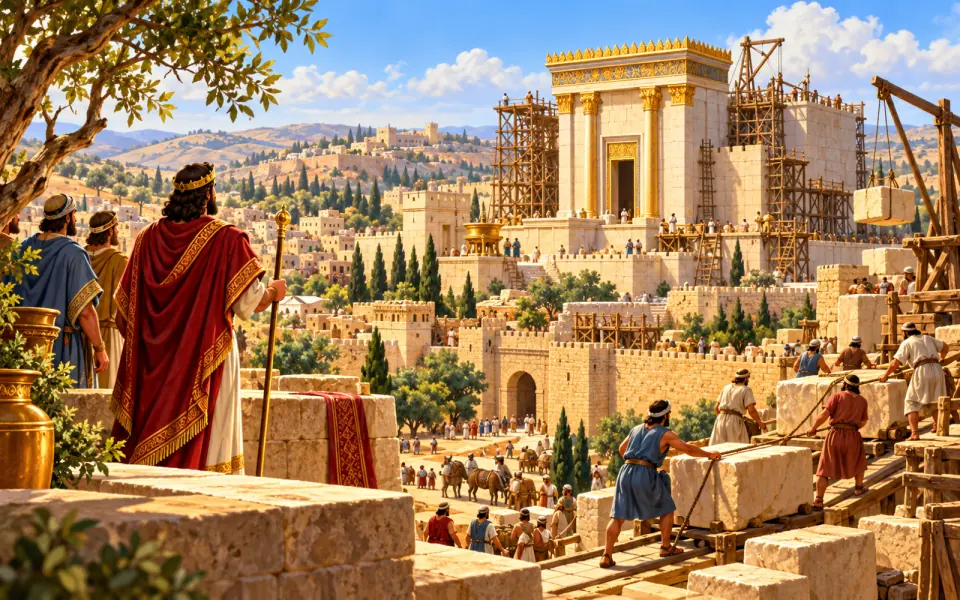
According to the biblical account, the twelve tribes of Israel at first lived without a king, led by chiefs called judges. Then they asked for a ruler like the other peoples, and the first was Saul. After him, and after a period of conflict inside Saul's family, David became king. The account describes him as a shepherd, then a warrior, musician and poet. David united the tribes in a single kingdom and chose Jerusalem as its capital. This is why the city is still called the “City of David” today.
Solomon and the Temple
David's son, Solomon, is remembered in the Bible for his wisdom and his wealth. His main work was the building of the Temple in Jerusalem, the holiest place for the Jewish people, which the biblical account says was built with the help of the king of Tyre, in Phoenicia. The cedar wood, for example, came from Lebanon. The king of Tyre in those years, according to scholars, was Hiram I. The dates of these kings (about 1047 to 930 BC for the whole kingdom) are worked out from the Bible and from the calculations of those who study it, not from outside documents.
After Solomon: two kingdoms
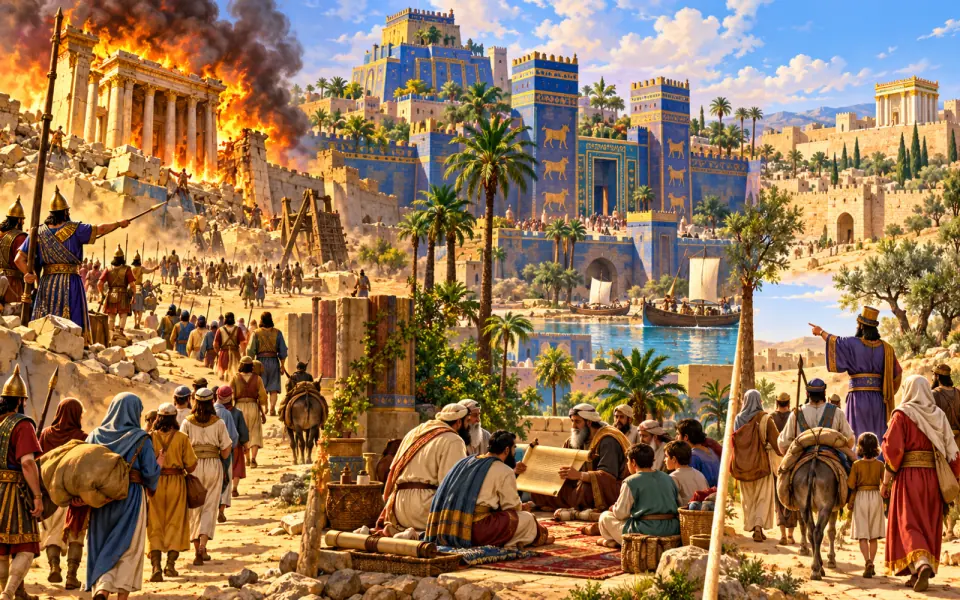
When Solomon died, says the Bible, his son Rehoboam did not listen to the complaints of the northern tribes, who felt burdened by labour and taxes. The kingdom split. In the north arose the kingdom of Israel, in the south that of Judah, with Jerusalem as its capital. The two kingdoms sometimes cooperated and sometimes made war on each other. Then came greater powers: in 722 BC the Assyrians conquered the kingdom of Israel, and in 586 BC the Babylonians conquered that of Judah. We discuss this in the card on the Babylonian Exile.
What archaeologists say
Here comes the most debated part. Archaeologists have not found, in the times of David and Solomon, clear proof of a great united kingdom. Israel Finkelstein, an Israeli scholar, proposes a “low chronology”: many monumental buildings that others date to the 10th century BC would instead belong to the 9th, and so the kingdom of David would have been smaller than the Bible tells it. Amihai Mazar, another archaeologist, defends instead the older dating. Other researchers cite in support of the biblical account the digs of Eilat Mazar in Jerusalem and those of Yosef Garfinkel at Khirbet Qeiyafa. These datings and identifications too are debated. Today there is no agreement among scholars.
The Tel Dan stele
One discovery has a special place. In 1993 and 1994, at Tel Dan, in the north of Israel, the archaeologist Avraham Biran and his team found fragments of a basalt stele, a stone with an inscription in ancient Aramaic. The stele had been reused as building material in a wall, and is dated to the 9th century BC. Most scholars think it was set up by Hazael, king of Aram-Damascus, after a victory. The text speaks of a king of Israel and a king of the “house of David”. It reads “bytdwd”, with no space between the two words: almost everyone translates “House of David”, but some propose other readings. It is one of the oldest mentions of David outside the Bible. However, the stele does not prove that in the 10th century there was a great kingdom: it only says that, a century later, Judah was ruled by a dynasty that traced itself back to David. Today the stele is in the Israel Museum.
A story that goes on
Of David and Solomon, then, we are left with an account of enormous importance and with archaeological evidence that sometimes supports it and sometimes does not. This is not a problem: it means that research is still open. For the Jewish people, and for Christians and Muslims, those kings remain fundamental figures, regardless of how much archaeologists manage to confirm.
Why it happened
According to the biblical account, the people of Israel asked for a king because they felt threatened by their neighbours, in particular the Philistines, and wanted a leader who would guide them in war and keep them united. Before that, the tribes had lived independently.
Historians add that in the 12th and 11th centuries BC, after the crisis that had overwhelmed the great empires of the Near East, there was room in that region for new small kingdoms. Egypt, Assyria and Babylon were weak or far away, and this allowed small local states, such as Israel and Judah, to organise themselves and grow.
What changed
The stories of David and Solomon are at the centre of the history and faith of the Jewish people: Jerusalem, the Temple and the dynasty of David remained for centuries the symbols of an identity, even after the kingdom disappeared. The Temple was destroyed by the Babylonians and rebuilt after the exile, but the hope of a return stayed alive.
David has an important role for Christians and Muslims too. The Psalms, songs that tradition attributes to him, are still read and sung today.
The discussion among archaeologists has also had consequences: it has taught people to distinguish carefully between a religious source and a historical document, and to use digs to check accounts. Jerusalem continues to be excavated, and every discovery reopens the debate.
Key people and places
People
- Saul
- First king of Israel according to the Bible, before David.
- David
- According to the Bible, the king who united the tribes and made Jerusalem the capital; tradition attributes the Psalms to him.
- Solomon
- Son of David, remembered by the Bible for his wisdom and for building the Temple in Jerusalem.
- Avraham Biran
- Israeli archaeologist who directed the excavations at Tel Dan, where the stele with the “house of David” was found.
- Israel Finkelstein
- Israeli archaeologist who proposes lowering the dates of the monuments, reducing the extent of David's kingdom.
Places
- Jerusalem
- The city chosen as capital by David, according to the Bible; the site of Solomon's Temple.
- Tel Dan
- An archaeological site in the north of Israel where the stele with the inscription “house of David” was found.
- Khirbet Qeiyafa
- A fortified site in Israel dug by Yosef Garfinkel, at the centre of the debate on David's kingdom.
Good to know
- The Tel Dan stele was found reused in a wall, in fragments discovered between 1993 and 1994.
- The phrase “house of David” on the stele is written with no space between the two words.
- The dates of the whole united kingdom, with Saul, David and Solomon (about 1047–930 BC), come from the Bible, not from outside documents.
- According to the Bible, the cedar wood for the Temple was supplied by the king of Tyre.
- After Solomon's death, according to the account, the kingdom split in two: Israel in the north and Judah in the south.
Find out more
- Wikipedia, “Solomon” en.wikipedia.org
- Wikipedia, “David” en.wikipedia.org
- World History Encyclopedia, “Solomon” worldhistory.org
- Wikipedia, “Tel Dan Stele” en.wikipedia.org
Related events
- The Babylonian Exileabout 586 BC · Sea civilisationsThe kingdom of Judah ended with the Babylonian conquest and the exile.
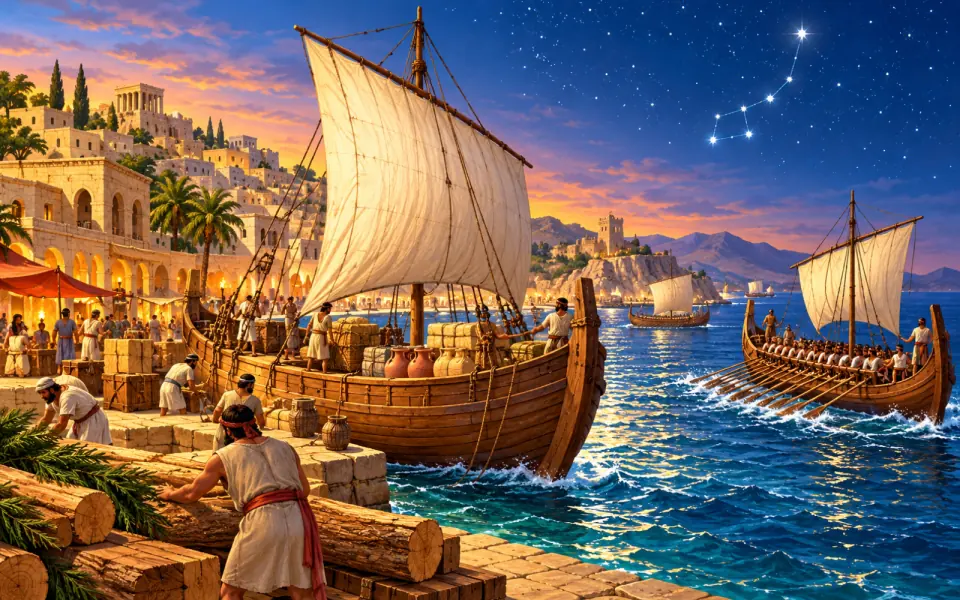
- The Phoenicians spread outabout 1200 BC · Sea civilisationsThe king of Tyre helped Solomon to build the Temple.
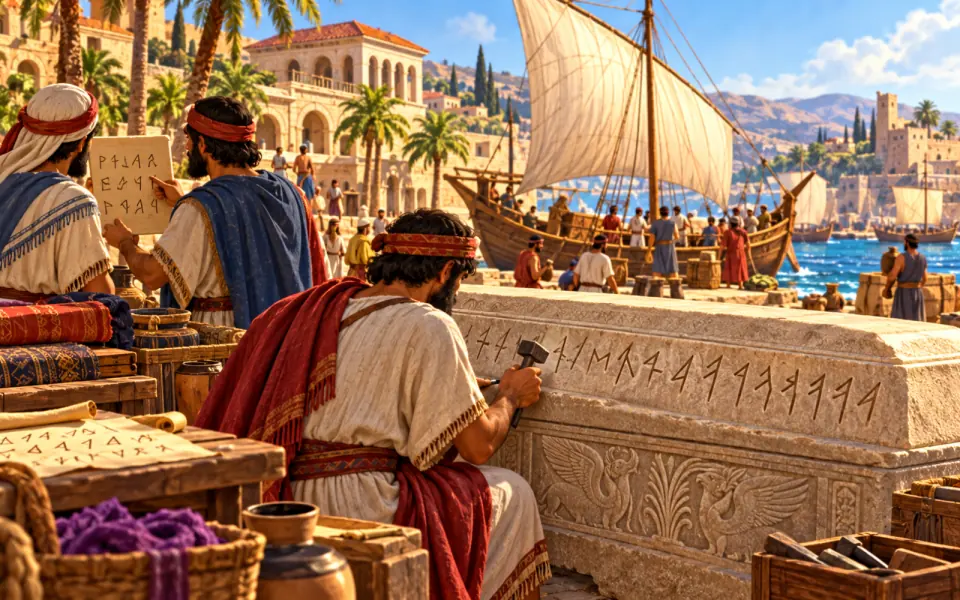
- The Phoenician alphabetabout 1050 BC · Sea civilisationsThe ancient Hebrews used an alphabet derived from the Phoenician one.
- The Bronze Age collapseabout 1200 BC · River civilisationsThe collapse of the great empires left room for new small kingdoms.
Before and after, in the era “Sea civilisations”
Event 13 of 25
 BeforeMinoan civilisation on Creteabout 2000 BC
 BeforeThe palace of Knossosabout 1900 BC
 BeforeThe Proto-Sinaitic alphabetabout 1800 BC
 BeforeThe eruption of Theraabout 1600 BC
 BeforeThe nuraghi of Sardiniaabout 1600 BC
 BeforeThe gold mask of Mycenaeabout 1550 BC
 BeforeLinear Babout 1450 BC
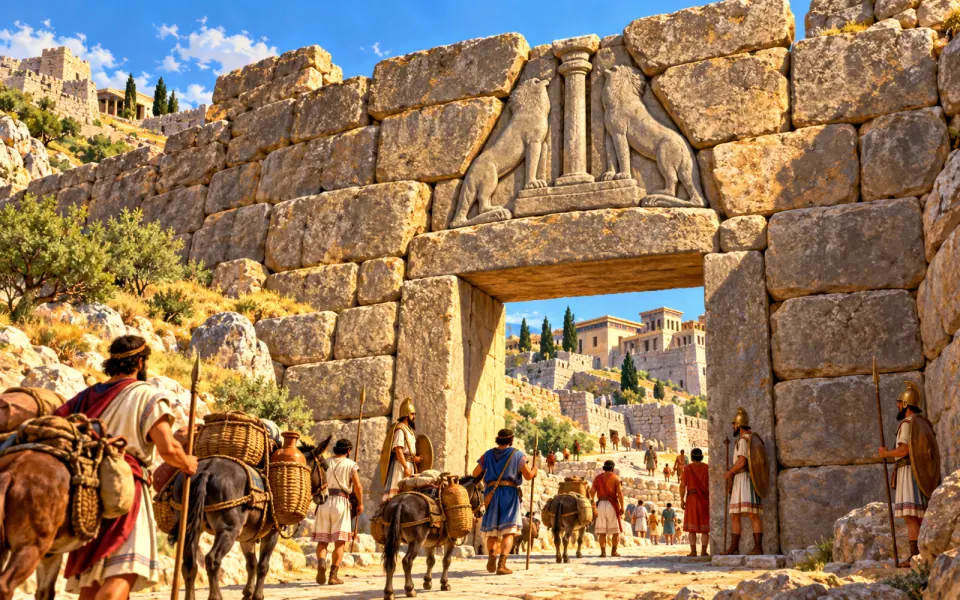 BeforeThe Lion Gate at Mycenaeabout 1250 BC
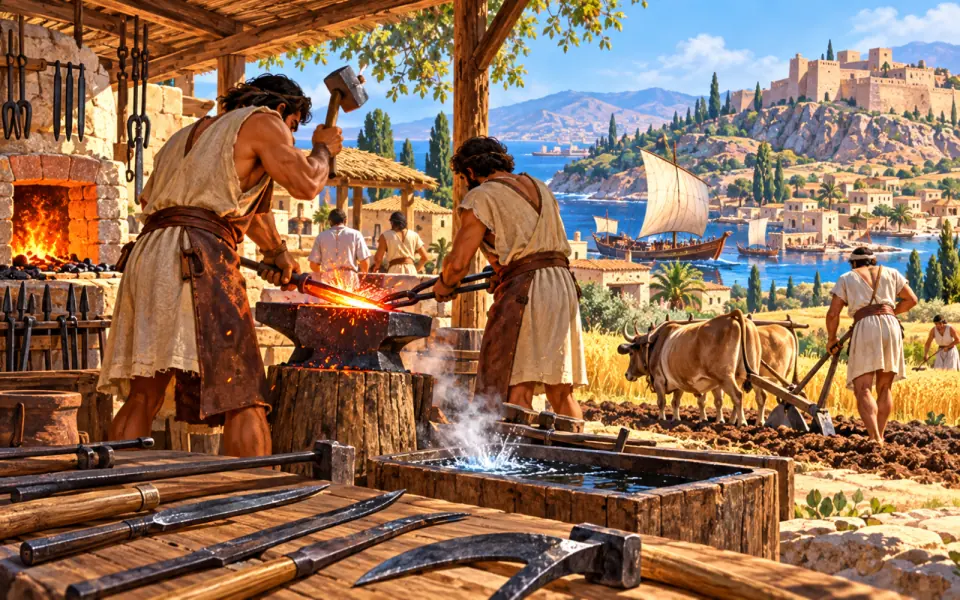 BeforeThe Iron Age beginsabout 1200 BC
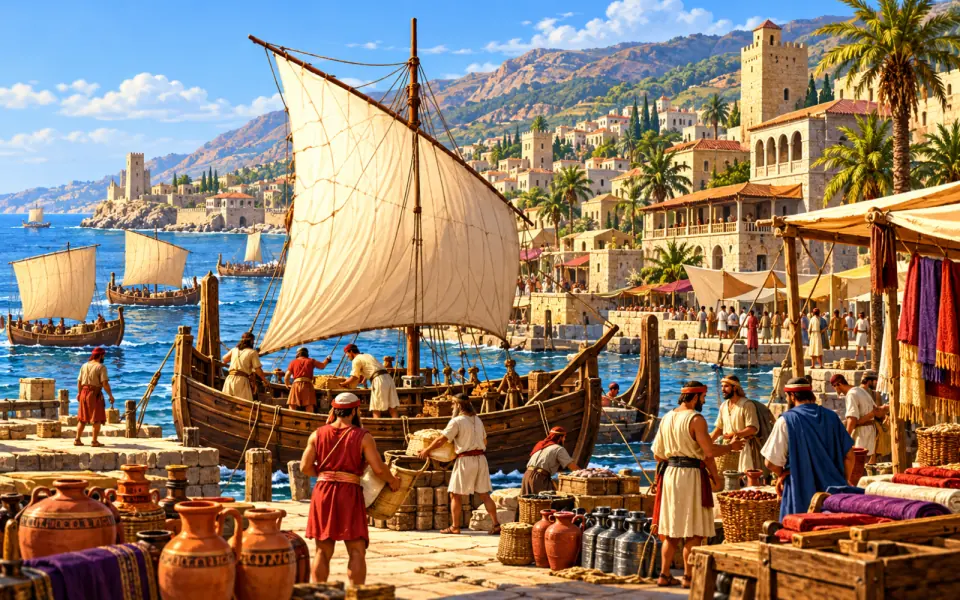 BeforeThe Phoenicians spread outabout 1200 BC
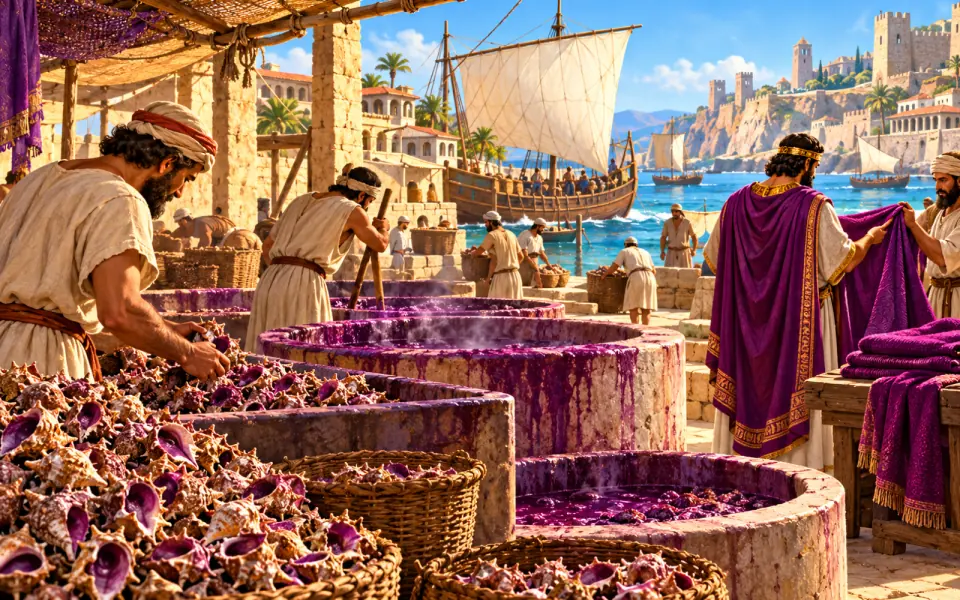 BeforePhoenician purpleabout 1100 BC
 BeforeThe Phoenician alphabetabout 1050 BC
- You are hereThe Kingdom of Israelabout 1000 BC
 AfterPhoenician seafaringabout 1000 BC
 AfterThe Villanovan culture in Italyabout 900 BC
 AfterTraditional founding of Carthageabout 814 BC
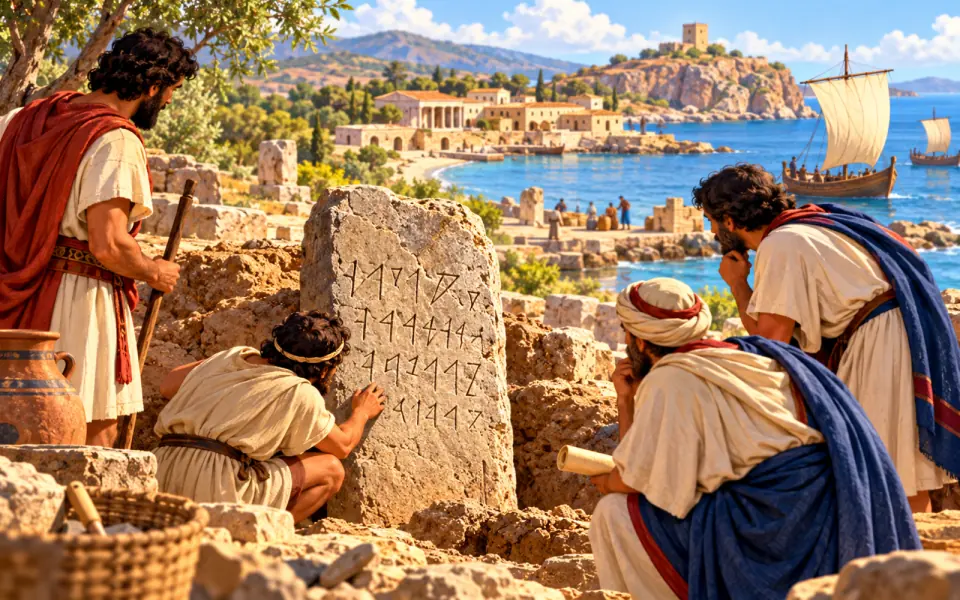 AfterThe Nora Stoneabout 800 BC
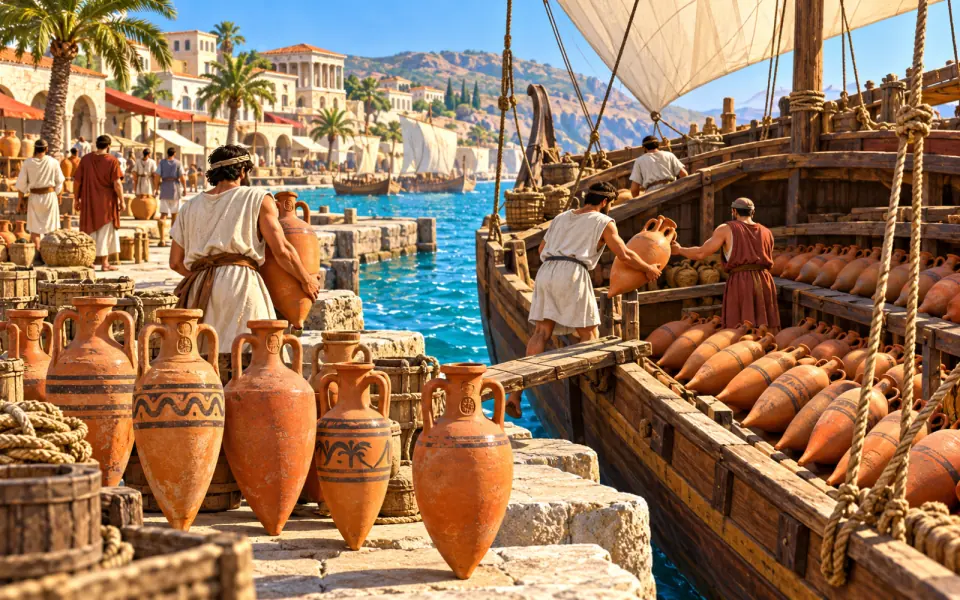 AfterAmphorae for oil and wineabout 800 BC
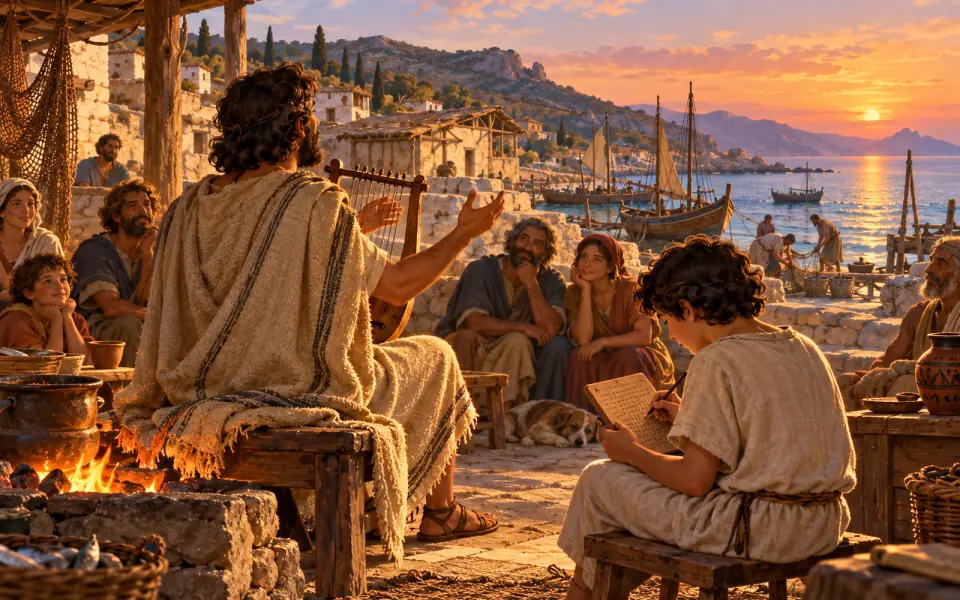 AfterHomer's poems are written downabout 750 BC
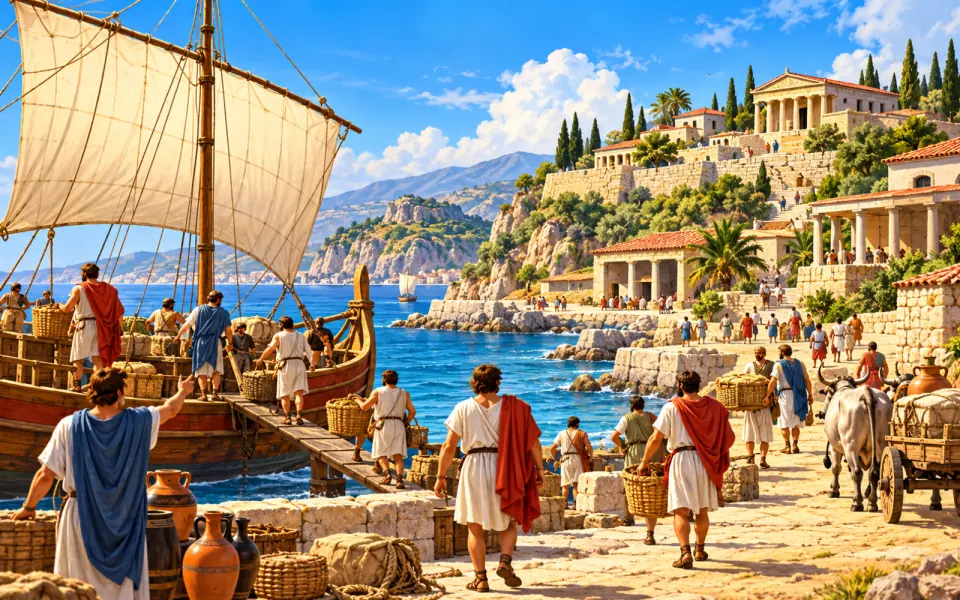 AfterGreek colonies in the Westabout 750 BC
 AfterThe Etruscans, lords of the Tyrrhenian Seaabout 700 BC
 AfterPhoenician glass spreadsabout 600 BC
 AfterCoins in the Mediterraneanabout 600 BC
 AfterThe Babylonian Exileabout 586 BC
 AfterSailing beyond Gibraltarabout 500 BC
Listen / Read next
- Music to read by: Cinematic JourneyEpic film-style music, no lyrics, by Ciro Simone IrmiciSpotifyYouTube Music
Meanwhile, elsewhere in the world
Other events of the era “Sea civilisations”
- Minoan civilisation on Crete
- The palace of Knossos
- The Proto-Sinaitic alphabet
- The eruption of Thera
- The nuraghi of Sardinia
- The gold mask of Mycenae
- Linear B
- The Lion Gate at Mycenae
- The Iron Age begins
- The Phoenicians spread out
- Phoenician purple
- The Phoenician alphabet
- Phoenician seafaring
- The Villanovan culture in Italy
- Traditional founding of Carthage
- The Nora Stone
- Amphorae for oil and wine
- Homer's poems are written down
- Greek colonies in the West
- The Etruscans, lords of the Tyrrhenian Sea
- Phoenician glass spreads
- Coins in the Mediterranean
- The Babylonian Exile
- Sailing beyond Gibraltar
