The first dinosaurs
about 230 million years ago Pangaea (fossils in Argentina and Brazil)
In short
The first dinosaurs appeared in the Triassic and were just one of many groups of land reptiles. The oldest definite fossils come from Argentina and Brazil. Many were small and walked on two legs. After further extinctions they multiplied into plant-eaters and hunters of very different sizes.
Why it matters Their success would shape life on land for more than 160 million years.
Source: Natural History Museum (London), “Where did dinosaurs come from?”
Study card about 5 minutes of reading
The story
A word invented in 1842
The word “dinosaur” is less than two hundred years old. It was invented in 1842 by an English anatomist, Richard Owen, who was studying some big fossil bones found in England. He realised that they belonged to a group of reptiles not yet recognised and called it Dinosauria, from the Greek for “terrible lizards”. Before then the bones of these animals had been found several times, but nobody knew what they were. Some thought they were dragons or giants.
Dinosaurs ruled the planet for a very long time: from the Triassic, about 230 million years ago, until the end of the Cretaceous, 66 million years ago. That is more than 160 million years, an enormous time compared with the roughly 300,000 years of our species. But the beginning of their story was much more modest than you might think.
Valley of the Moon
The oldest certain dinosaur fossils come from South America. One of the most important places is Ischigualasto Provincial Park in Argentina, also called the Valley of the Moon for its landscape of red, grey and purple rocks carved by the wind. Here there is a sequence of Triassic layers, about 231 million years old, which has yielded some of the oldest dinosaurs known. Another place is the state of Rio Grande do Sul in Brazil.
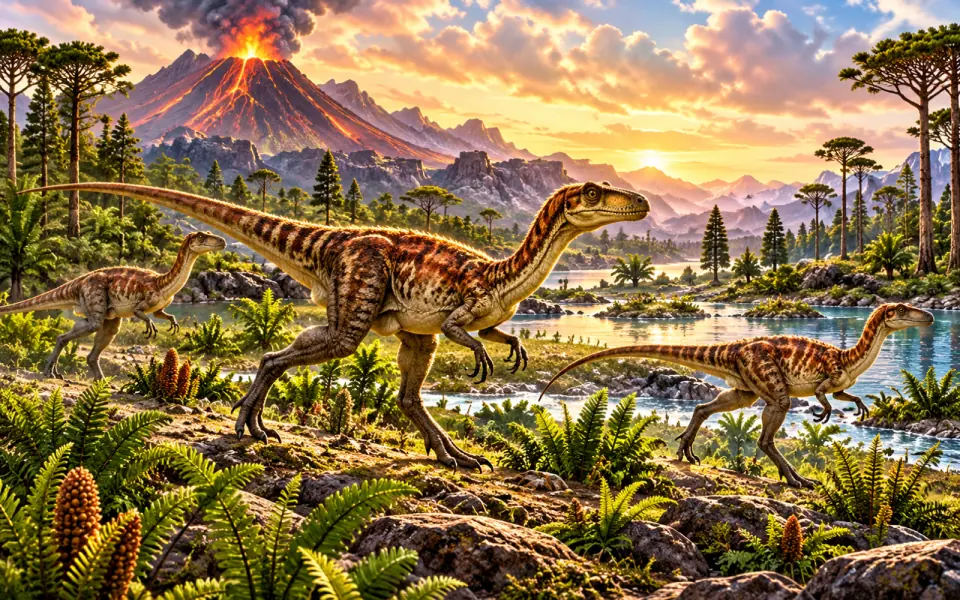
Among the most important fossils are Herrerasaurus, a predator 4 to 6 metres long, and Eoraptor, discovered in 1991 by an expedition led by the American palaeontologist Paul Sereno. Eoraptor, whose name means “dawn thief”, was about a metre long, light, walked on two legs and had teeth that differed from one another, perhaps because it ate a bit of everything: small animals but also plants. Scientists think the first dinosaurs were like that: not giants, but agile animals of medium or small size.
There are also clues to older forms. In Tanzania Nyasasaurus has been found, about 243 million years old, which some scholars consider the oldest dinosaur or a close relative of one, but the bones are few and the debate is open. That is why the date of the “first dinosaur” is not fixed: the timeline says about 230 million years ago, following the most certain fossils.
What is a dinosaur?
Not all ancient reptiles were dinosaurs. Pterosaurs, ichthyosaurs, plesiosaurs and Dimetrodon were different animals. Dinosaurs had one particular feature: their legs were set beneath the body, in an upright position, as in us or in a horse, and not out to the sides, as in a lizard or a crocodile. This made it easier to run and to breathe while walking. In 1887 another English scientist, Harry Seeley, divided the dinosaurs into two big groups according to the shape of the hip: the saurischians, with a “lizard” hip, and the ornithischians, with a “bird” hip. Paradoxically, birds descend from the saurischians.
A slow rise
For the first 30 million years the dinosaurs were not the masters of the world. In the Triassic other reptiles dominated, relatives of the crocodiles, which were bigger and more varied, and there were also the first mammals and many large amphibians. Dinosaurs were one group among many. Their moment came around 201 million years ago, when another mass extinction, at the end of the Triassic, removed many of the competitors. From then on dinosaurs spread and became dominant, giving rise in the Jurassic to the long-necked giants and in the Cretaceous to predators such as Tyrannosaurus.
Their success is perhaps explained by a combination of features: upright legs, high speed, good breathing and an ability to adapt. But scholars do not yet have a complete picture: luck and circumstances counted for a great deal.
Why it happened
Dinosaurs appeared after the Great Dying at the end of the Permian. The catastrophe had cleared many environments and in the Triassic an enormous variety of reptiles reappeared. Among them were the archosaurs, the group from which crocodiles, pterosaurs and dinosaurs descend.
The Triassic climate was hot and largely dry, and the supercontinent Pangaea was in one piece. The change from one world to the other was gradual. Around 234 to 232 million years ago there was a period of unusual rains, called the “Carnian Pluvial Event”, which some scholars think helped the dinosaurs to spread, but its role is still debated.
The real leap came with the extinction at the end of the Triassic, about 201 million years ago, which removed many rivals. The dinosaurs survived and took the places left empty.
What changed
For more than 160 million years dinosaurs were the dominant vertebrates on land. They spread to every continent and every environment, with thousands of species, big and small, plant-eating and meat-eating. Some sauropods, such as Argentinosaurus, reached about 30 metres in length or more (the estimates are uncertain) and were among the biggest animals that have ever lived on land. Others were as small as a turkey.
They have not vanished completely: birds are surviving dinosaurs. When you look at a sparrow or a hen, you are looking at a descendant of that group. That is why scientists say that the “non-avian” dinosaurs became extinct, meaning all of them except the birds.
Dinosaurs have also changed our culture. Fossils inspired legends and then science, and today natural history museums all over the world display them. In Italy too: at Pietraroia, near Benevento, the small Scipionyx was found, with parts of its internal organs preserved, and at Saltrio, in Lombardy, Saltriovenator was discovered, a large Jurassic predator. Children who love dinosaurs are often the first to become curious about science.
Key people and places
People
- Richard Owen
- English anatomist (1804–1892). In 1842 he invented the word “Dinosauria” and founded the Natural History Museum in London.
- Paul Sereno
- American palaeontologist at the University of Chicago. In 1991 he found Eoraptor in Argentina.
- Harry Seeley
- English palaeontologist (1839–1909). In 1887 he divided the dinosaurs into saurischians and ornithischians.
Places
- Ischigualasto, Argentina
- The Valley of the Moon Park: Triassic layers with some of the oldest dinosaurs in the world.
- Rio Grande do Sul, Brazil
- A region where some of the oldest certain dinosaurs have been found, such as Staurikosaurus.
- Pietraroia, Campania (Italy)
- Here Scipionyx was found, a baby dinosaur with the remains of its internal organs.
Good to know
- Eoraptor means “dawn thief”: the name recalls that it appeared at the beginning of the age of the dinosaurs.
- The little Italian dinosaur Scipionyx, nicknamed Ciro, was discovered at Pietraroia by a fossil enthusiast in the early 1980s: it preserves intestine, liver and muscles.
- Birds inherited from dinosaurs their feathers, their way of walking on two legs and the habit of laying eggs with a shell.
- The first dinosaurs were small: Eoraptor was about a metre long, like a medium-sized dog.
- Dinosaur fossils have been found on every continent, Antarctica included.
Find out more
- Natural History Museum, London, “Dinosaurs” nhm.ac.uk
- Wikipedia, “Dinosaur” en.wikipedia.org
- Natural History Museum, London, Eoraptor (in English) nhm.ac.uk
- Wikipedia, “Ischigualasto Provincial Park” en.wikipedia.org
Related events
- The great Permian extinctionabout 252 million years ago · The Earth before usDinosaurs appeared after the Great Dying of the Permian.
- The first mammalsabout 225 million years ago · The Earth before usAlongside the first dinosaurs lived the first mammals.
- The first birdsabout 150 million years ago · The Earth before usFrom the theropod dinosaurs came the birds.
- Extinction of the non-avian dinosaursabout 66 million years ago · The Earth before usAfter 160 million years the non-avian dinosaurs disappeared.
- Darwin publishes On the Origin of Species1859 · Age of revolutionsA few years after the word “dinosaur”, Darwin published On the Origin of Species.
Before and after, in the era “The Earth before us”
Event 22 of 25
 BeforeThe Big Bangabout 13.8 billion years ago
 BeforeThe first starsabout 13.5 billion years ago
 BeforeBirth of the Milky Wayabout 13 billion years ago
 BeforeFormation of the Solar Systemabout 4.6 billion years ago
 BeforeBirth of the Earthabout 4.5 billion years ago
 BeforeFormation of the Moonabout 4.5 billion years ago
 BeforeThe oldest pieces of Earthabout 4.4 billion years ago
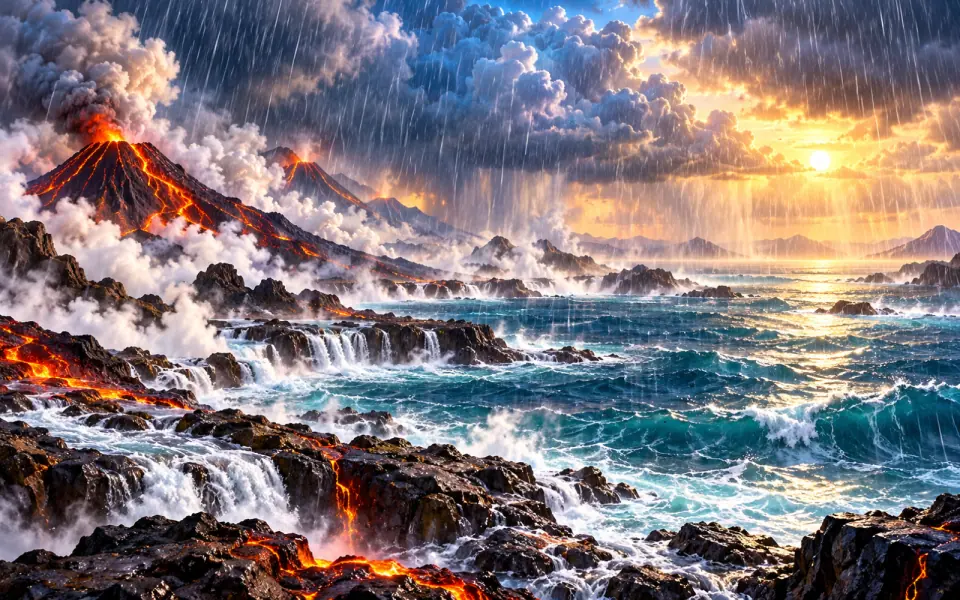 BeforeThe first oceansabout 4.3 billion years ago
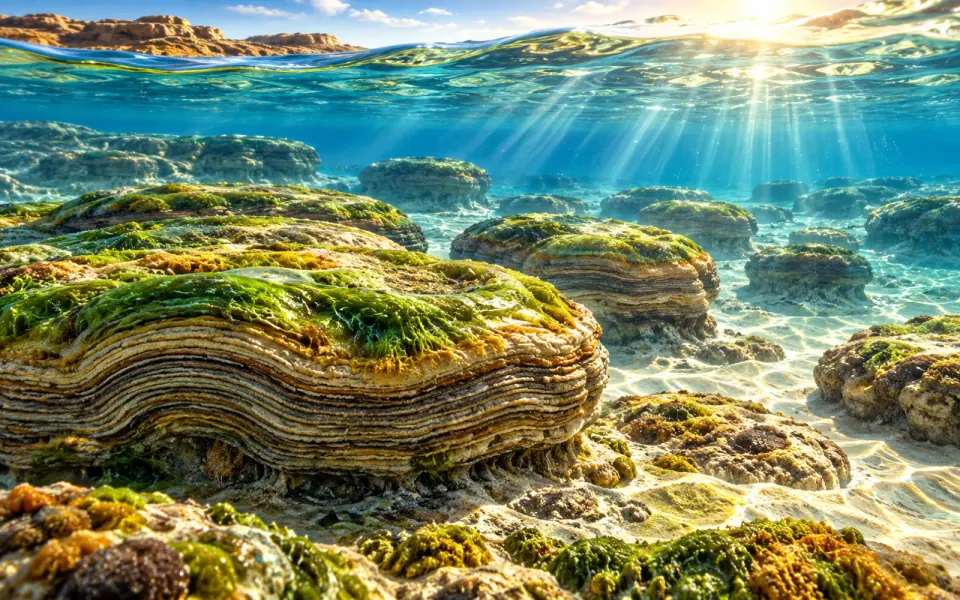 BeforeThe first life on Earthabout 3.5 billion years ago
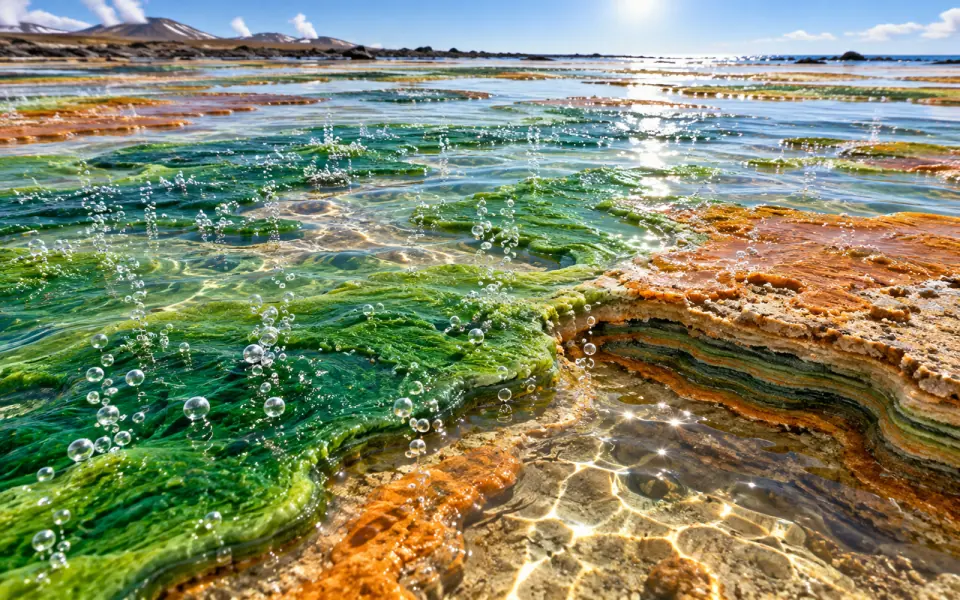 BeforeCyanobacteria and photosynthesisabout 2.7 billion years ago
 BeforeThe Great Oxidation Eventabout 2.4 billion years ago
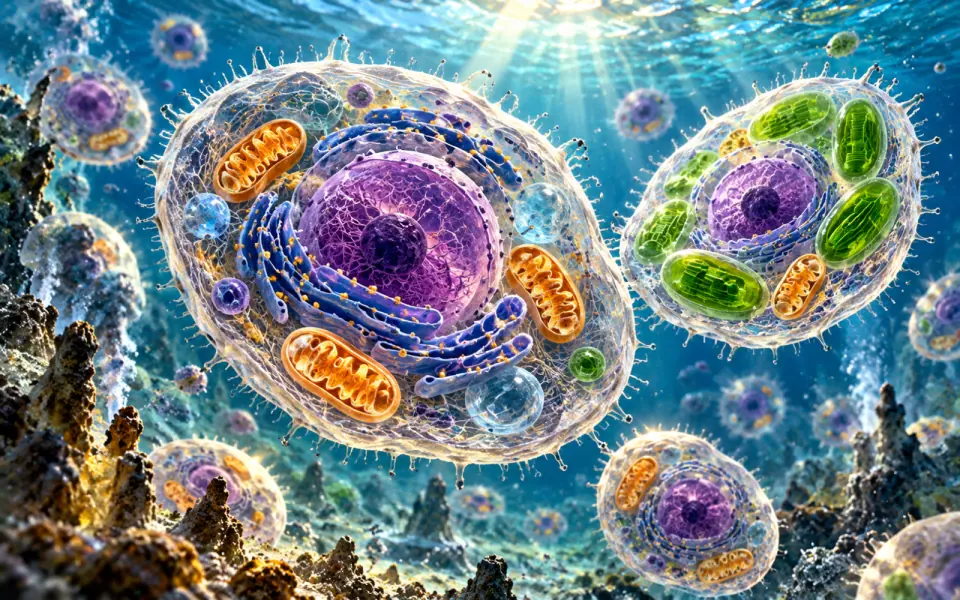 BeforeThe first complex cellsabout 1.8 billion years ago
 BeforeThe first many-celled living thingsabout 1 billion years ago
 BeforeThe Ediacaran creaturesabout 555 million years ago
 BeforeThe Cambrian explosionabout 539 million years ago
 BeforeThe first plants on landabout 475 million years ago
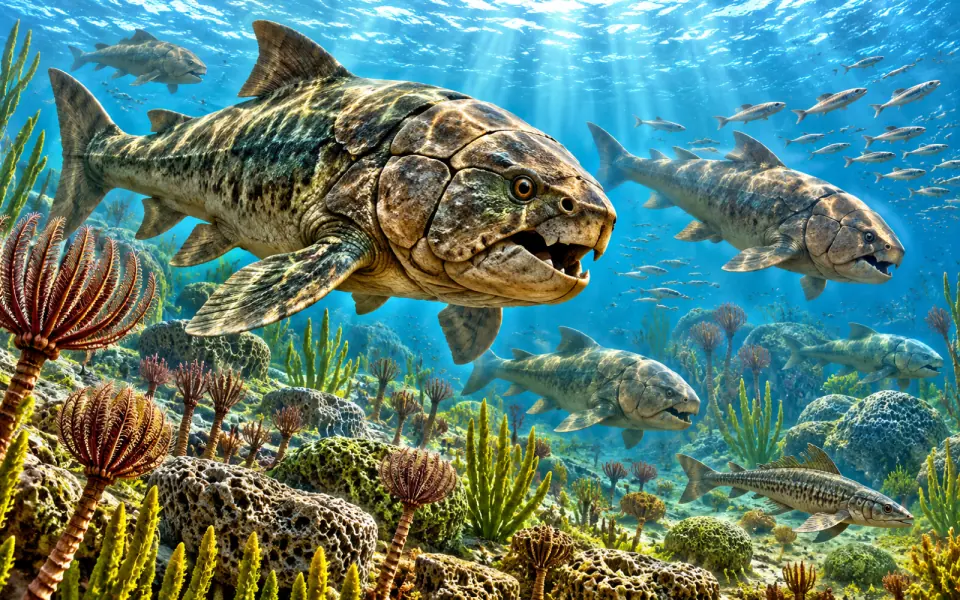 BeforeThe first fish with jawsabout 440 million years ago
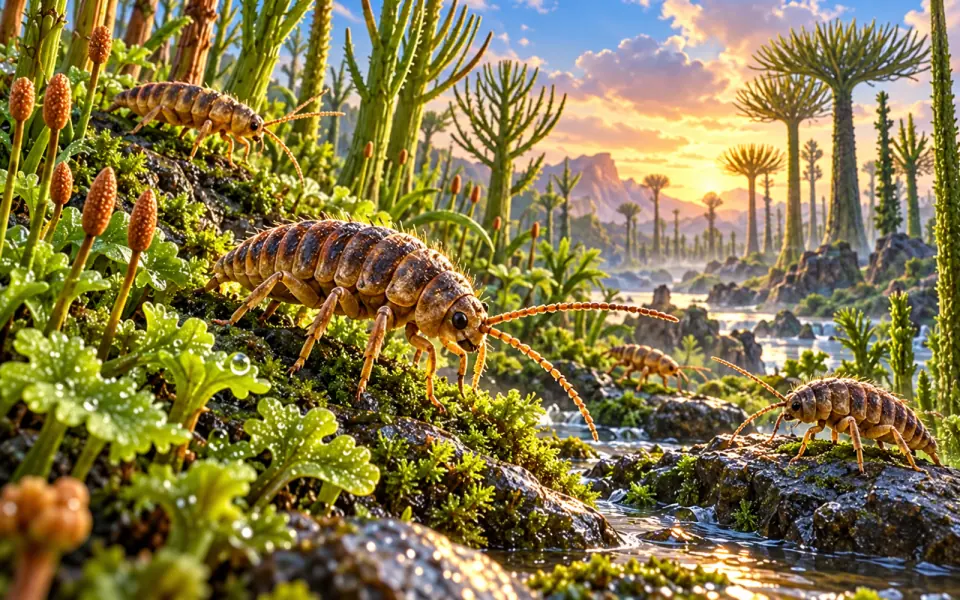 BeforeThe first insectsabout 400 million years ago
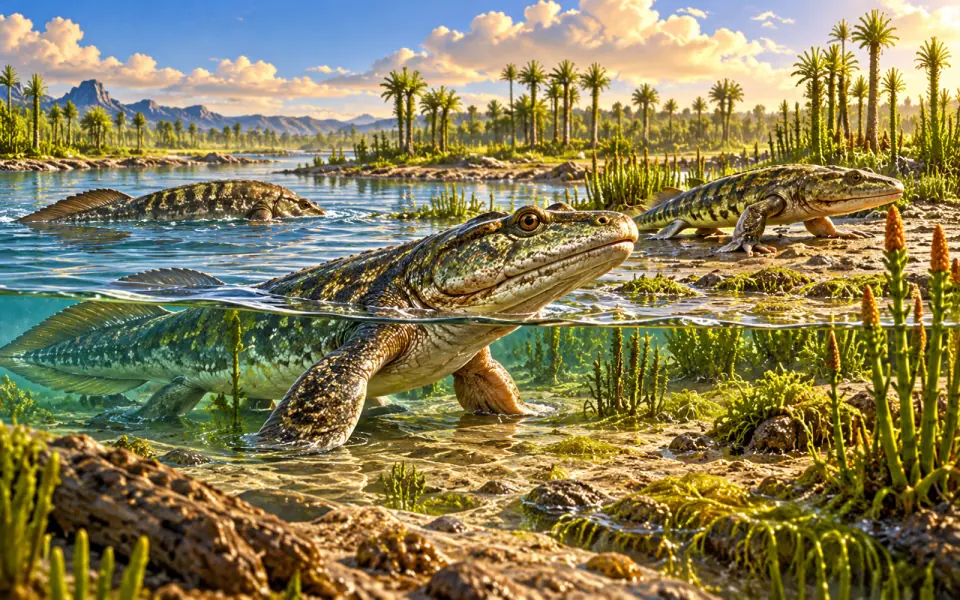 BeforeThe first amphibiansabout 375 million years ago
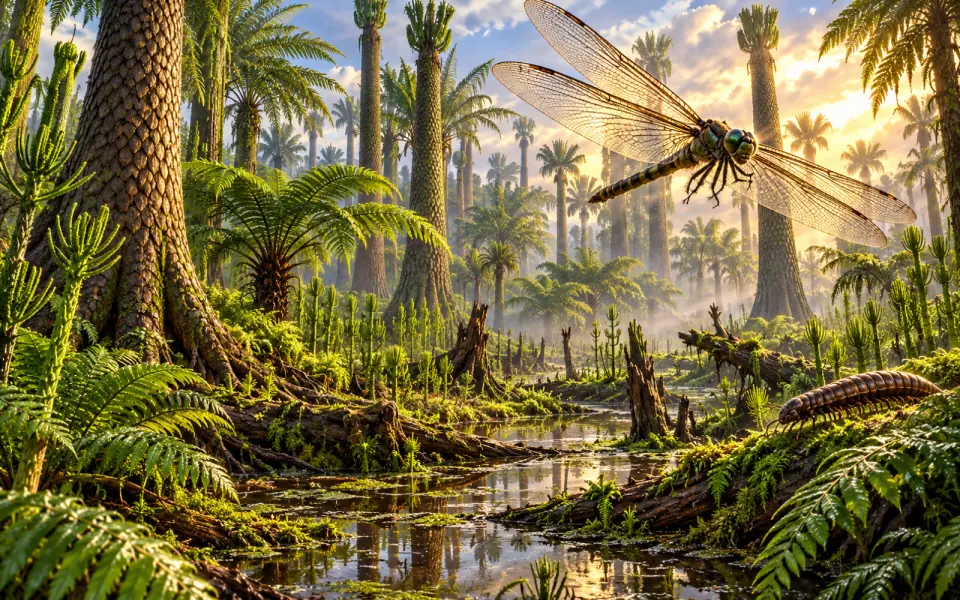 BeforeCarboniferous forestsabout 320 million years ago
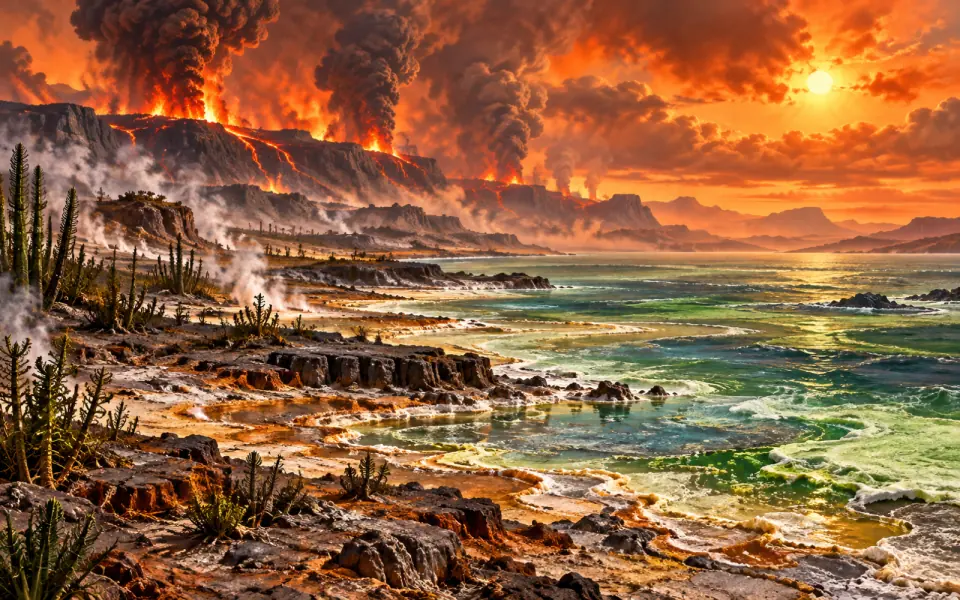 BeforeThe great Permian extinctionabout 252 million years ago
- You are hereThe first dinosaursabout 230 million years ago
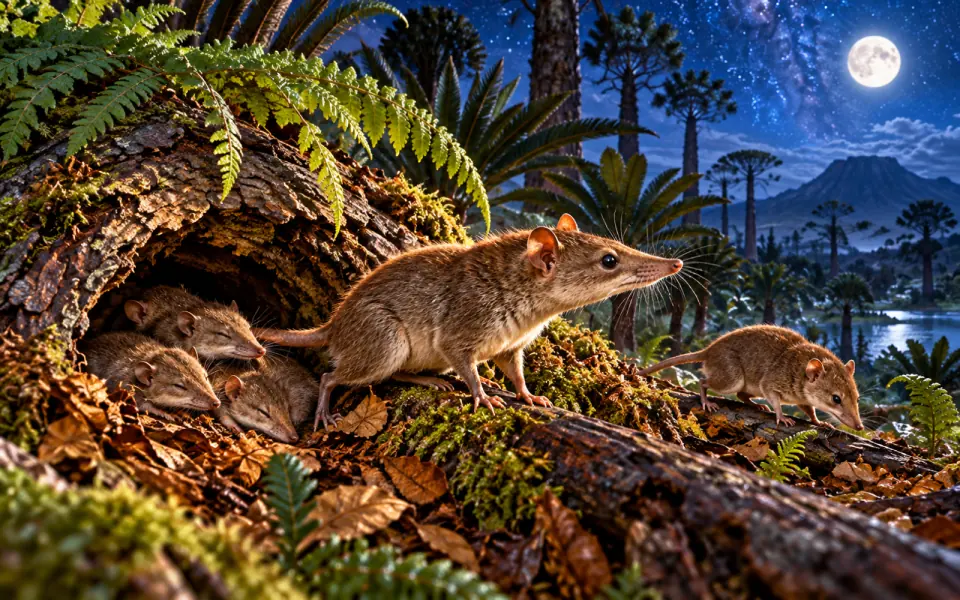 AfterThe first mammalsabout 225 million years ago
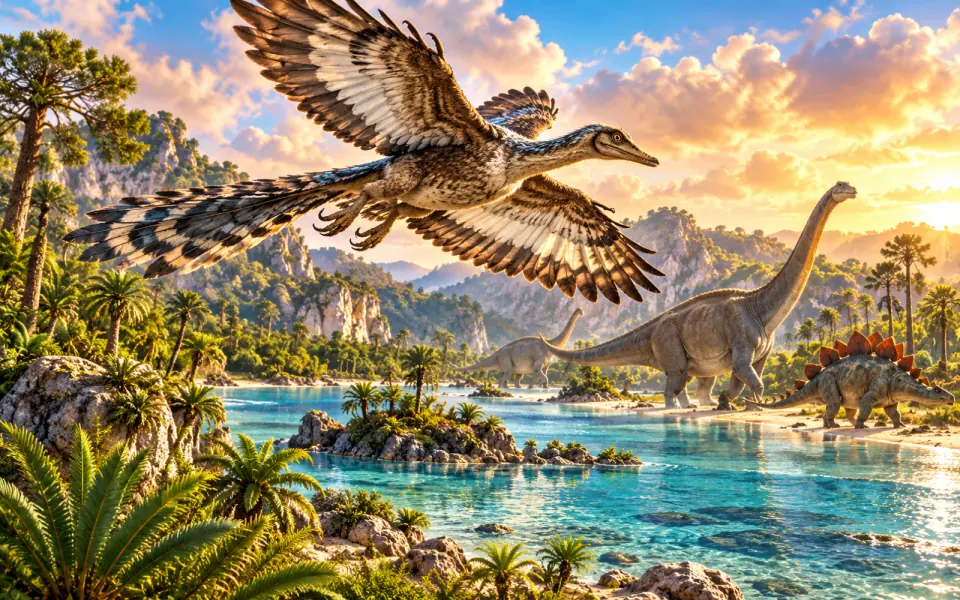 AfterThe first birdsabout 150 million years ago
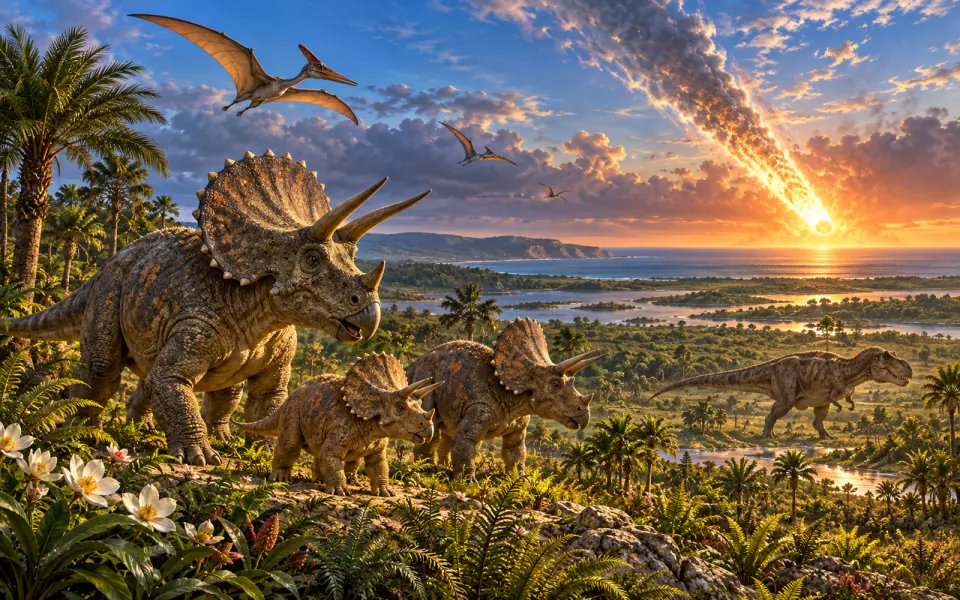 AfterExtinction of the non-avian dinosaursabout 66 million years ago
Listen / Read next
- Music to read by: Cinematic JourneyEpic film-style music, no lyrics, by Ciro Simone IrmiciSpotifyYouTube Music
Meanwhile, elsewhere in the world
Other events of the era “The Earth before us”
- The Big Bang
- The first stars
- Birth of the Milky Way
- Formation of the Solar System
- Birth of the Earth
- Formation of the Moon
- The oldest pieces of Earth
- The first oceans
- The first life on Earth
- Cyanobacteria and photosynthesis
- The Great Oxidation Event
- The first complex cells
- The first many-celled living things
- The Ediacaran creatures
- The Cambrian explosion
- The first plants on land
- The first fish with jaws
- The first insects
- The first amphibians
- Carboniferous forests
- The great Permian extinction
- The first mammals
- The first birds
- Extinction of the non-avian dinosaurs
