The oldest pieces of Earth
about 4.4 billion years ago Jack Hills, Western Australia
In short
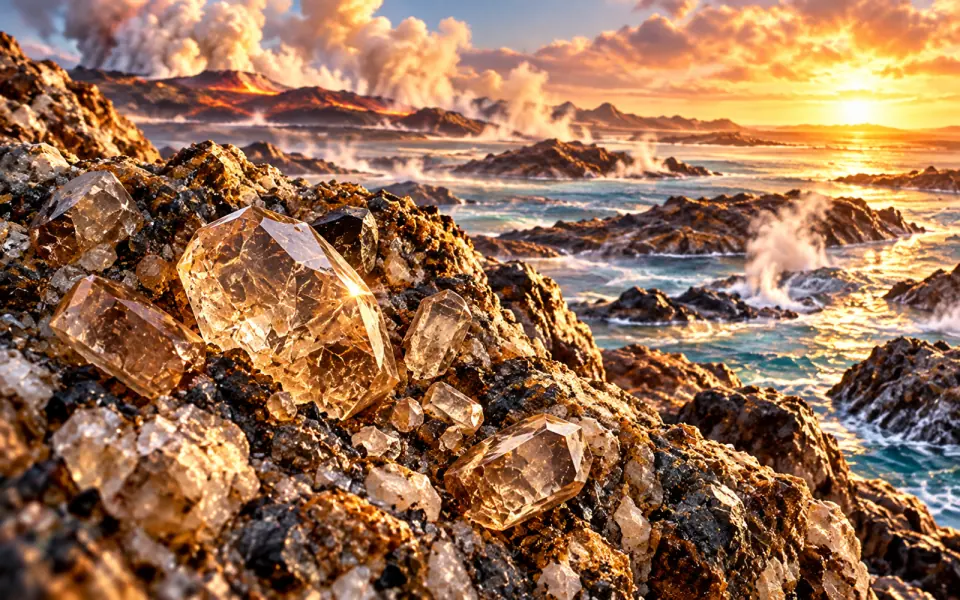
Tiny zircon crystals found at Jack Hills, in Australia, are about 4.4 billion years old. They survived even though the rocks that held them were changed or destroyed. What they are made of gives clues about the crust and the water of the very young Earth.
Why it matters They are some of the oldest physical evidence our planet has kept.
Source: University of Wisconsin-Madison, “Oldest bit of crust firms up idea of a cool early Earth”
Study card about 5 minutes of reading
The story
Looking for a stone that remembers everything
Imagine you had to find out what your town was like a thousand years ago, but you only had a few scattered scraps of brick. Scientists who study the newborn Earth are in the same situation. The planet is a place in constant change: continents move, rocks sink into the mantle and melt, volcanoes bring new ones to the surface, rain and wind wear down the mountains. That is why almost nothing is left of the rocks of the first 500 million years of the Earth's life.
Among the oldest rocks known today in one piece are the Acasta gneisses, in northern Canada, about 4 billion years old (by some studies the Nuvvuagittuq belt, also in Canada, is even older, but its age is disputed). But there are even older fragments: tiny crystals, smaller than a millimetre, found in the Jack Hills in Western Australia. They are crystals of zircon, a mineral that forms from magma, and they are about 4.4 billion years old.
Zircon: a time capsule
Zircon is one of the toughest materials in nature. When it forms, a little uranium gets into its structure, but no lead. Over time the uranium, which is radioactive, slowly turns into lead, at a rate that scientists know precisely. By measuring how much uranium and how much lead there is in a crystal, they can work out how much time has passed since it formed, as with an hourglass. The crystal withstands heat, impacts and even chemical changes: it often survives even when the rock that held it is destroyed.
The zircons of Jack Hills are not found in the rock where they were born. They are grains that water carried elsewhere, billions of years ago, and that ended up trapped in sands that later turned into a rock called conglomerate. This rock is about 3 billion years old, but the grains inside it are much older. The oldest was dated in 2001 by a team of researchers led by Simon Wilde, of Curtin University in Australia, who found an age of about 4.4 billion years, only 150 million years after the Earth formed. In 2014 another team, led by John Valley of the University of Wisconsin, repeated the measurement with very precise techniques and confirmed that the crystal is 4.4 billion years old.
What they tell us
They are not just an age. Each crystal carries clues about the place where it was born. In the zircon studied by Wilde and colleagues, the amount of certain kinds of oxygen suggests that the magma it formed from had to do with rocks that had interacted with liquid water. If so, 4.4 billion years ago the Earth already had a solid crust and there was water on the surface. This changed the picture scientists had of the newborn planet: not just a hell of lava, but a world perhaps cooler than people thought.
As always in science, the conclusion is a cautious one. Some researchers question the interpretation of the oxygen and the date of some stages, and study whether the crust was thin and unstable, covered by shallow oceans. What is certain is that these grains are among the oldest things ever touched by human beings, and that they are younger only than meteorites and the rocks brought back from the Moon.
A hill and a lot of patience
Jack Hills is a chain of low hills in the Murchison region, in the desert of Western Australia. To find the crystals, geologists collect rocks, crush them and separate the heavy minerals, then look at each grain under the microscope. Out of hundreds of thousands of grains, only a small share are more than 4 billion years old. It takes a good eye, patience and instruments such as the ion mass spectrometer, which can analyse a crystal the size of a pinpoint without completely destroying it.
Why it happened
The rocks of the earliest times have disappeared because the Earth is a living planet. The tectonic plates move and crust rocks, dragged down into the mantle, melt and become new rocks. Erosion too, the work of water, wind and ice, reduces them to sand and mud. Over billions of years the process is almost complete.
Some materials do manage to survive. Zircon is very hard and its crystal lattice does not let lead in, so the uranium clock stays reliable. That is why zircon grains have become the main tool for dating the oldest rocks.
Chance did the rest: some ancient grains were carried by water and protected in a conglomerate, and only that rock at Jack Hills stayed at the surface to be discovered.
What changed
The zircons of Jack Hills have changed the story told about the early Earth. It used to be thought that in the first 500 million years the planet was a hellish place, battered by asteroids and covered in magma. Today many scientists think that the crust and the oceans appeared early and that the planet may have been more welcoming than people believed.
This has reopened the question of when life began. If liquid water and a crust already existed 4.4 billion years ago, life would have had more time to get started. Some researchers have studied the carbon enclosed in a Jack Hills zircon, looking for chemical traces of living organisms, but that evidence is much debated.
The methods for dating the grains are used every day to study continents, mountains and meteorites. The same principle, uranium turning into lead, is used to date rocks all over the world and to build the geological time scale that we use throughout this era.
Key people and places
People
- Simon Wilde
- Australian geologist at Curtin University (Perth). In 2001 he led the team that dated the 4.4-billion-year-old zircon.
- John Valley
- American geologist at the University of Wisconsin. In 2014 he confirmed the age of 4.4 billion years with a technique that counts lead atoms one by one.
- Clair Patterson
- American geochemist who was the first to measure the age of the Earth precisely, using lead.
Places
- Jack Hills, Western Australia
- Low hills in the Murchison region, where the oldest known zircons are found.
- Acasta, Northwest Territories (Canada)
- Here outcrop the Acasta gneisses, among the oldest rocks preserved in a single block, about 4 billion years old.
- Curtin University, Perth
- The laboratory where geologists measure the age of crystals with an instrument called SHRIMP.
Good to know
- The instrument used to date the zircon is called SHRIMP, which in English means a small sea creature, but it is the abbreviation of a long technical name.
- The zircon crystals of Jack Hills are smaller than a millimetre: finding them takes microscopes and many weeks of work.
- Uranium-238 halves its amount about every 4.5 billion years, a time almost equal to the age of the Earth: that is why it is the ideal clock for the oldest rocks.
- Zircon is also a gemstone: its transparent crystals are used in jewellery, and should not be confused with “cubic zirconia”, an artificial material.
- To decide whether a crystal is ancient or not, researchers look inside it with a special light, which shows growth rings like those of a tree.
Find out more
- Wikipedia, “Jack Hills” en.wikipedia.org
- Wikipedia, “Zircon” en.wikipedia.org
- Wikipedia, “History of Earth” en.wikipedia.org
- U.S. Geological Survey, “Age of the Earth” pubs.usgs.gov
Related events
- Birth of the Earthabout 4.5 billion years ago · The Earth before usThe Earth had formed only 150 million years before the oldest crystal.
- The first oceansabout 4.3 billion years ago · The Earth before usThe zircons suggest that liquid water and oceans appeared very early.
- The first life on Earthabout 3.5 billion years ago · The Earth before usWith water and a stable crust, life had a place to begin.
- Formation of the Moonabout 4.5 billion years ago · The Earth before usThe rocks of the Moon are the only other evidence this old.
Before and after, in the era “The Earth before us”
Event 7 of 25
 BeforeThe Big Bangabout 13.8 billion years ago
 BeforeThe first starsabout 13.5 billion years ago
 BeforeBirth of the Milky Wayabout 13 billion years ago
 BeforeFormation of the Solar Systemabout 4.6 billion years ago
 BeforeBirth of the Earthabout 4.5 billion years ago
 BeforeFormation of the Moonabout 4.5 billion years ago
- You are hereThe oldest pieces of Earthabout 4.4 billion years ago
 AfterThe first oceansabout 4.3 billion years ago
 AfterThe first life on Earthabout 3.5 billion years ago
 AfterCyanobacteria and photosynthesisabout 2.7 billion years ago
 AfterThe Great Oxidation Eventabout 2.4 billion years ago
 AfterThe first complex cellsabout 1.8 billion years ago
 AfterThe first many-celled living thingsabout 1 billion years ago
 AfterThe Ediacaran creaturesabout 555 million years ago
 AfterThe Cambrian explosionabout 539 million years ago
 AfterThe first plants on landabout 475 million years ago
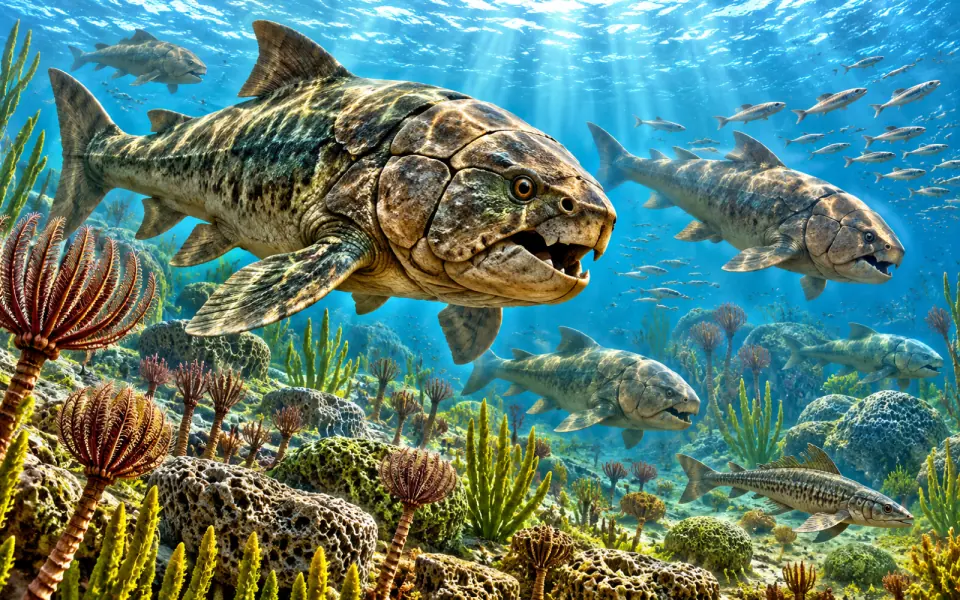 AfterThe first fish with jawsabout 440 million years ago
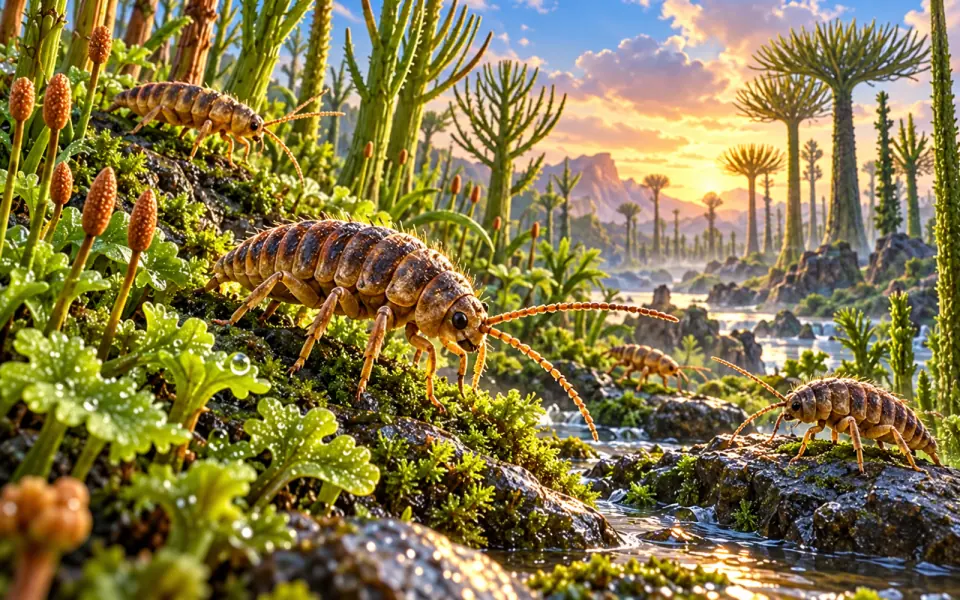 AfterThe first insectsabout 400 million years ago
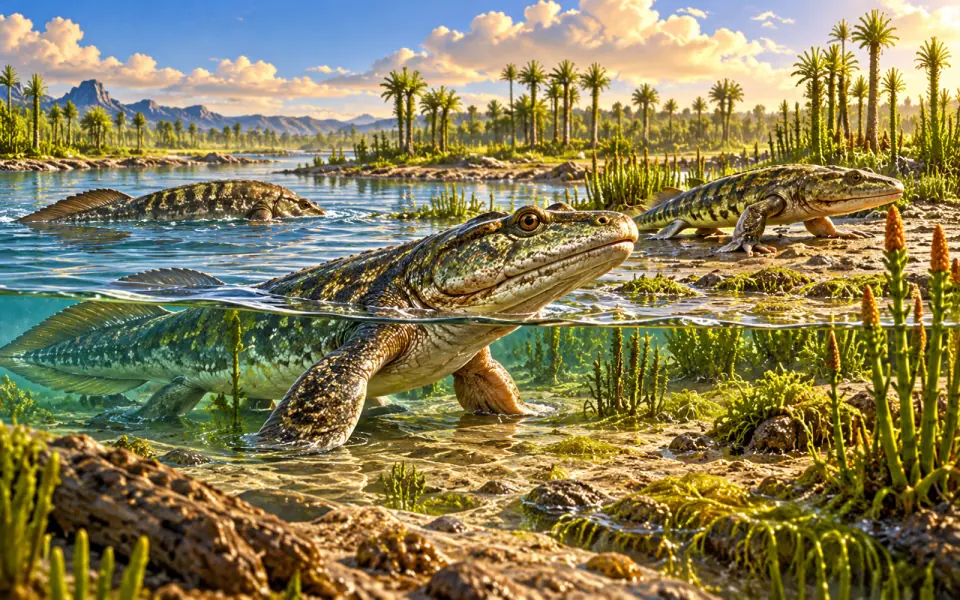 AfterThe first amphibiansabout 375 million years ago
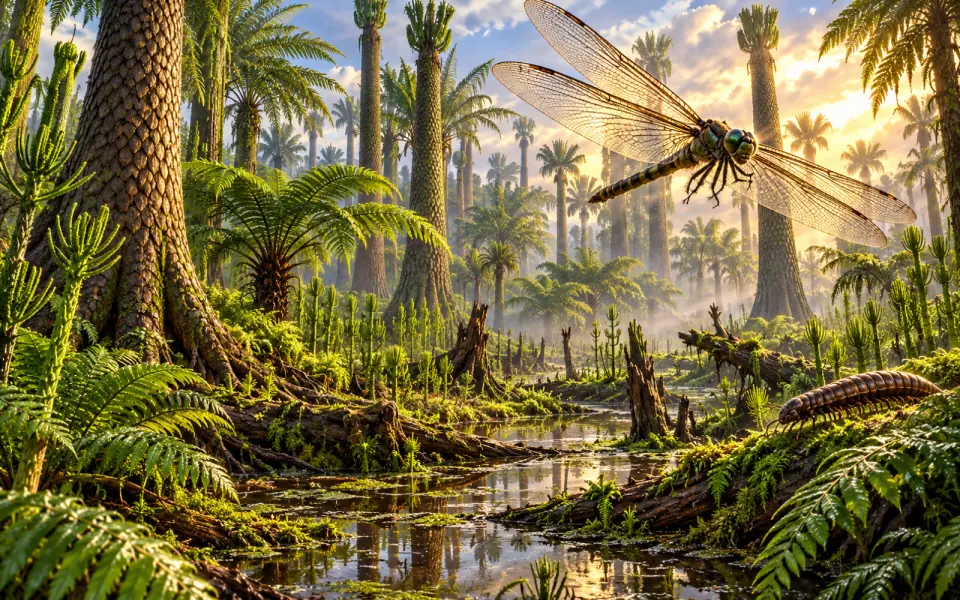 AfterCarboniferous forestsabout 320 million years ago
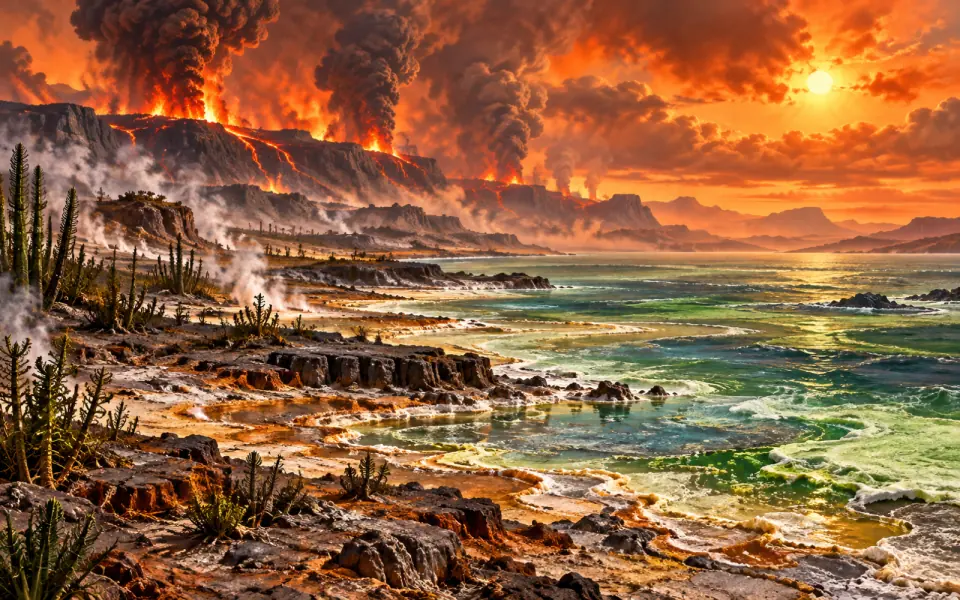 AfterThe great Permian extinctionabout 252 million years ago
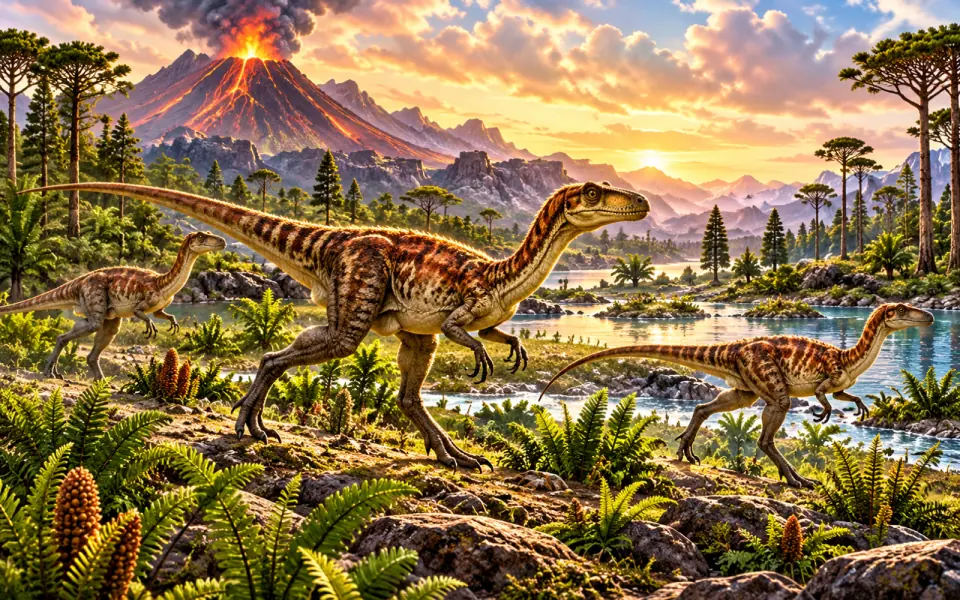 AfterThe first dinosaursabout 230 million years ago
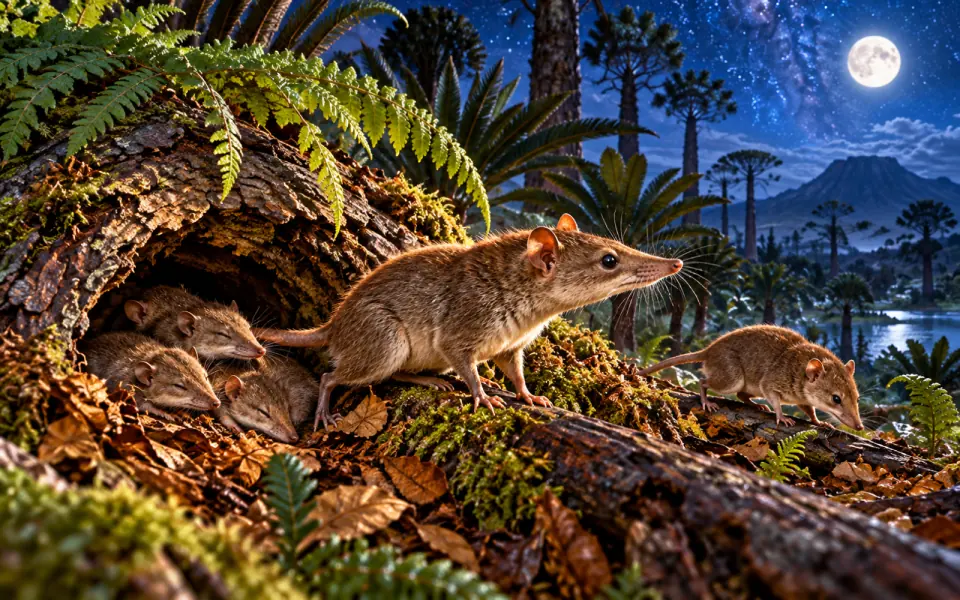 AfterThe first mammalsabout 225 million years ago
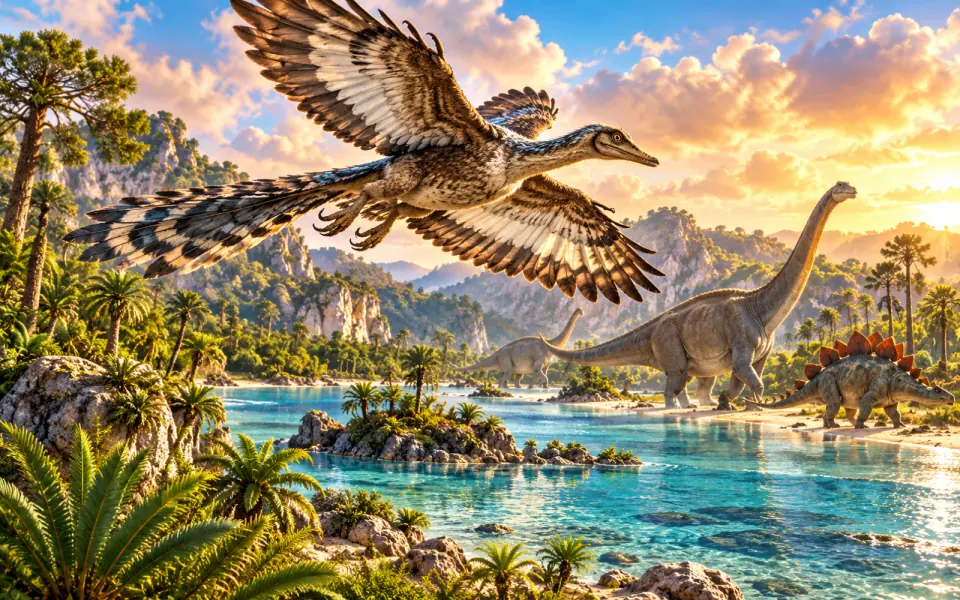 AfterThe first birdsabout 150 million years ago
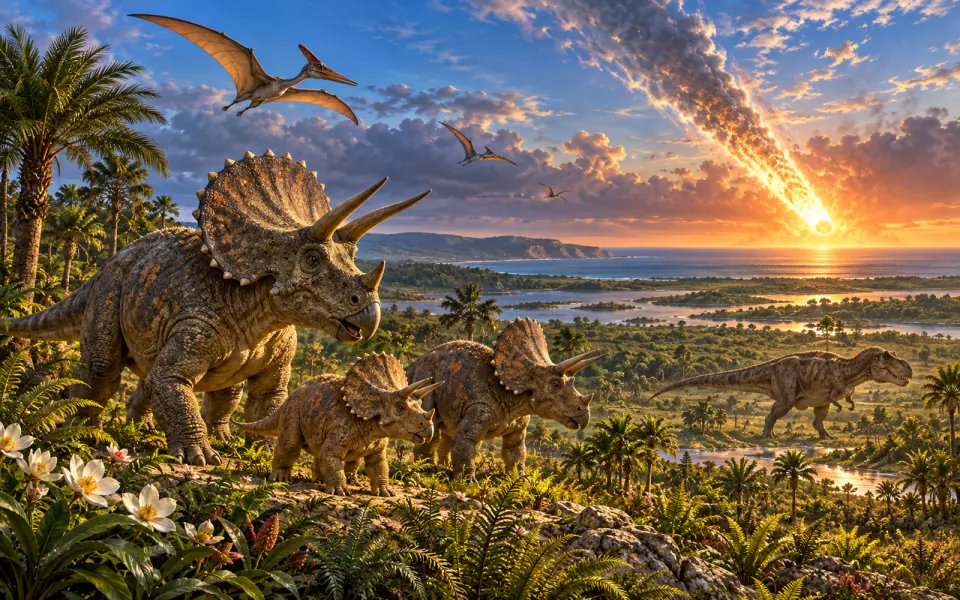 AfterExtinction of the non-avian dinosaursabout 66 million years ago
Listen / Read next
- Music to read by: Cinematic JourneyEpic film-style music, no lyrics, by Ciro Simone IrmiciSpotifyYouTube Music
Meanwhile, elsewhere in the world
Other events of the era “The Earth before us”
- The Big Bang
- The first stars
- Birth of the Milky Way
- Formation of the Solar System
- Birth of the Earth
- Formation of the Moon
- The first oceans
- The first life on Earth
- Cyanobacteria and photosynthesis
- The Great Oxidation Event
- The first complex cells
- The first many-celled living things
- The Ediacaran creatures
- The Cambrian explosion
- The first plants on land
- The first fish with jaws
- The first insects
- The first amphibians
- Carboniferous forests
- The great Permian extinction
- The first dinosaurs
- The first mammals
- The first birds
- Extinction of the non-avian dinosaurs
