The first life on Earth
about 3.5 billion years ago Seas of the early Earth
In short
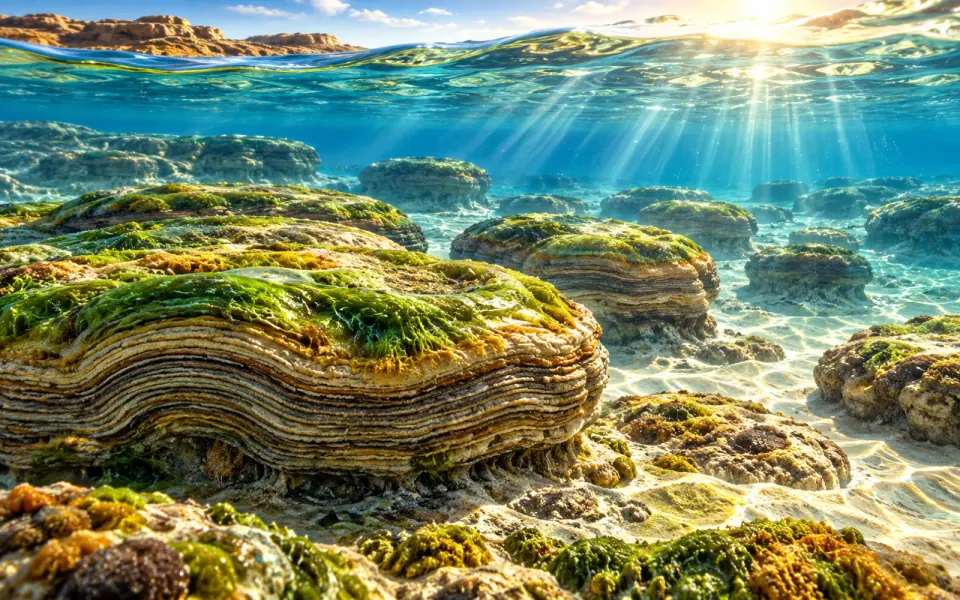
The oldest traces of life are hard to recognise, because the rocks have changed many times. In Western Australia there are stromatolites, layered rocks built by colonies of microbes, about 3.45 billion years old. In Greenland some structures 3.7 billion years old might be even older signs of life, but scientists do not agree. Those first living things were cells without a nucleus, very different from plants and animals.
Why it matters The arrival of life turned the Earth from a planet of rocks alone into a living world.
Study card about 5 minutes of reading
The story
How to search for the oldest life
Imagine looking for the footprint of an animal that walked through mud billions of years ago. The mud has become rock, and the rock has been squashed, heated, folded and worn away. That is what scientists face when they look for the first forms of life. Those first living things were very simple, very tiny cells, with no skeleton or shell, and they left no obvious fossils. That is why this subject is full of disputed evidence, and scholars often disagree.
One thing is clear, though: life appeared very early, and for nearly three billion years, from its beginning until about 600 million years ago, almost all living things were microscopic. Animals, plants and fungi arrived very, very late.
The rocks of the Pilbara
One of the pieces of evidence considered most solid today comes from Western Australia, from the Pilbara region, from a place called Strelley Pool (similar structures, about 3.48 billion years old, are also found at North Pole, again in the Pilbara). At Strelley Pool, in rocks about 3.43–3.45 billion years old, there are stromatolites, that is, layered structures, sometimes dome-shaped or cone-shaped. Stromatolites are built by colonies of microbes that form mats on the shore: the microbes trap grains of sediment or produce minerals, and layer by layer the colony grows. They are like small reefs made by living things.
How do we know that those of Strelley Pool were made by living things and not by chemical forces alone? In 2006 the geologist Abigail Allwood and her colleagues studied the shape of the structures, their position along an ancient coast and the make-up of the rocks, and concluded that a biological origin was the best explanation. Living stromatolites still exist today, for example in Shark Bay, also in Western Australia, and they allow comparison.
The oldest and most disputed evidence
Further back there are clues that divide scientists. In Greenland, in the Isua region, in 2016 a team led by Allen Nutman described cone-shaped structures in rocks about 3.7 billion years old, which they interpreted as stromatolites. Other researchers, a few years later, argued that they could have been formed by the deformation of the rocks. The debate is not closed.
Other clues are chemical. When microbes use carbon, they prefer the lighter kind, and they leave a signature in the rocks. Isua rocks about 3.8 billion years old have this signature, but it too can have non-biological causes. In 2015 a grain of graphite inside a 4.1-billion-year-old zircon, with the same signature, was announced. These traces are suggestive, but nobody considers them definitive proof.
In 2024 a team of researchers tried to reconstruct the last common ancestor of all living things, called LUCA, by comparing today's genes. According to their estimate it lived about 4.2 billion years ago and already had a complex system. The result is based on calculations and on the way of estimating how fast genes change, and it is not accepted by everyone.
How did it begin?
On this question science today knows less. We do not know how non-living matter became living. In 1953 the American chemist Stanley Miller, in the laboratory of his professor Harold Urey, carried out a famous experiment: in a glass container he put water and gases, which he thought were similar to those of the early atmosphere, and passed electric sparks through them, like lightning. After a few days some amino acids had formed, the building blocks of proteins. Today it is thought that the atmosphere was different, but the experiment showed that the building blocks of life can form through simple processes.
Several hypotheses are being studied today: hot springs on the seabed, pools of hot water on land, a world of RNA molecules able to copy themselves, materials brought by meteorites. Probably the truth will be a combination. Meanwhile we can say that life did not wait long: as soon as the Earth had cooled and become covered with oceans, and perhaps even earlier, the first microbes appeared.
Why it happened
To live, a cell needs three things: chemicals to build itself from, energy, and a covering that separates it from its surroundings. On the early Earth there was liquid water, rocks that released minerals, and sources of energy, such as the heat of the sea near volcanoes, lightning and the Sun's ultraviolet light.
Nobody knows for sure which was the right place. Some scientists back hydrothermal vents, that is, hot springs on the seabed, where water rich in minerals and gases comes out of the rocks and where chemistry can produce energy. Others prefer shallow pools that dry out and fill up again, concentrating substances. Both ideas explain some pieces and leave others uncovered.
It is one of the biggest questions in science, and so far it has no certain answer.
What changed
Once life had begun, it never went away. For billions of years microbes changed the planet slowly but deeply: they changed the chemistry of the oceans, laid down minerals, and finally, with the cyanobacteria, filled the air with oxygen. All living things today, including people, descend from those first microbes. The DNA of a mosquito, an oak and a child uses the same code, a reminder of a common ancestor.
Understanding how life appeared is also a guide to looking for it elsewhere. If the first forms appeared when the Earth was young and full of water, perhaps life is not impossible on other worlds with water, such as ancient Mars or the ocean moons of Jupiter and Saturn. NASA's Perseverance rover is exploring an ancient Martian lake today, Jezero crater, precisely to look for traces of ancient microbial life, including signs like stromatolites.
Studies of the first cells have practical uses: understanding how molecules form, how DNA works and how to develop new treatments. Every discovery makes our place in the living world a little clearer.
Key people and places
People
- Abigail Allwood
- Australian geologist, now at NASA. In 2006 she showed that the stromatolites of Strelley Pool had been produced by microbes 3.4 billion years ago.
- Stanley Miller
- American chemist (1930–2007). In 1953 he obtained amino acids from gases and electric sparks.
- Allen Nutman
- Australian geologist. In 2016 he described the disputed 3.7-billion-year-old structures at Isua, in Greenland.
Places
- Strelley Pool, Pilbara (Western Australia)
- Where the stromatolites of about 3.43 billion years ago are found, considered to be of biological origin.
- Isua, Greenland
- A belt of very ancient rocks with possible traces of life 3.7 billion years old.
- Shark Bay, Western Australia
- A bay with living stromatolites, which help us understand how the ancient ones formed.
Good to know
- The stromatolites of Shark Bay grow very slowly, less than a millimetre a year: a column one metre high can be more than a thousand years old.
- The genetic code is almost the same in all living things: a 2016 study estimated that LUCA had about 355 families of genes, still present in many living things.
- The oldest cells were tiny: it would take about a thousand of them, in a row, to cover a millimetre.
- On Mars the Perseverance rover has found rocks with organic compounds in Jezero crater: they are not proof of life, but they are a clue to study.
- The word “stromatolite” comes from Greek and means “layered stone”: those of Shark Bay are at the heart of a protected area.
Find out more
- Wikipedia, “Cyanobacteria” en.wikipedia.org
- Wikipedia, “History of Earth” en.wikipedia.org
- University of California Museum of Paleontology (Berkeley), “Cyanobacteria” ucmp.berkeley.edu
- NASA, the Perseverance mission on Mars (in English) science.nasa.gov
Related events
- The first oceansabout 4.3 billion years ago · The Earth before usLife needed the liquid water of the first oceans.
- Cyanobacteria and photosynthesisabout 2.7 billion years ago · The Earth before usFrom the first microbes came the cyanobacteria, which made use of sunlight.
- The first complex cellsabout 1.8 billion years ago · The Earth before usAfter billions of years of simple microbes, complex cells appeared.
- Darwin publishes On the Origin of Species1859 · Age of revolutionsDarwin suggested that all living things descend from common ancestors.
- The double helix of DNA1953 · TodayThe discovery of the structure of DNA explained how living things pass on heredity.
Before and after, in the era “The Earth before us”
Event 9 of 25
 BeforeThe Big Bangabout 13.8 billion years ago
 BeforeThe first starsabout 13.5 billion years ago
 BeforeBirth of the Milky Wayabout 13 billion years ago
 BeforeFormation of the Solar Systemabout 4.6 billion years ago
 BeforeBirth of the Earthabout 4.5 billion years ago
 BeforeFormation of the Moonabout 4.5 billion years ago
 BeforeThe oldest pieces of Earthabout 4.4 billion years ago
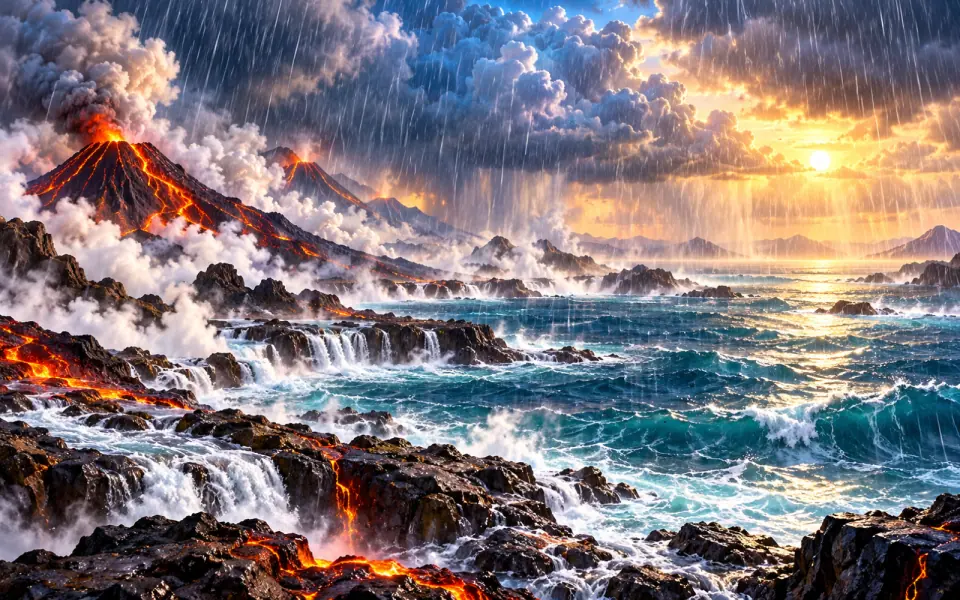 BeforeThe first oceansabout 4.3 billion years ago
- You are hereThe first life on Earthabout 3.5 billion years ago
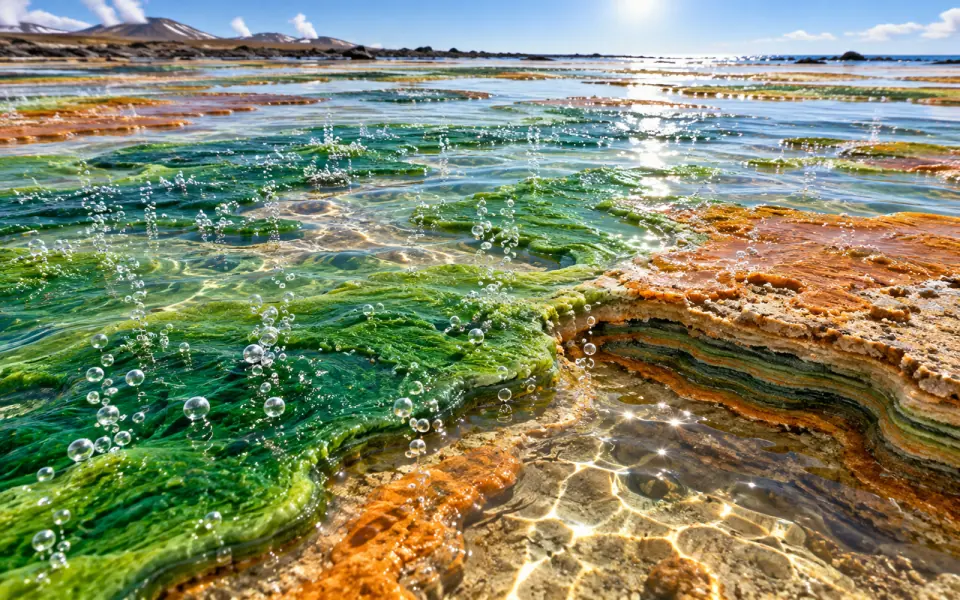 AfterCyanobacteria and photosynthesisabout 2.7 billion years ago
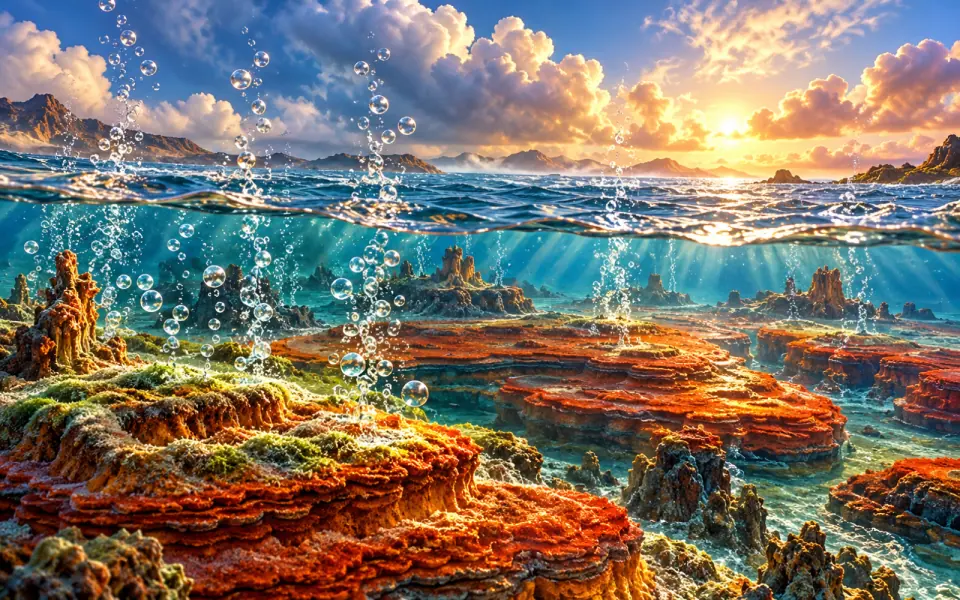 AfterThe Great Oxidation Eventabout 2.4 billion years ago
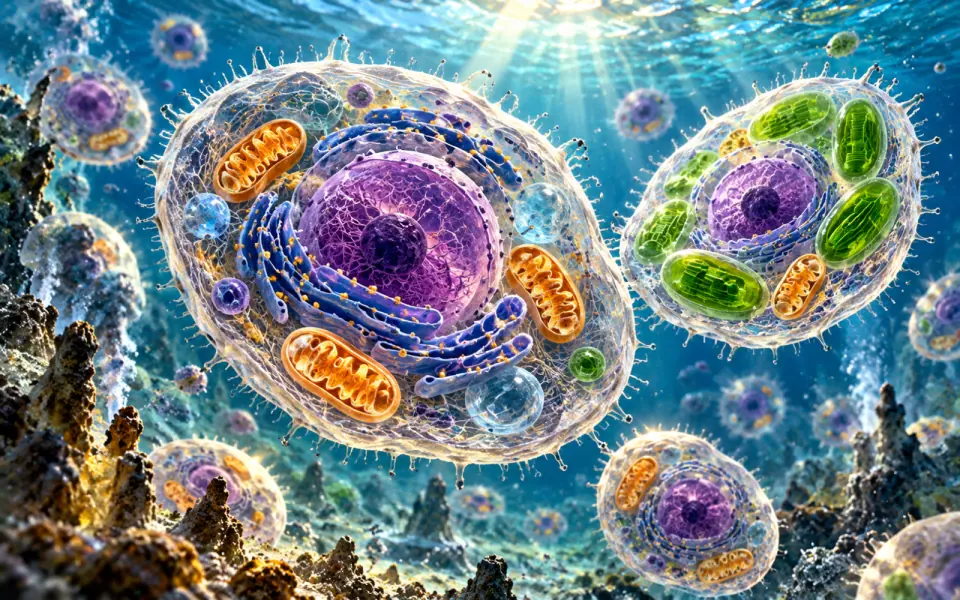 AfterThe first complex cellsabout 1.8 billion years ago
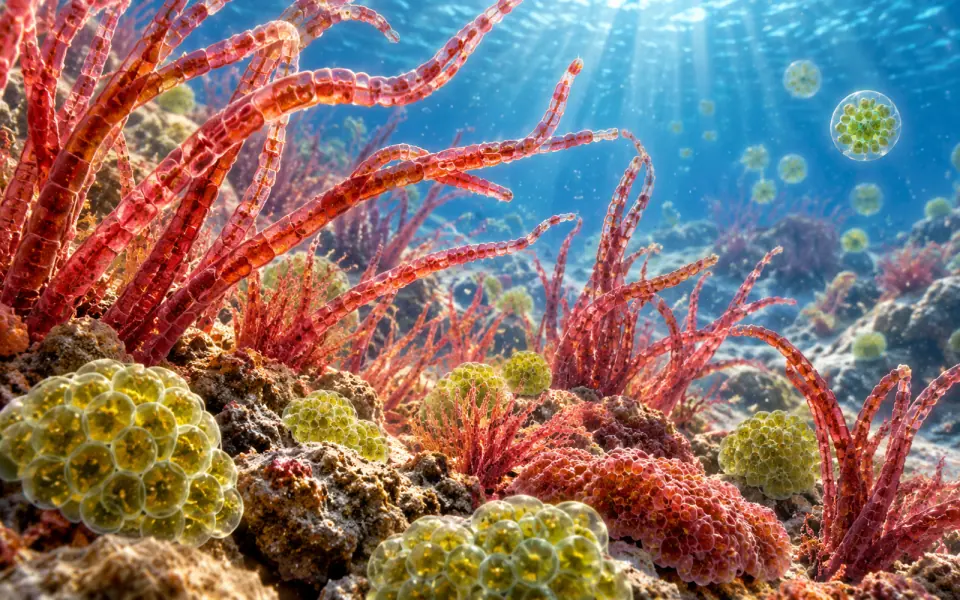 AfterThe first many-celled living thingsabout 1 billion years ago
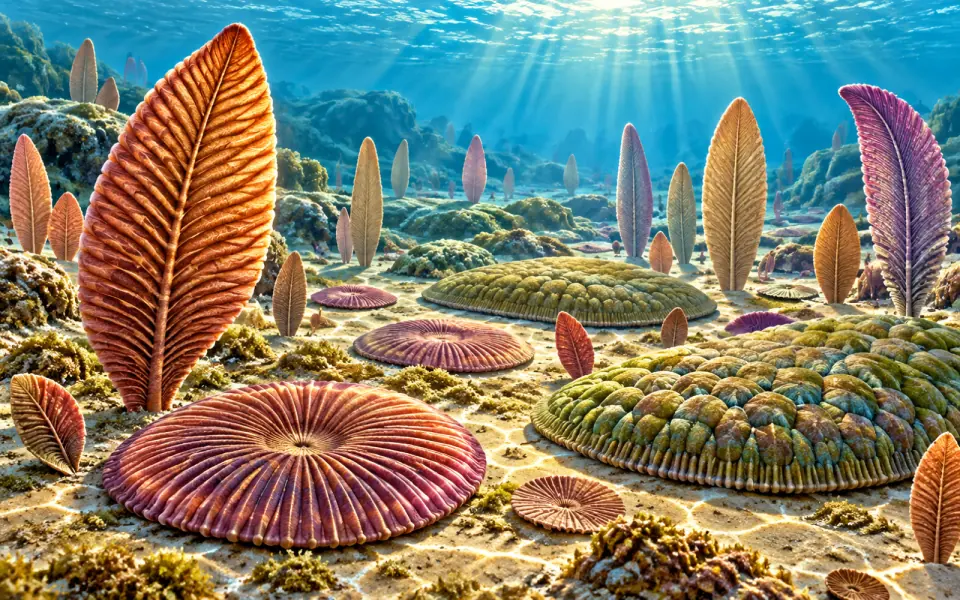 AfterThe Ediacaran creaturesabout 555 million years ago
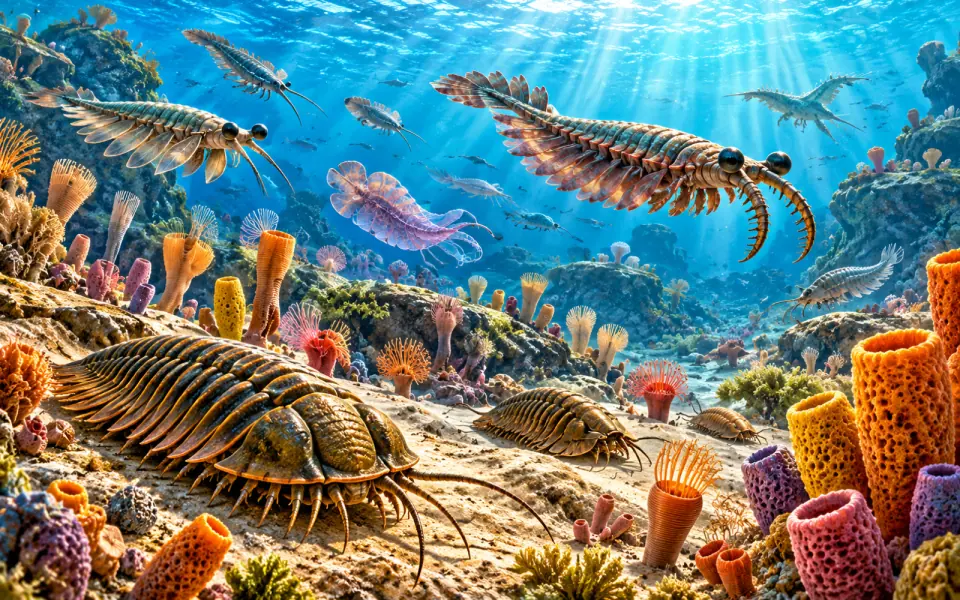 AfterThe Cambrian explosionabout 539 million years ago
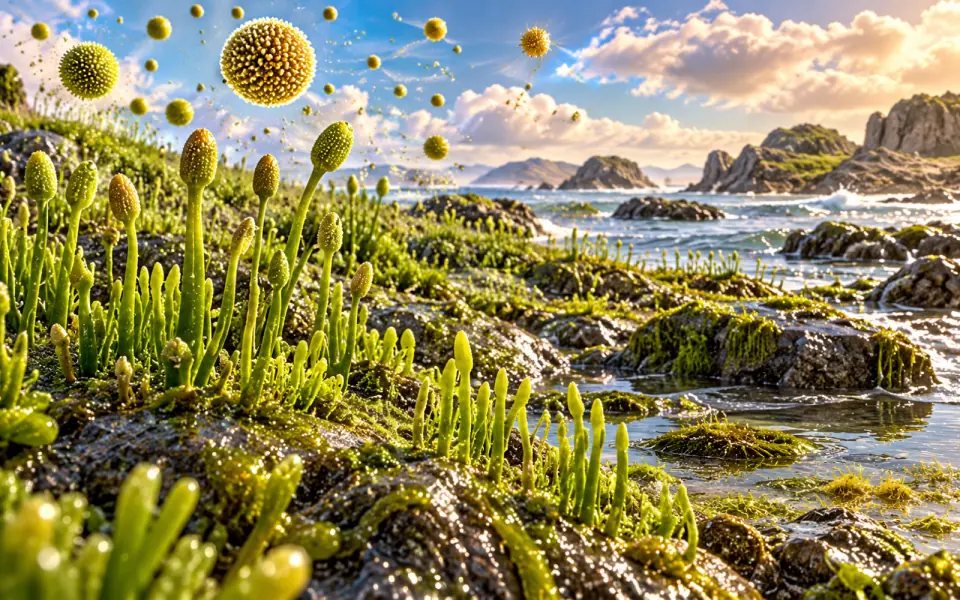 AfterThe first plants on landabout 475 million years ago
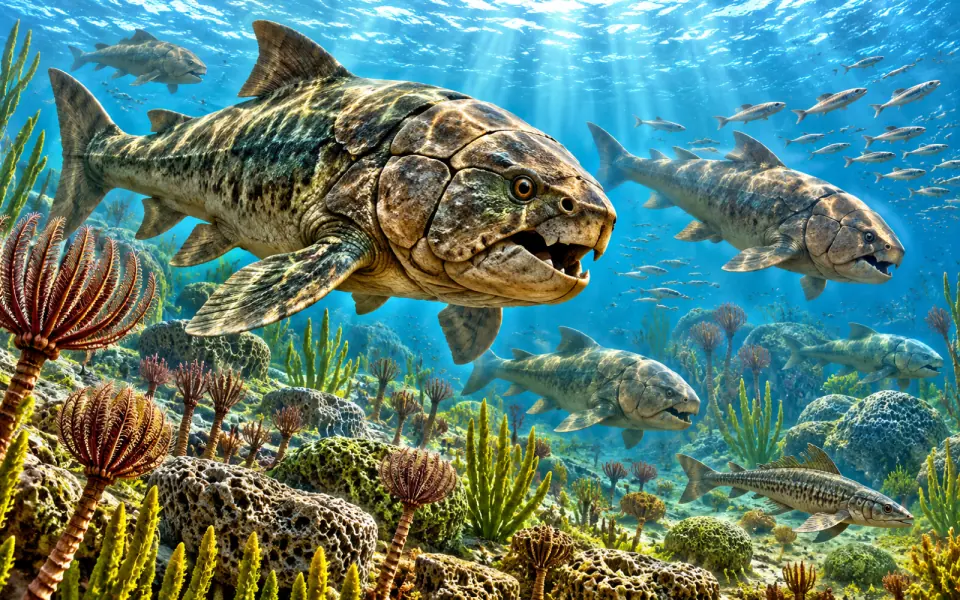 AfterThe first fish with jawsabout 440 million years ago
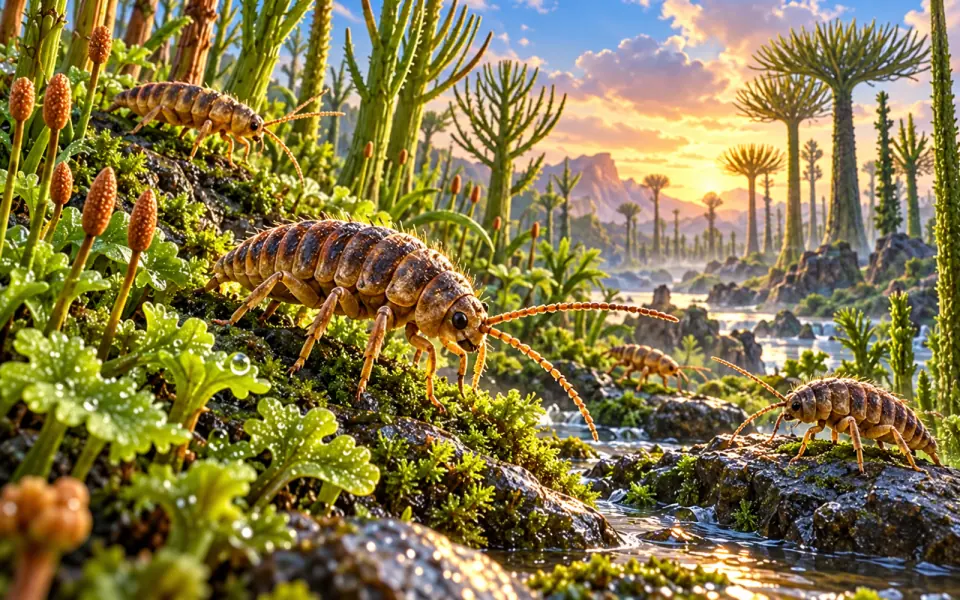 AfterThe first insectsabout 400 million years ago
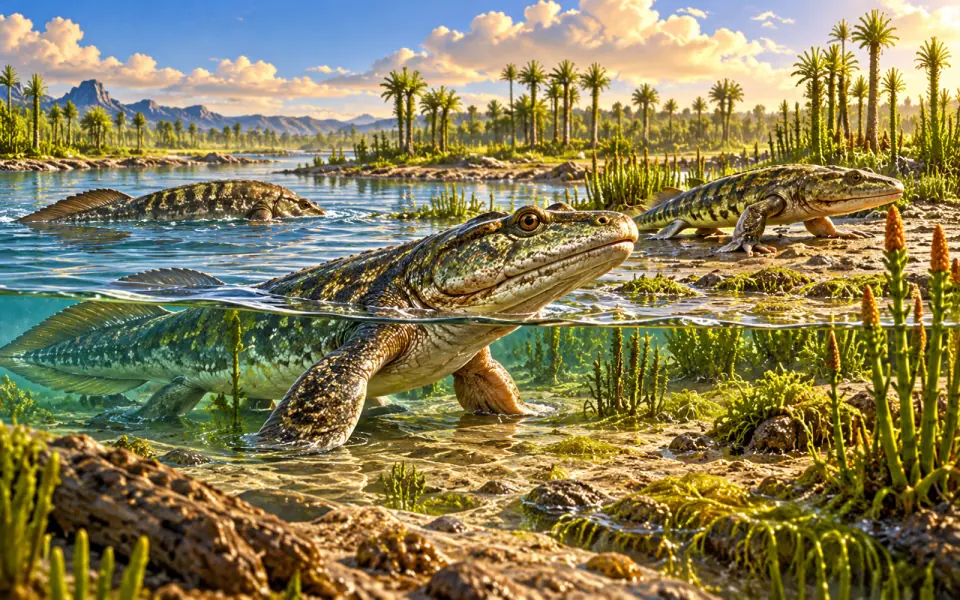 AfterThe first amphibiansabout 375 million years ago
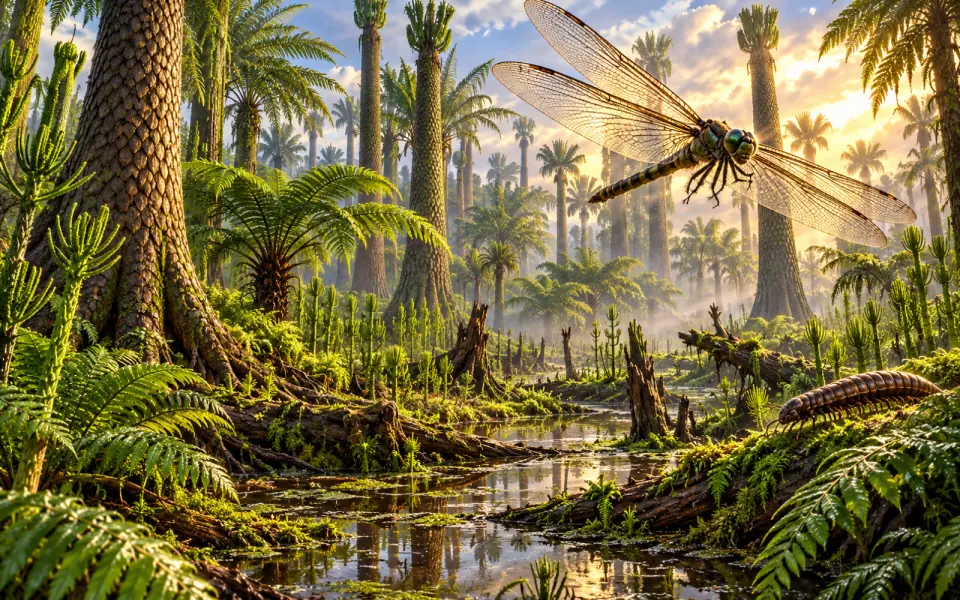 AfterCarboniferous forestsabout 320 million years ago
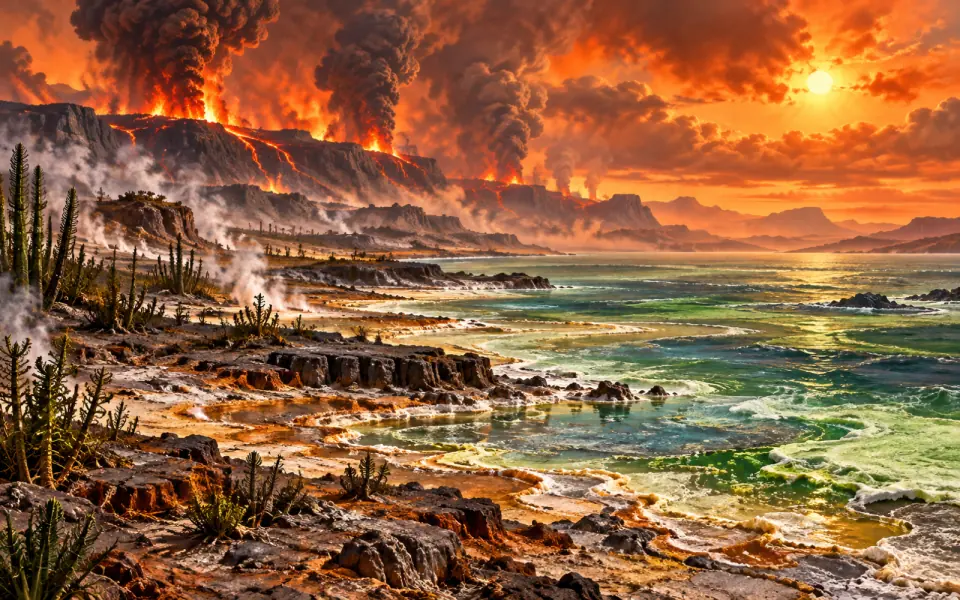 AfterThe great Permian extinctionabout 252 million years ago
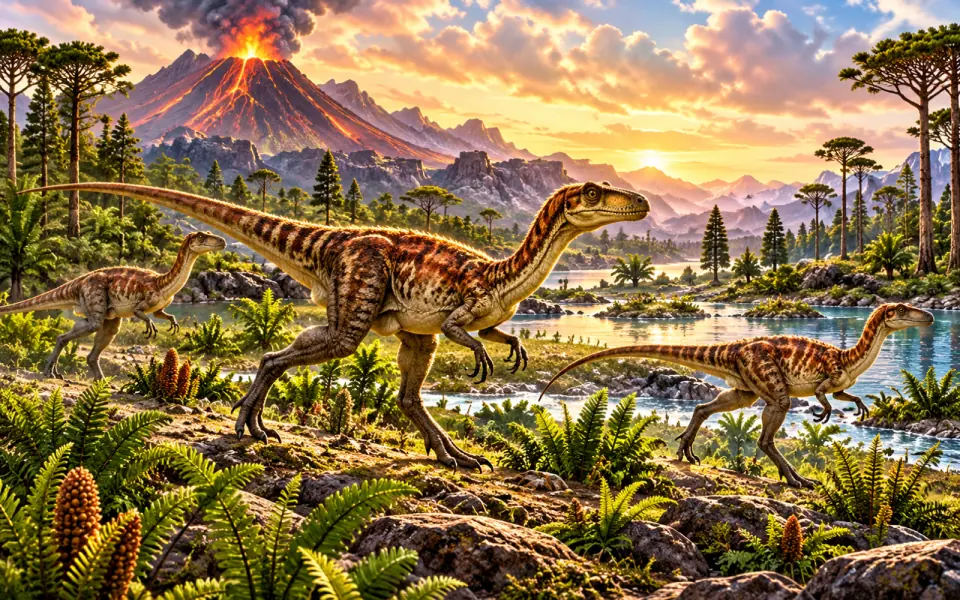 AfterThe first dinosaursabout 230 million years ago
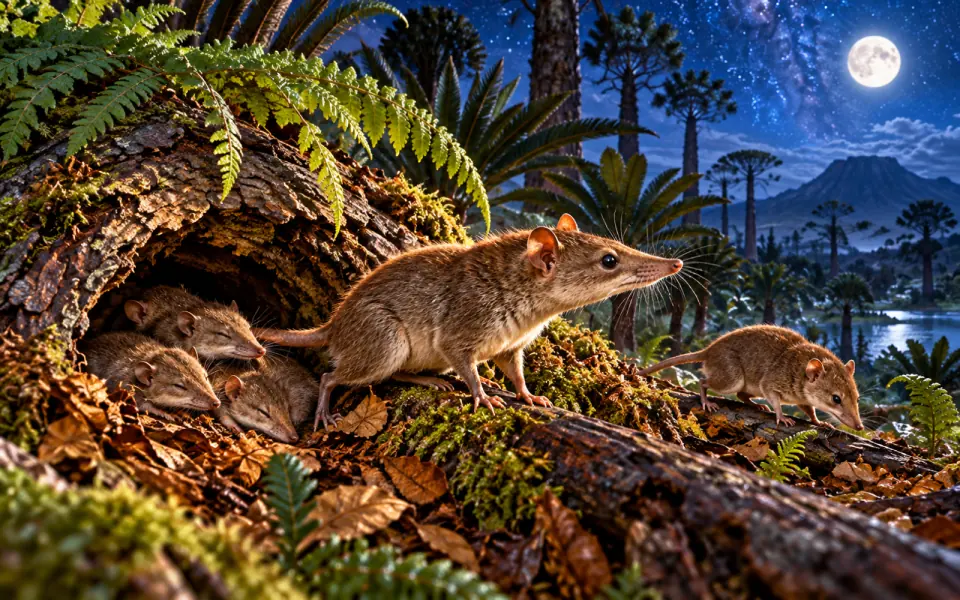 AfterThe first mammalsabout 225 million years ago
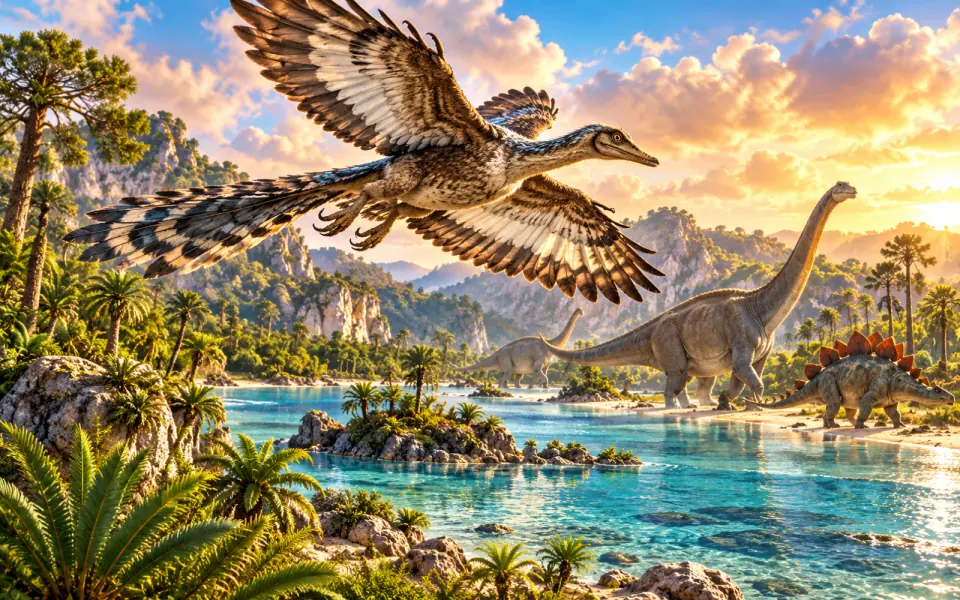 AfterThe first birdsabout 150 million years ago
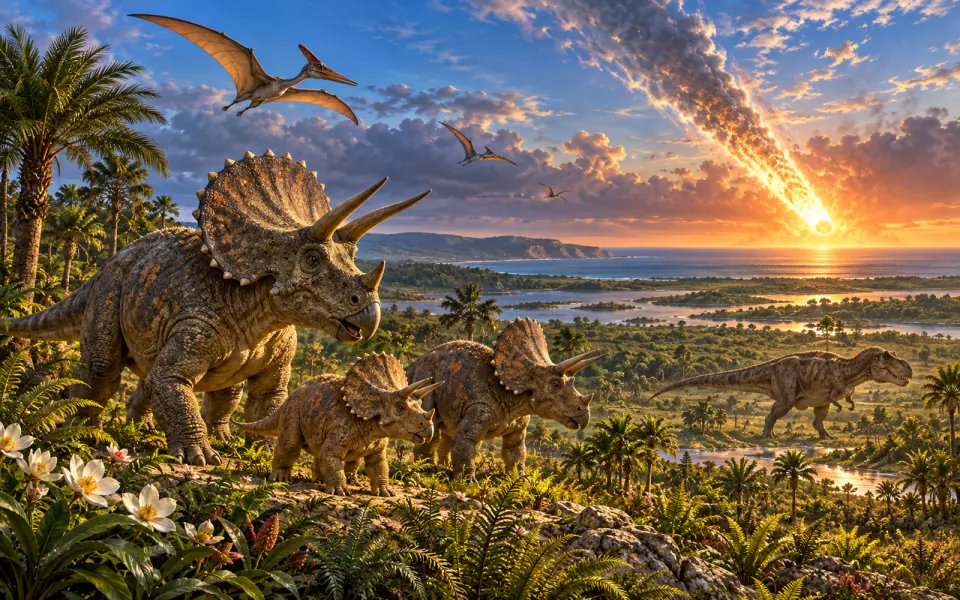 AfterExtinction of the non-avian dinosaursabout 66 million years ago
Listen / Read next
- Music to read by: Cinematic JourneyEpic film-style music, no lyrics, by Ciro Simone IrmiciSpotifyYouTube Music
Meanwhile, elsewhere in the world
Other events of the era “The Earth before us”
- The Big Bang
- The first stars
- Birth of the Milky Way
- Formation of the Solar System
- Birth of the Earth
- Formation of the Moon
- The oldest pieces of Earth
- The first oceans
- Cyanobacteria and photosynthesis
- The Great Oxidation Event
- The first complex cells
- The first many-celled living things
- The Ediacaran creatures
- The Cambrian explosion
- The first plants on land
- The first fish with jaws
- The first insects
- The first amphibians
- Carboniferous forests
- The great Permian extinction
- The first dinosaurs
- The first mammals
- The first birds
- Extinction of the non-avian dinosaurs
