The first mammals
about 225 million years ago Pangaea
In short
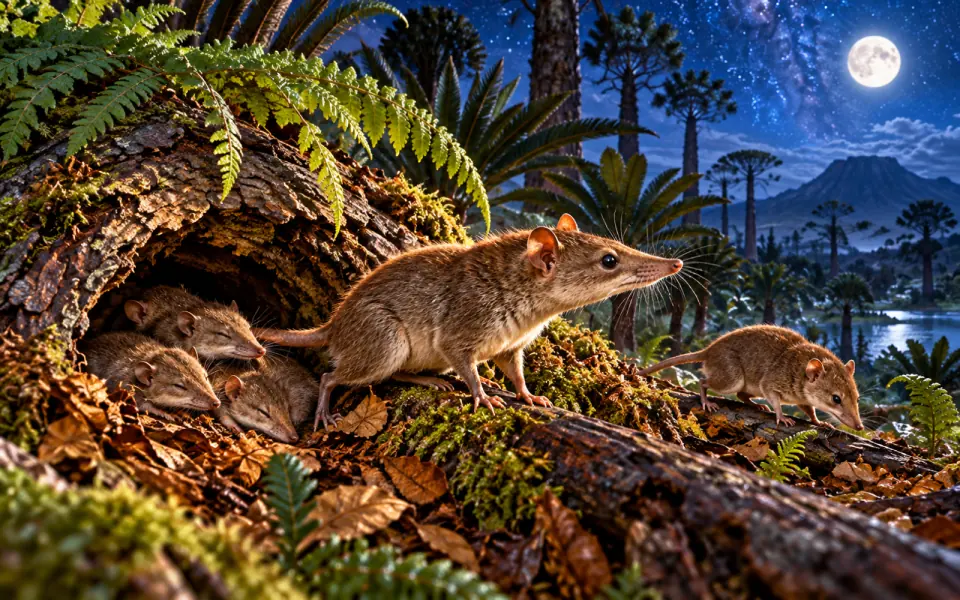
The first mammals were small animals, rather like shrews, that lived alongside the first dinosaurs. They had teeth of different shapes and replaced them only once, just like us. They probably had fur and fed their young on milk, even though fur and milk are not preserved in fossils. For millions of years they mostly stayed small.
Why it matters From these modest creatures come all mammals, including humans, whales and bats.
Source: Natural History Museum (London), “Earliest known mammal is identified using fossil tooth records”
Study card about 6 minutes of reading
The story
Small and hidden
When you think of the age of the dinosaurs, you imagine giants walking through forests. But if you could look down at the ground, among the roots and dry leaves, you would see other animals, small and quick: the mammals. They appeared at almost the same time as the dinosaurs, about 225 million years ago, and lived for more than 150 million years in the shadow of those great reptiles. The first ones were the size of a shrew or a little mouse and probably came out mostly at night, to eat insects.
What “mammal” means
What makes an animal a mammal? People usually think of fur and milk. Mammals have hair or fur on the body, produce milk with mammary glands to feed their young (that is where the name comes from), are warm-blooded with a steady body temperature, have a relatively large brain and a middle ear with three little bones: hammer, anvil and stirrup. The teeth are distinctive too: they come in different shapes, incisors, canines and molars, and are replaced only once in a lifetime, from milk teeth to permanent ones. Reptiles, by contrast, have teeth that are all alike and are constantly renewed.
But almost all of these features, such as fur and milk, leave no trace in the bones. That is why palaeontologists rely on what is preserved: teeth, jaws, ear bones. Fur and milk are worked out indirectly, or seen in the very rare exceptional fossils in which the imprints of fur survive.
Where they come from
Mammals do not descend from the dinosaurs. They belong to another line, that of the synapsids, which split from the reptiles very long ago, in the Carboniferous. The synapsids of the Permian, such as Dimetrodon, and then the cynodonts, a group of animals more and more like mammals, are their ancestors. If you look at the fossil of a cynodont, you see a dog-like animal with a tail, still partly a reptile.
The change from cynodonts to mammals was not a sudden event, but a series of small changes. The lower jaw, which in the ancestors was made of many bones, shrank to a single bone, the dentary. The other bones that used to form the jaw joint moved into the ear and became the little bones that carry sounds. It is one of the best-documented cases of evolutionary change and is confirmed by fossils and by the embryos of mammals today.
The oldest mammal?
Saying which was the first mammal depends on how you define the word. One candidate is Brasilodon, found in southern Brazil, in rocks of about 225 million years ago: a little animal about 20 centimetres long, with two sets of teeth, milk teeth and permanent ones. But its remains are few, mostly teeth and jaws, and scholars disagree: some see it as a cynodont very close to mammals, others as a “mammaliaform”, that is, “mammal-shaped”, leaving open whether it is already a true mammal.
Well-documented animals come from slightly more recent fossils. Morganucodon, which lived about 205 million years ago and was found in Wales, China and elsewhere, was about 10 centimetres long and fed on insects. Hadrocodium, from China, about 195 million years old, had a skull less than 2 centimetres long and perhaps weighed two grams: among the smallest mammals of its time.
A life in the background, but not a dull one
For a long time it was thought that the mammals of the Mesozoic were all alike, small insect-eaters. Recent fossils, mainly from China, show that this was not so. Castorocauda, from about 164 million years ago, had a flat tail and webbed feet like an otter or a beaver, and caught fish; its fossils even preserve imprints of the fur. Repenomamus, from the Cretaceous, was as big as an opossum or a small badger and the remains of a small dinosaur have been found in its fossil stomach. There were mammals that glided, that dug, that climbed. After the end of the dinosaurs, that variety exploded.
Why it happened
Mammals arose from a long process of adaptation. After the Great Dying of the Permian, the surviving cynodonts shrank in size. For many groups it was an advantage to be small and active at night, when the large daytime reptile predators were less dangerous. Some scholars think this night-time life pushed them to develop a better sense of smell and hearing and a larger brain.
Warm blood, that is, the ability to keep the body at a steady temperature, allowed them to stay active at night and in the cold. Fur helped keep the heat in. Milk made it possible to feed the young safely and to let them grow for longer.
How much each factor weighed and when each feature appeared is still being studied. That is why it is hard to give a precise date: the timeline marks about 225 million years ago.
What changed
The small mammals of the Mesozoic are the ancestors of all mammals today. When the non-avian dinosaurs disappeared, 66 million years ago, the mammals found many empty environments in front of them. In a few million years they diversified: the first large plant-eaters and predators appeared, animals that fly like bats and others that went back to the sea like whales. Today there are about 6,500 species of mammals.
Among the descendants of those small animals are the primates, the group to which we belong. There are many features we inherit from them: fur (although we have very little), mammary glands, warm blood, the three little bones in the ear, the large brain and the care of the young. The bond between mother and child, which lies at the heart of so many human stories, has a root more than 200 million years old.
Studying ancient mammals also helps us to understand how evolution transforms structures. A mammal's ear is made of pieces that once served for chewing, and so the history of its bones is a concrete example of how the old becomes new.
Key people and places
People
- Kenneth Kermack
- English palaeontologist. He studied Morganucodon and showed how mammals descend from cynodonts.
- Zhe-Xi Luo
- Chinese-American palaeontologist at the University of Chicago. He has studied Hadrocodium, Castorocauda and the evolution of the mammal ear.
- Jin Meng
- Chinese-American palaeontologist. He described Repenomamus with the dinosaur in its stomach.
Places
- Rio Grande do Sul, Brazil
- The region where Brasilodon and other Triassic cynodonts have been found.
- Glamorgan, Wales
- Here, in a quarry, in the 1940s, the first fossils of Morganucodon were found.
- Liaoning and Inner Mongolia, China
- Areas with exceptional Jurassic and Cretaceous fossils, including mammals with their fur preserved.
Good to know
- Hadrocodium perhaps weighed two grams, about the same as a one-cent euro coin.
- The platypus and the echidna are mammals, produce milk and have fur, but lay eggs: they are the last descendants of a very ancient branch.
- Castorocauda is the oldest example of a swimming mammal: it has a flat tail and webbed feet.
- Almost all mammals have seven bones in the neck, whether a giraffe, a mouse or a human being.
- Bats are mammals that have wings: they make up almost a fifth of all species of mammals.
Find out more
- University of California Museum of Paleontology (Berkeley), “Mammalia” ucmp.berkeley.edu
- Wikipedia, “Mammal” en.wikipedia.org
- Wikipedia, “Cynodontia” en.wikipedia.org
- Wikipedia, “Morganucodon” en.wikipedia.org
Related events
- The first dinosaursabout 230 million years ago · The Earth before usThe first mammals lived alongside the first dinosaurs.
- The first fish with jawsabout 440 million years ago · The Earth before usThe ear bones of mammals come from jaw bones of fish.
- Extinction of the non-avian dinosaursabout 66 million years ago · The Earth before usAfter the end of the non-avian dinosaurs the mammals diversified.
- The first homininsabout 7 million years ago · PrehistoryMillions of years later, from a line of mammals, the primates, the first hominins were born, our distant ancestors.
Before and after, in the era “The Earth before us”
Event 23 of 25
 BeforeThe Big Bangabout 13.8 billion years ago
 BeforeThe first starsabout 13.5 billion years ago
 BeforeBirth of the Milky Wayabout 13 billion years ago
 BeforeFormation of the Solar Systemabout 4.6 billion years ago
 BeforeBirth of the Earthabout 4.5 billion years ago
 BeforeFormation of the Moonabout 4.5 billion years ago
 BeforeThe oldest pieces of Earthabout 4.4 billion years ago
 BeforeThe first oceansabout 4.3 billion years ago
 BeforeThe first life on Earthabout 3.5 billion years ago
 BeforeCyanobacteria and photosynthesisabout 2.7 billion years ago
 BeforeThe Great Oxidation Eventabout 2.4 billion years ago
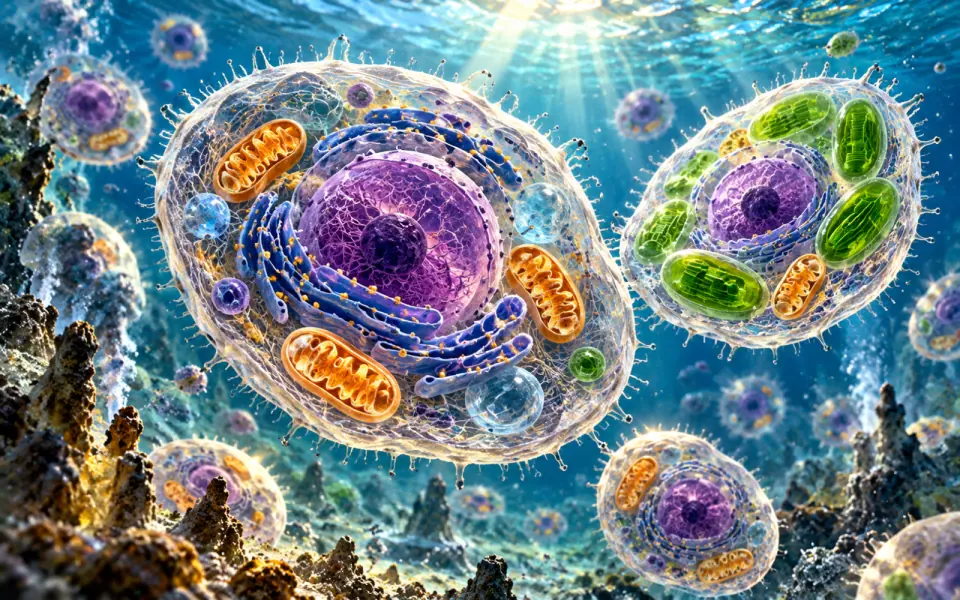 BeforeThe first complex cellsabout 1.8 billion years ago
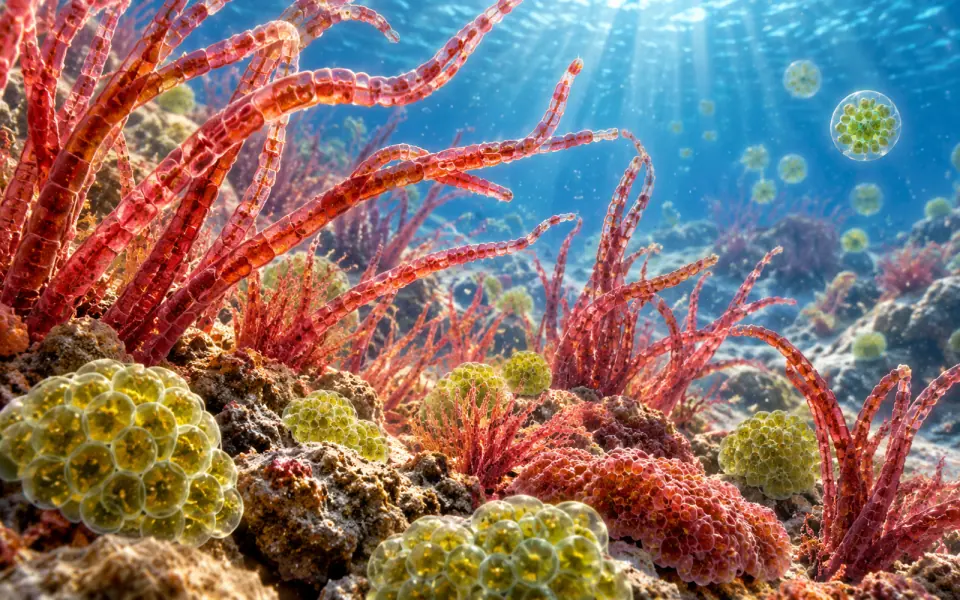 BeforeThe first many-celled living thingsabout 1 billion years ago
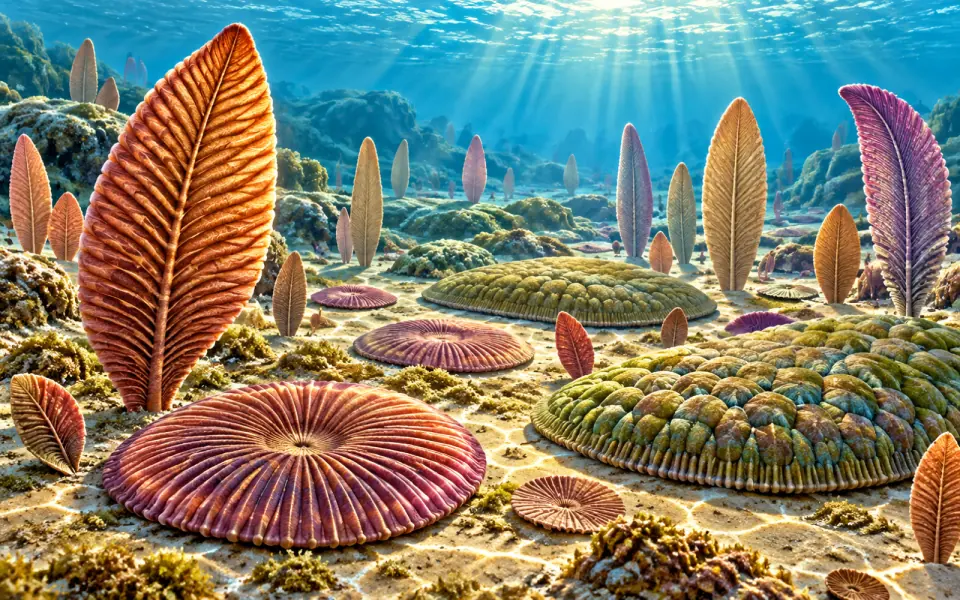 BeforeThe Ediacaran creaturesabout 555 million years ago
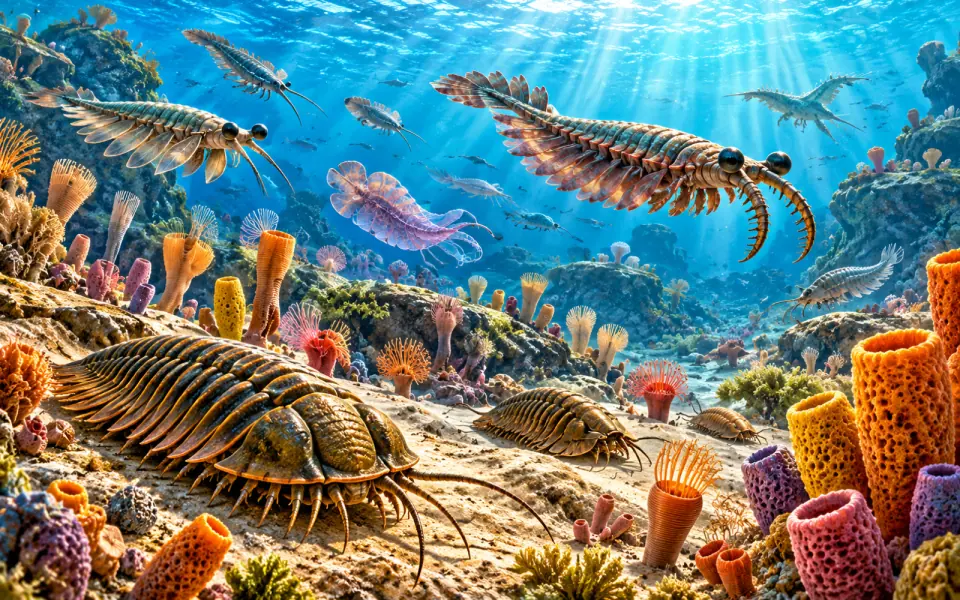 BeforeThe Cambrian explosionabout 539 million years ago
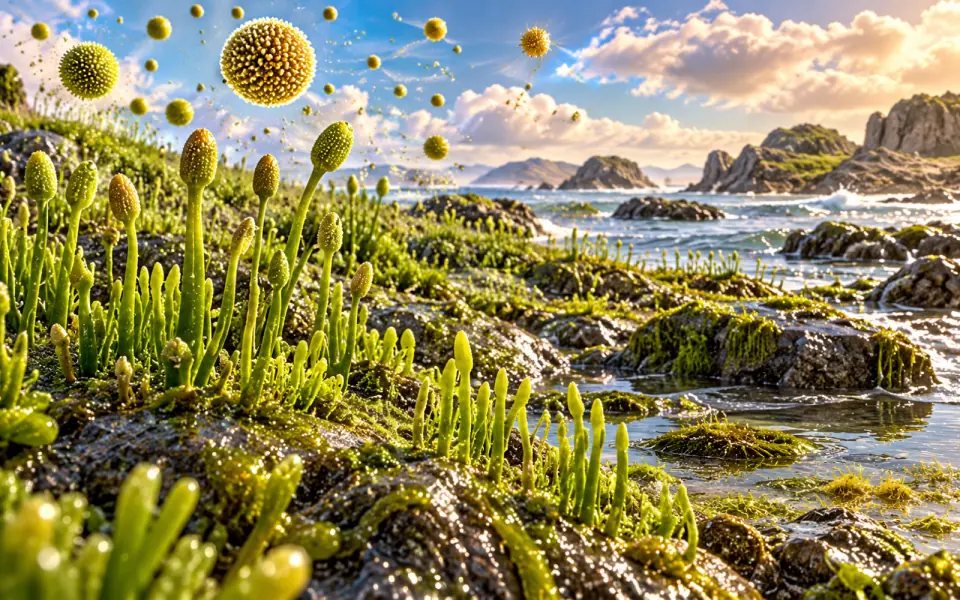 BeforeThe first plants on landabout 475 million years ago
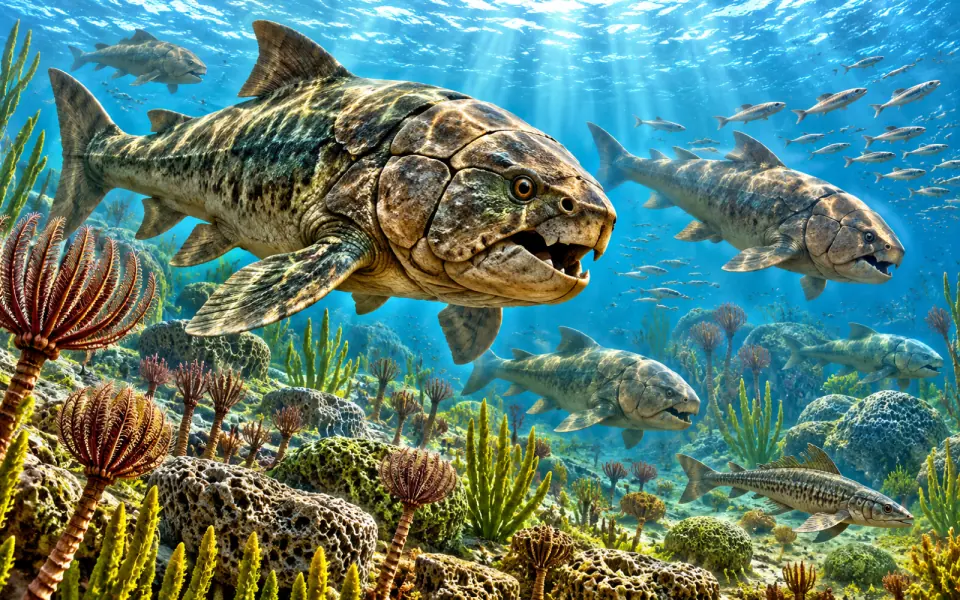 BeforeThe first fish with jawsabout 440 million years ago
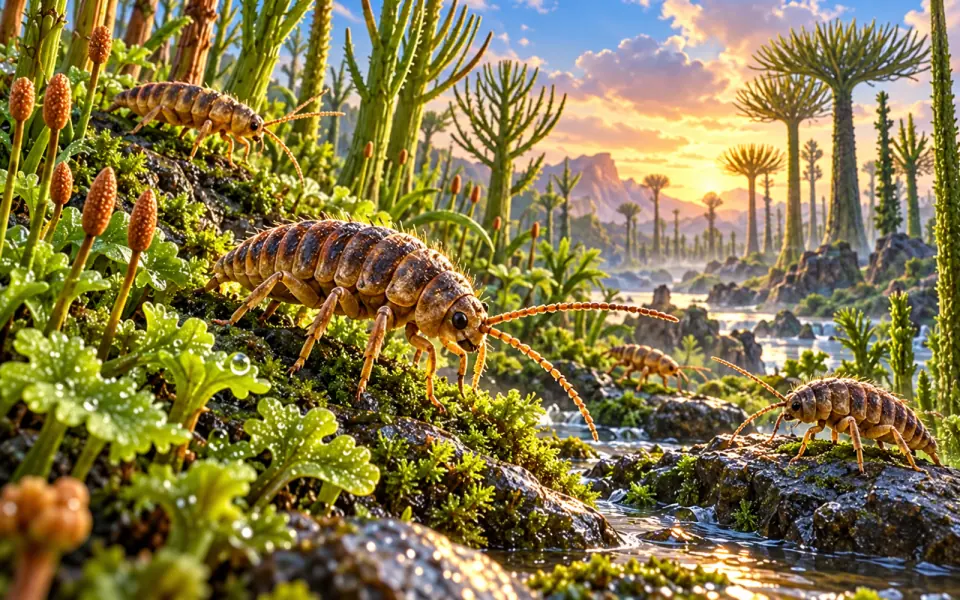 BeforeThe first insectsabout 400 million years ago
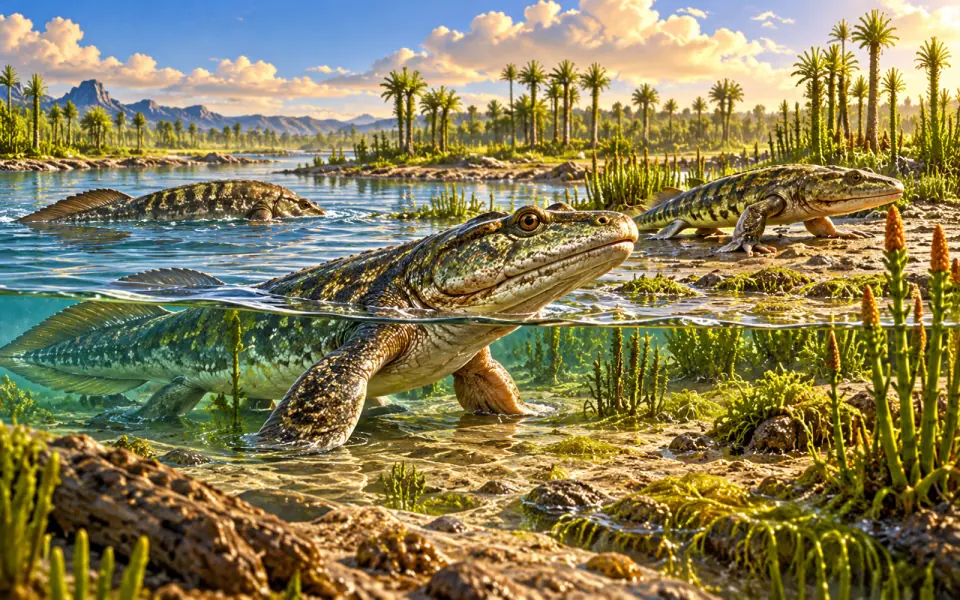 BeforeThe first amphibiansabout 375 million years ago
 BeforeCarboniferous forestsabout 320 million years ago
 BeforeThe great Permian extinctionabout 252 million years ago
 BeforeThe first dinosaursabout 230 million years ago
- You are hereThe first mammalsabout 225 million years ago
 AfterThe first birdsabout 150 million years ago
 AfterExtinction of the non-avian dinosaursabout 66 million years ago
Listen / Read next
- Music to read by: Cinematic JourneyEpic film-style music, no lyrics, by Ciro Simone IrmiciSpotifyYouTube Music
Meanwhile, elsewhere in the world
Other events of the era “The Earth before us”
- The Big Bang
- The first stars
- Birth of the Milky Way
- Formation of the Solar System
- Birth of the Earth
- Formation of the Moon
- The oldest pieces of Earth
- The first oceans
- The first life on Earth
- Cyanobacteria and photosynthesis
- The Great Oxidation Event
- The first complex cells
- The first many-celled living things
- The Ediacaran creatures
- The Cambrian explosion
- The first plants on land
- The first fish with jaws
- The first insects
- The first amphibians
- Carboniferous forests
- The great Permian extinction
- The first dinosaurs
- The first birds
- Extinction of the non-avian dinosaurs
