Carboniferous forests
about 320 million years ago Swamps near the equator (now Europe and North America)
In short
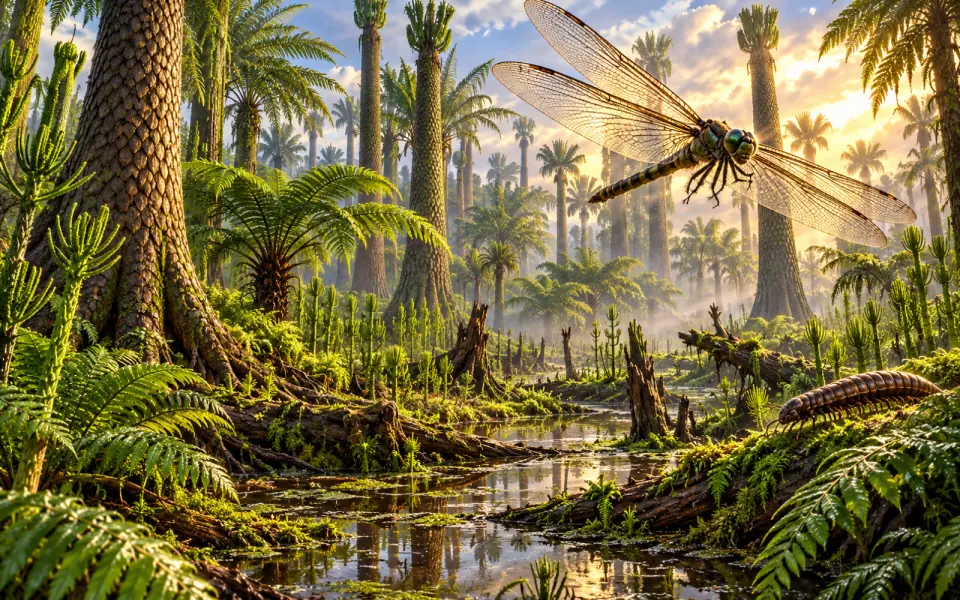
During the Carboniferous, vast warm swamps were covered with ferns and giant clubmosses, plants as tall as trees with scaly trunks. Plant remains buried in mud, where there was no oxygen, much later became huge coal deposits. In the oxygen-rich air there were also enormous insects and millipedes, such as dragonflies with wings more than half a metre across.
Why it matters Those forests changed the climate and the atmosphere, and left resources that human industry would later use.
Source: University of California Museum of Paleontology, “The Carboniferous Period”
Study card about 5 minutes of reading
The story
A world of swamps
About 320 million years ago, on the lands we now call Europe and North America, the landscape was very different. It was hot and extremely humid. Great swamps stretched near the equator, and in those still waters grew dense, green forests. They were not made of oaks or pines, which did not exist yet, but of tree ferns, giant horsetails and above all of club mosses, plants that are small and creeping today but that then grew into trees.
The period is called the Carboniferous and lasts from about 359 to 299 million years ago. The name was given in 1822 by two English geologists, William Conybeare and William Phillips, because rocks of that age contained a lot of coal: “Carboniferous” means exactly “coal-bearing”.
Strange and immense trees
The biggest club mosses, such as Lepidodendron and Sigillaria, were up to about 30 metres tall. They had trunks that did not branch for much of their height and were covered with diamond-shaped scales, like the skin of a reptile. At the top, forked branches opened out with long, ribbon-like leaves. They had little wood, and grew very fast, and then died. Beside them were the giant horsetails, such as Calamites, 20 metres tall, and tree ferns, with broad, ragged leaves.
The leaves and trunks fell into the dark, oxygen-poor water of the swamps. There the remains did not rot completely: they piled up in layers of plant material, called peat. With time, the ground sank and the sea or rivers covered the peat with sand and mud. Under the weight and the heat, over millions of years, the peat turned into coal. To make a layer of coal one metre thick took several metres of peat, and to form that, many thousands of years.
Scientists have long argued about why so much coal formed in just that period. One hypothesis says that the fungi and bacteria able to break down wood were not yet efficient enough, so a lot of wood stayed intact; today many scholars think that the humid climate and the movement of the continents, which created basins where the remains piled up, mattered more. The debate is open.
Giant animals in oxygen-rich air
The Carboniferous was the golden moment of the arthropods. In the forests lived gigantic dragonfly-like insects such as Meganeura, with wings up to about 70 centimetres across, and enormous millipedes such as Arthropleura, more than two metres long, the biggest land invertebrate that has ever existed. These giants are thought to have been helped by the air, which according to calculations held more oxygen than today, between 25 and 35 per cent according to the models, against 21: insects breathe through tiny tubes and richer air lets bodies grow bigger.
Vertebrates walked among the plants too. Amphibians were numerous and some were as big as crocodiles. And, around 315 million years ago, the first reptile-like animals appeared: the best-known example is Hylonomus, a lizard-like animal about 20 centimetres long, whose remains were found inside a fossil tree trunk at Joggins, in Nova Scotia, Canada. Reptiles laid eggs with a shell and a membrane that protected the embryo, and this allowed them to live far from water.
The end of the swamp forests
Towards the end of the Carboniferous the climate became drier and colder, partly because of great glaciers forming in the south of the supercontinent Gondwana. About 305 million years ago the wet forests of club mosses shrank a great deal and broke up; the reptiles, better suited to dry climates, took advantage. The coal stayed underground, waiting.
Why it happened
Why were there so many forests in that period? Plants had only recently invented wood and trees, and for the first time they were occupying the dry land in a massive way. The climate was hot and humid, the low lands near the equator were covered with bogs, and the moving continents were joining to form the supercontinent Pangaea, creating vast swampy areas.
The forests absorbed large amounts of carbon dioxide from the air and turned it into wood, which ended up buried. Less carbon dioxide means less greenhouse effect, and the planet cooled: at the beginning of the Carboniferous the climate was milder, at the end there were great glaciers. At the same time oxygen increased.
Coal formed because the layers of peat were buried quickly and under pressure. It did not happen anywhere else with the same abundance, and that is why the Carboniferous is the coal period par excellence, even though coal formed in other periods too.
What changed
The forests of the Carboniferous changed the atmosphere and the climate, and left a legacy that still changes our lives. The coal formed then was for centuries a fuel: from the 18th century it powered steam engines and factories, and was the engine of the Industrial Revolution in England, Germany, Belgium and North America. Without those deposits modern history would have been very different.
Coal is also a problem. When we burn it, we give back to the air in a few decades the carbon dioxide that those plants had taken out over tens of millions of years. It is one of the main causes of today's global warming. That is why many countries, under climate agreements, are cutting their use of coal and moving to renewable energy.
From the point of view of the history of life, the Carboniferous saw the invention of the shelled egg and the appearance of the first reptiles, which would spread across the Earth in the following eras, opening the way to dinosaurs and mammals. Many fossils from this period, such as ferns and insects, are still found in coal mines today.
Key people and places
People
- William Conybeare and William Phillips
- English geologists who in 1822 gave the name “Carboniferous” to the rocks with coal.
- Robert Berner
- American geochemist (1935–2015). With his models he estimated the oxygen in the air of the past and showed that in the Carboniferous it was very high.
- William Dawson
- Canadian geologist (1820–1899). He studied the cliffs of Joggins and found there, inside fossil trunks, remains of some of the oldest reptile-like animals; the geologist Charles Lyell helped him and visited him.
Places
- Joggins, Nova Scotia (Canada)
- Coastal cliffs with fossil forests about 315 million years old and the remains of some of the oldest reptile-like animals.
- Ruhr Basin, Germany
- A region of coal mines that fed German industry for more than a century.
- Wales and northern England
- Areas of coal deposits that were the heart of the British Industrial Revolution.
- Carboniferous swamps
- Hot regions near the equator, now part of Europe and North America.
Good to know
- Arthropleura, the giant millipede, was over two metres long, but it probably did not hunt: scientists think it fed on decaying plant matter.
- The coal we burn today is stored sunlight: it is the energy that those plants captured with photosynthesis 300 million years ago.
- The trunks of club mosses had a soft “heart” and a tough bark, like a tube: that is why they often became fossils standing upright.
- Lepidodendron means “scale tree” in Greek, from the diamond-shaped scales that covered the trunk.
- The reptile egg has a shell and membranes that keep water in and let air through: it is the invention that made it possible to lay eggs far from water, and reptiles and birds still use it today.
Find out more
- Wikipedia, “Lepidodendron” en.wikipedia.org
- Wikipedia, “Carboniferous” en.wikipedia.org
- University of California Museum of Paleontology (Berkeley), the Carboniferous (in English) ucmp.berkeley.edu
- U.S. Energy Information Administration, “Coal explained” eia.gov
Related events
- The first plants on landabout 475 million years ago · The Earth before usThe first land plants are the ancestors of the trees of the Carboniferous.
- The first insectsabout 400 million years ago · The Earth before usIn the forests of the Carboniferous giant dragonfly-like insects flew.
- The first amphibiansabout 375 million years ago · The Earth before usThe amphibians of the Carboniferous descend from the first four-legged animals.
- Newcomen's steam engine1712 · Age of revolutionsThe coal of the Carboniferous powered the first steam engines.
- The Paris Agreement on climate2015 · TodayThe Paris Agreement tries to reduce the use of fossil fuels such as coal.
Before and after, in the era “The Earth before us”
Event 20 of 25
 BeforeThe Big Bangabout 13.8 billion years ago
 BeforeThe first starsabout 13.5 billion years ago
 BeforeBirth of the Milky Wayabout 13 billion years ago
 BeforeFormation of the Solar Systemabout 4.6 billion years ago
 BeforeBirth of the Earthabout 4.5 billion years ago
 BeforeFormation of the Moonabout 4.5 billion years ago
 BeforeThe oldest pieces of Earthabout 4.4 billion years ago
 BeforeThe first oceansabout 4.3 billion years ago
 BeforeThe first life on Earthabout 3.5 billion years ago
 BeforeCyanobacteria and photosynthesisabout 2.7 billion years ago
 BeforeThe Great Oxidation Eventabout 2.4 billion years ago
 BeforeThe first complex cellsabout 1.8 billion years ago
 BeforeThe first many-celled living thingsabout 1 billion years ago
 BeforeThe Ediacaran creaturesabout 555 million years ago
 BeforeThe Cambrian explosionabout 539 million years ago
 BeforeThe first plants on landabout 475 million years ago
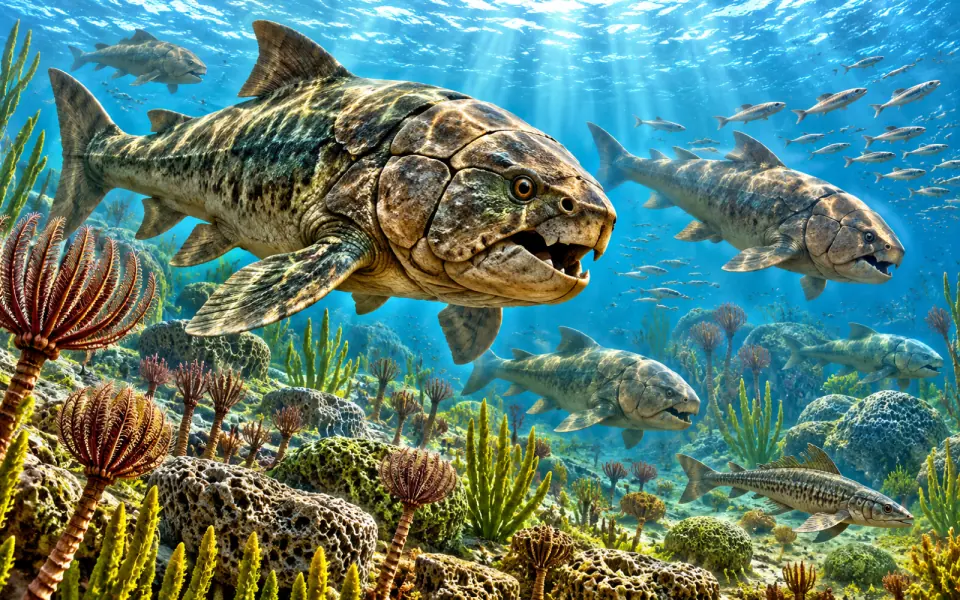 BeforeThe first fish with jawsabout 440 million years ago
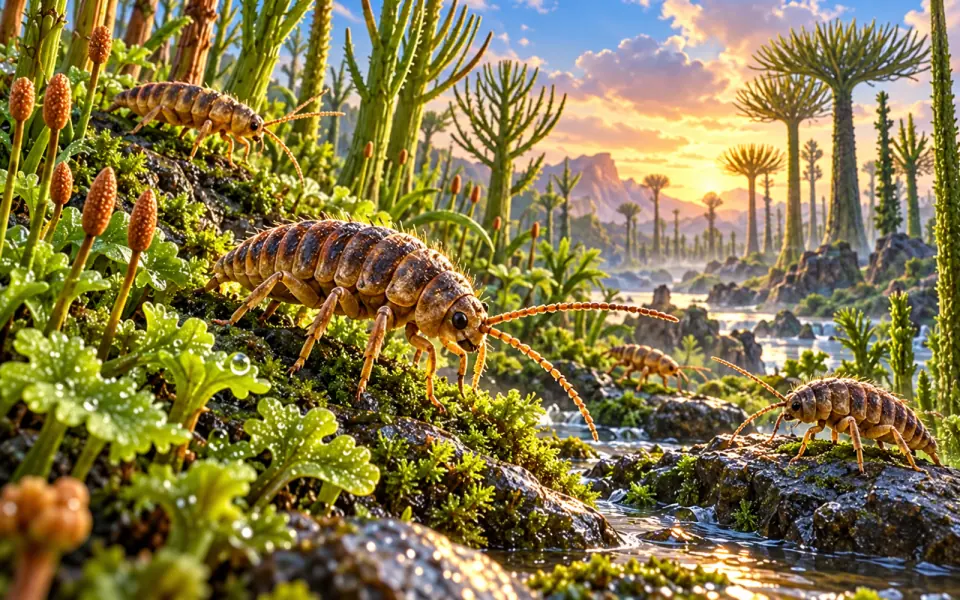 BeforeThe first insectsabout 400 million years ago
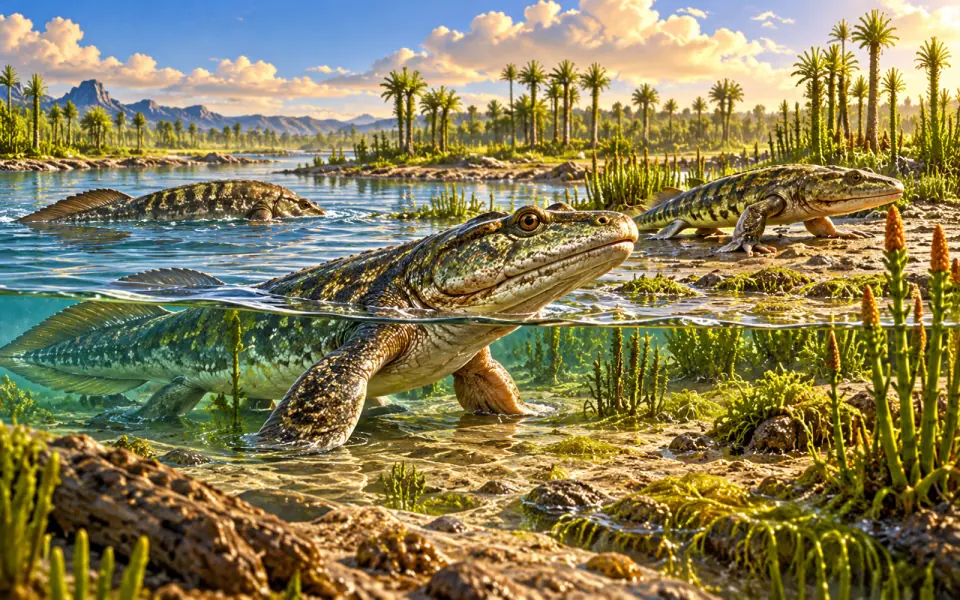 BeforeThe first amphibiansabout 375 million years ago
- You are hereCarboniferous forestsabout 320 million years ago
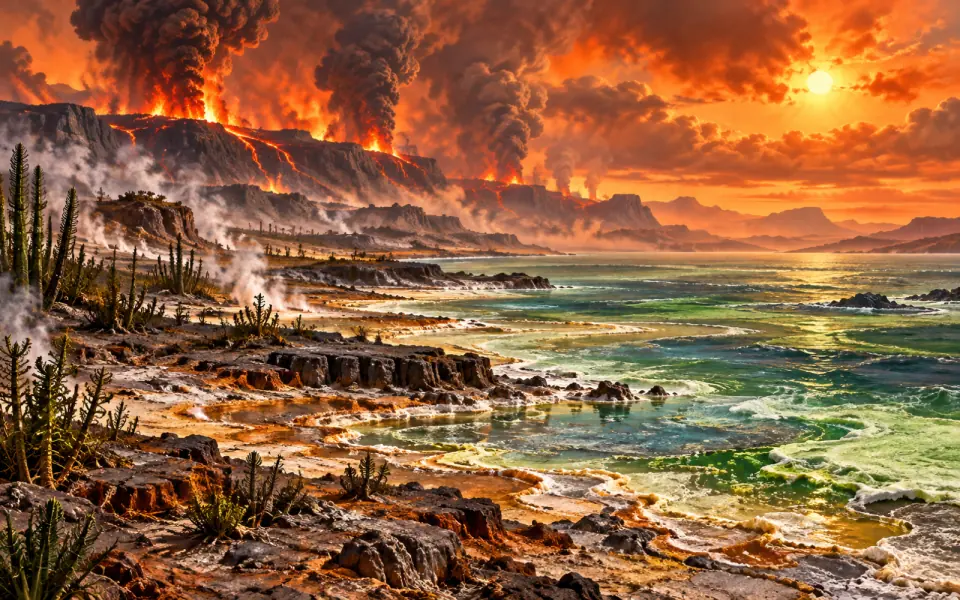 AfterThe great Permian extinctionabout 252 million years ago
 AfterThe first dinosaursabout 230 million years ago
 AfterThe first mammalsabout 225 million years ago
 AfterThe first birdsabout 150 million years ago
 AfterExtinction of the non-avian dinosaursabout 66 million years ago
Listen / Read next
- Music to read by: Cinematic JourneyEpic film-style music, no lyrics, by Ciro Simone IrmiciSpotifyYouTube Music
Meanwhile, elsewhere in the world
Other events of the era “The Earth before us”
- The Big Bang
- The first stars
- Birth of the Milky Way
- Formation of the Solar System
- Birth of the Earth
- Formation of the Moon
- The oldest pieces of Earth
- The first oceans
- The first life on Earth
- Cyanobacteria and photosynthesis
- The Great Oxidation Event
- The first complex cells
- The first many-celled living things
- The Ediacaran creatures
- The Cambrian explosion
- The first plants on land
- The first fish with jaws
- The first insects
- The first amphibians
- The great Permian extinction
- The first dinosaurs
- The first mammals
- The first birds
- Extinction of the non-avian dinosaurs
