The first many-celled living things
about 1 billion years ago The Earth's seas
In short
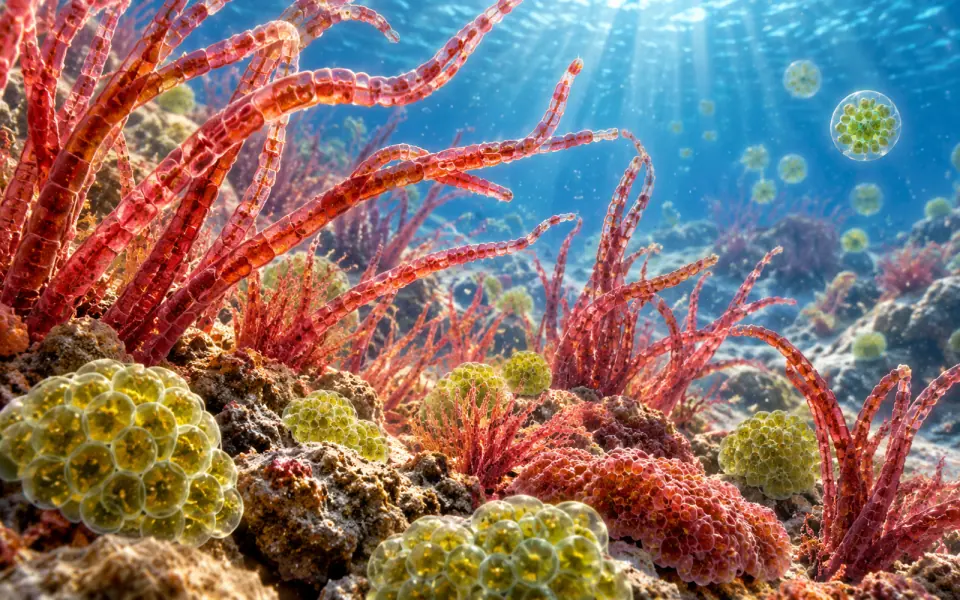
Some cells began to stay together and share out the work instead of separating after reproducing. That is how the first multicellular organisms were born, meaning living things made of many cells. One of the oldest known is Bangiomorpha, a small red seaweed about a billion years old found in the Canadian Arctic. Over time, groups of cells became tissues with different jobs.
Why it matters Being multicellular made bigger, more organised bodies possible, with new ways of living.
Source: CBC News, “Fossils of earliest organisms that had sex are a billion years old”
Study card about 5 minutes of reading
The story
From one cell to many
For billions of years life was made of single cells, each one independent. Then, at some point, some cells stopped separating after dividing and stayed stuck together, cooperating. Something new had been born: the many-celled organism, a being made of many cells working together. We are many-celled organisms, like a tree, a mushroom or a frog.
Scientists do not know when it happened for the first time, because the first organisms with several cells were tiny and soft, and fossils of that kind survive very badly. Some researchers have proposed even older fossils, such as those found in Gabon, in Africa, about 2.1 billion years old, but they are disputed. One of the most convincing pieces of evidence comes from a red alga called Bangiomorpha.
Bangiomorpha, an alga a billion years old
Bangiomorpha pubescens was discovered in the rocks of the Canadian Arctic, on Somerset Island, by the palaeontologist Nicholas Butterfield (now at the University of Cambridge), who described it in 2000. It is made of thin filaments, formed of a row of cells arranged like little discs, and it attached itself to the seabed. A dating in 2018, by a team from McGill University in Montreal, gave an age of about 1.047 billion years.
What makes this fossil special is that it already had cells that were different from one another. Some served to fix the alga to the bottom, others to produce cells for reproduction. What is more, its remains show that it reproduced by a sexual process, that is, by mixing the genetic material of two individuals. For this reason it has been considered one of the oldest organisms that can be recognised as eukaryotes with sexual reproduction. It is regarded as one of the oldest certain complex organisms, although new discoveries could move the date.
How many times did it happen?
A surprising fact is that many-celled life has been “invented” many times, independently. Red algae, green algae, brown algae, plants, fungi and animals each have their own story. Scientists estimate that it arose at least twenty or thirty times in different groups. This means that once complex cells existed, staying together paid off in many different ways.
You can still watch the process today. Volvox is a green alga that lives in fresh water as a hollow sphere made of thousands of cells, some devoted to movement and others to reproduction. Some single-celled organisms called choanoflagellates sometimes live in colonies and are the closest living relatives of animals, which suggests that the first animals came from similar forms.
In 2012 a team of researchers at the University of Minnesota (where he then worked) led by William Ratcliff carried out a famous experiment: they took brewer's yeast, a single-celled organism, and grew it, selecting every day the clumps of cells that sank fastest. In about two months, in the laboratory, the yeast cells formed snowflake-shaped clusters. It was a small re-run, in the lab, of the birth of a many-celled body.
Why it pays to stay together
A group of cells has advantages. It is harder for a smaller predator to eat, it can grow bigger, it can share out the jobs: some cells take care of getting food, others of moving, others of reproducing. But there are problems too. The cells have to cooperate and stop competing with one another. If a cell reproduces without control, it harms the body: that, after all, is how a tumour works. Many-celled organisms therefore developed rules: chemical signals, checks on cell division and even a programmed “suicide” of damaged cells.
A human body has tens of trillions of cells, of more than two hundred different types, all born from a single cell, the fertilised egg, and all with the same DNA. Their cooperation is the result of a story that begins, in an ancient sea, with an alga a billion years ago.
Why it happened
There is no single cause. Scientists have suggested several advantages: protection from predators, because a clump is harder to swallow; greater efficiency in getting food, because neighbouring cells can share substances; the chance of having cells dedicated to different jobs.
The environment probably mattered too. With more oxygen in the water and the air, after the Great Oxidation Event, there was more energy available, and a big body could work better. Some researchers think that the appearance of the first predators pushed cells to join together for defence.
The change was gradual. It probably began with colonies of identical cells and only later, with specialisation, became a true organism.
What changed
Many-celled bodies made it possible to reach much larger sizes and much more varied shapes. Some cells could specialise and form tissues: skin, muscle, nerves, bone. Tissues were organised into organs, and organs into systems. From this possibility came all the richness of shapes in visible life, beginning with the first animals, from which we descend.
A less pleasant consequence is that bodies come to an end: the cells that reproduce, the gametes, pass to the next generation, while the rest of the body ages and dies. Death from old age is in a way the price to be paid for having a complex body.
The study of many-celled life is useful in medicine too: understanding how cells cooperate and how they stop doing so helps in studying cancer and the development of embryos. And it helps us think about other worlds: if life has joined together many times independently, perhaps it would happen elsewhere as well.
Key people and places
People
- Nicholas Butterfield
- Palaeontologist at the University of Cambridge. In 2000 he described Bangiomorpha, the oldest red alga with sexual reproduction.
- William Ratcliff
- American biologist. In 2012 he made a many-celled yeast appear in the laboratory in about two months.
- Abderrazak El Albani
- Franco-Moroccan geologist. In 2010 he led the discovery of the 2.1-billion-year-old fossils in Gabon, still debated.
Places
- Somerset Island, Nunavut (Canada)
- Here, in the Canadian Arctic, the fossil red algae about a billion years old were found.
- Baffin Island, Nunavut (Canada)
- Another place in the Arctic where Bangiomorpha fossils have been collected.
- Franceville, Gabon
- An African region where fossil structures 2.1 billion years old have been found, perhaps among the first many-celled living things.
Good to know
- Scientists think that many-celled life arose, independently, at least twenty times in the history of life.
- Volvox is a green sphere of fresh water made of thousands of cells, and its “daughter” cells grow inside the mother sphere before coming out.
- Ratcliff's “snowflake” yeast was evolved for years in the laboratory: the clusters became thousands of times bigger, until they could be seen with the naked eye.
- Each of us began as a single cell, the fertilised egg; an adult's body has tens of trillions.
- In the human body millions of cells die and are replaced every second: your skin is completely renewed in a few weeks.
Find out more
- Wikipedia, “Bangiomorpha pubescens” en.wikipedia.org
- Wikipedia, “Eukaryote” en.wikipedia.org
- Wikipedia, “Algae” en.wikipedia.org
- University of California Museum of Paleontology (Berkeley), the red algae (in English) ucmp.berkeley.edu
Related events
- The first complex cellsabout 1.8 billion years ago · The Earth before usComplex cells were the first step towards many-celled bodies.
- The Ediacaran creaturesabout 555 million years ago · The Earth before usFrom many-celled organisms descend the strange creatures of Ediacara.
- The Cambrian explosionabout 539 million years ago · The Earth before usIn the Cambrian many-celled animals multiplied into a great variety of forms.
- Darwin publishes On the Origin of Species1859 · Age of revolutionsDarwin described how complex forms arise from simple ones.
Before and after, in the era “The Earth before us”
Event 13 of 25
 BeforeThe Big Bangabout 13.8 billion years ago
 BeforeThe first starsabout 13.5 billion years ago
 BeforeBirth of the Milky Wayabout 13 billion years ago
 BeforeFormation of the Solar Systemabout 4.6 billion years ago
 BeforeBirth of the Earthabout 4.5 billion years ago
 BeforeFormation of the Moonabout 4.5 billion years ago
 BeforeThe oldest pieces of Earthabout 4.4 billion years ago
 BeforeThe first oceansabout 4.3 billion years ago
 BeforeThe first life on Earthabout 3.5 billion years ago
 BeforeCyanobacteria and photosynthesisabout 2.7 billion years ago
 BeforeThe Great Oxidation Eventabout 2.4 billion years ago
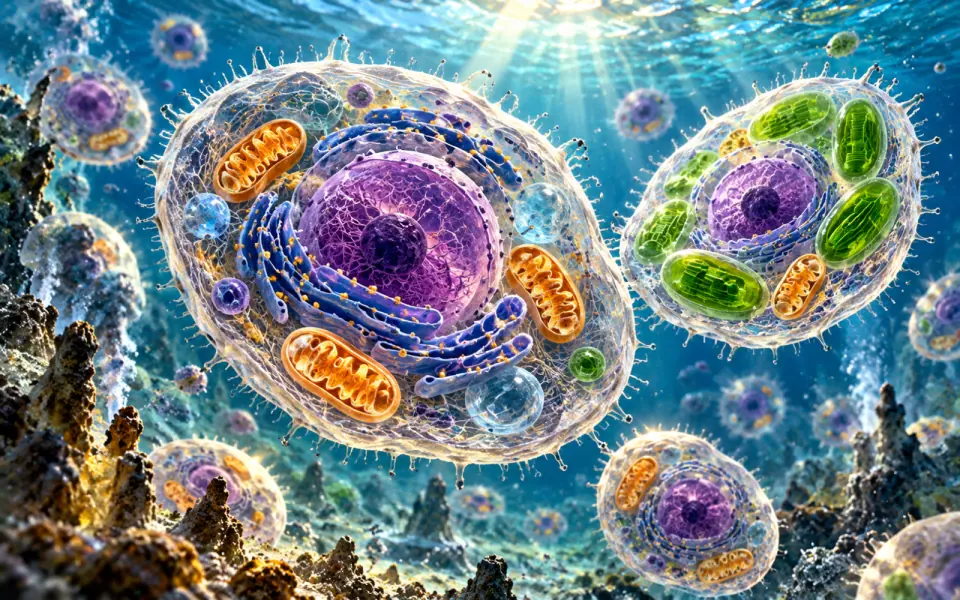 BeforeThe first complex cellsabout 1.8 billion years ago
- You are hereThe first many-celled living thingsabout 1 billion years ago
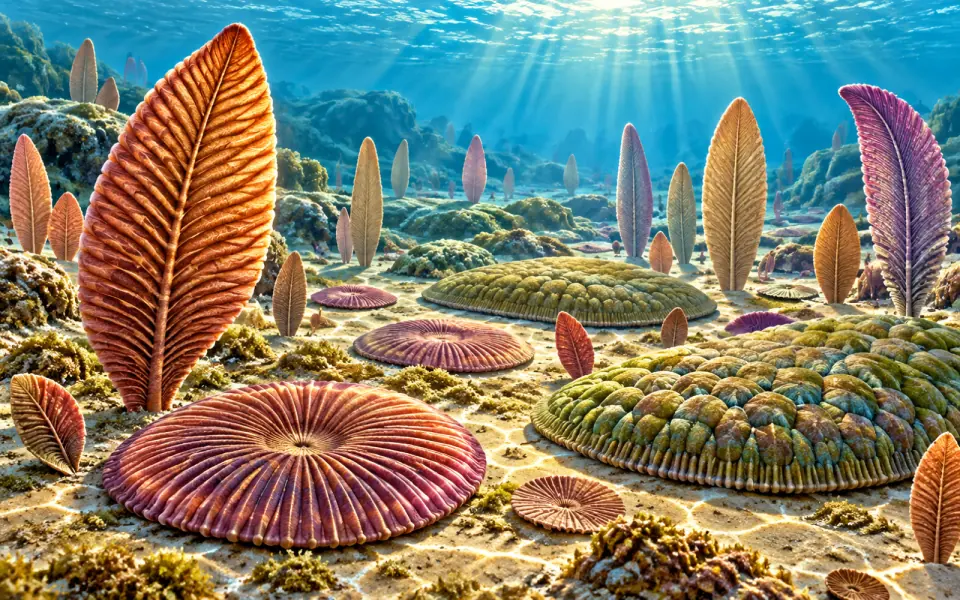 AfterThe Ediacaran creaturesabout 555 million years ago
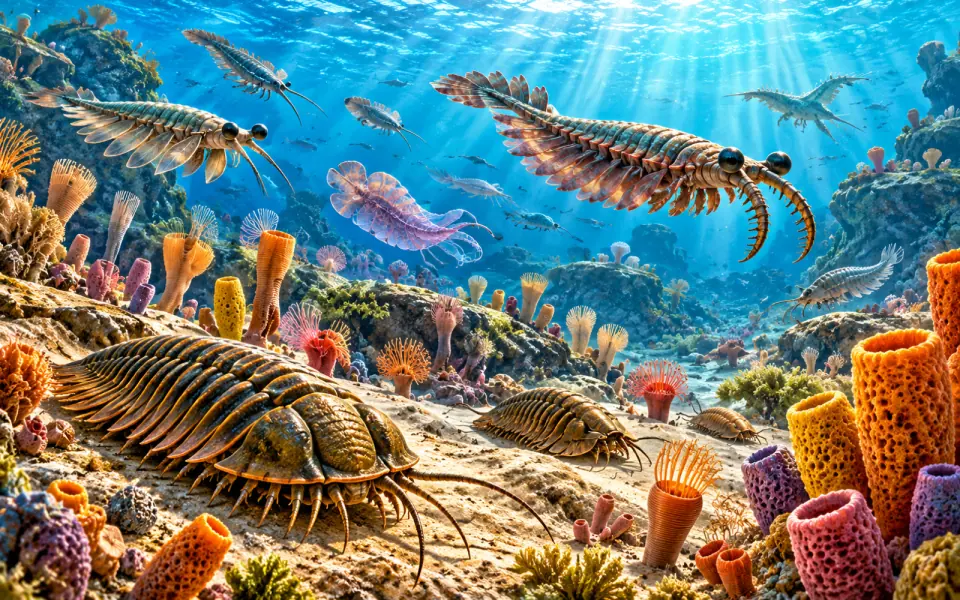 AfterThe Cambrian explosionabout 539 million years ago
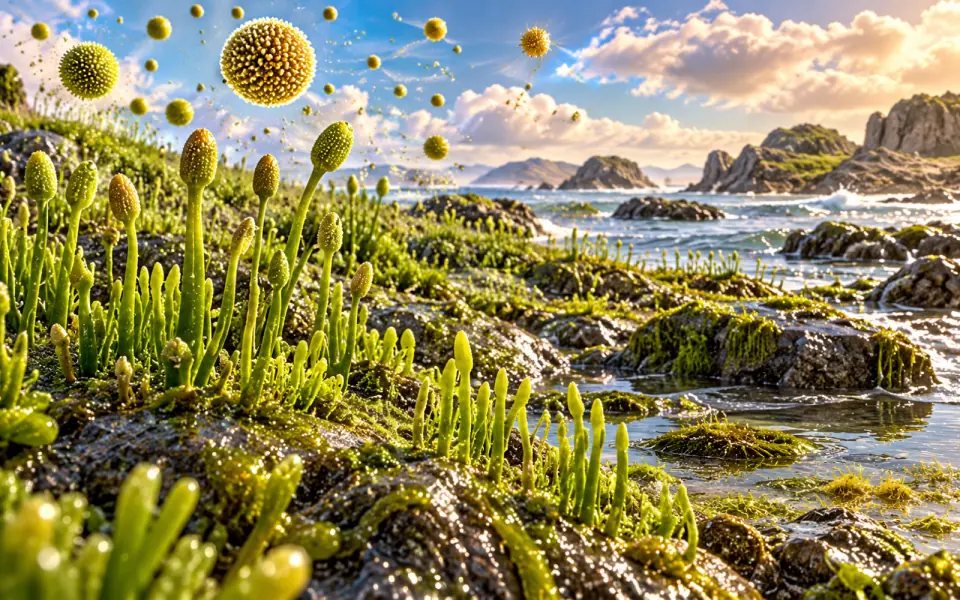 AfterThe first plants on landabout 475 million years ago
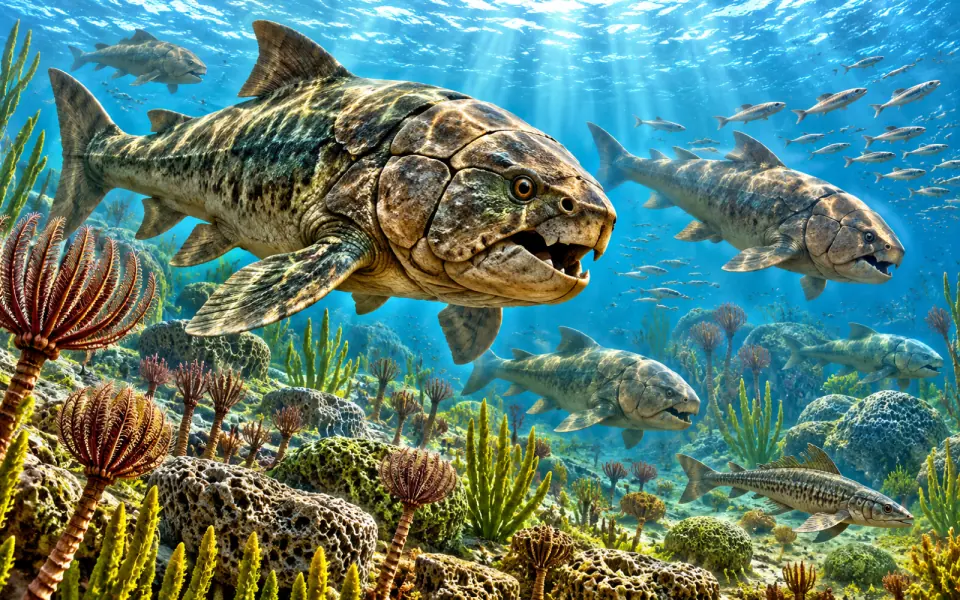 AfterThe first fish with jawsabout 440 million years ago
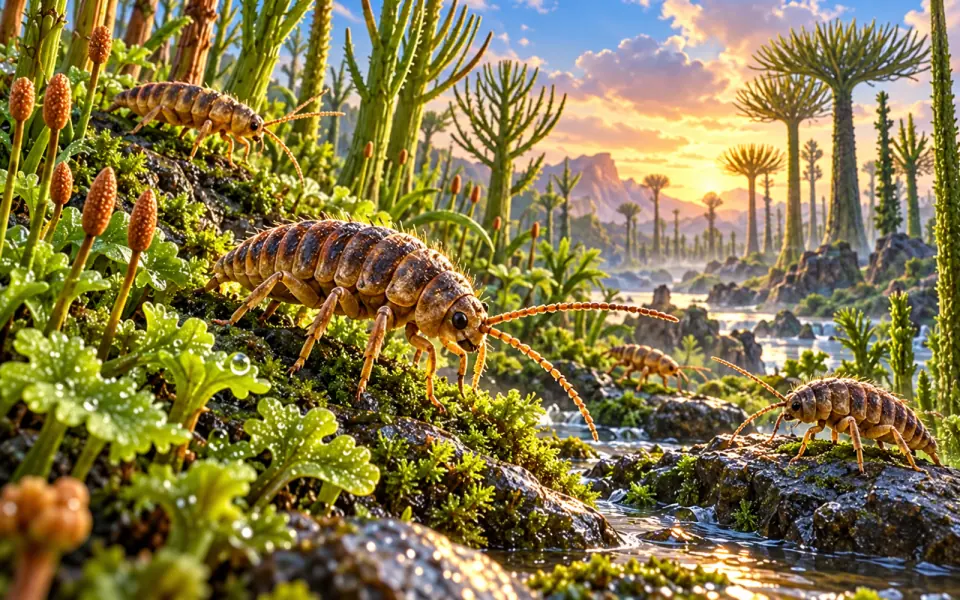 AfterThe first insectsabout 400 million years ago
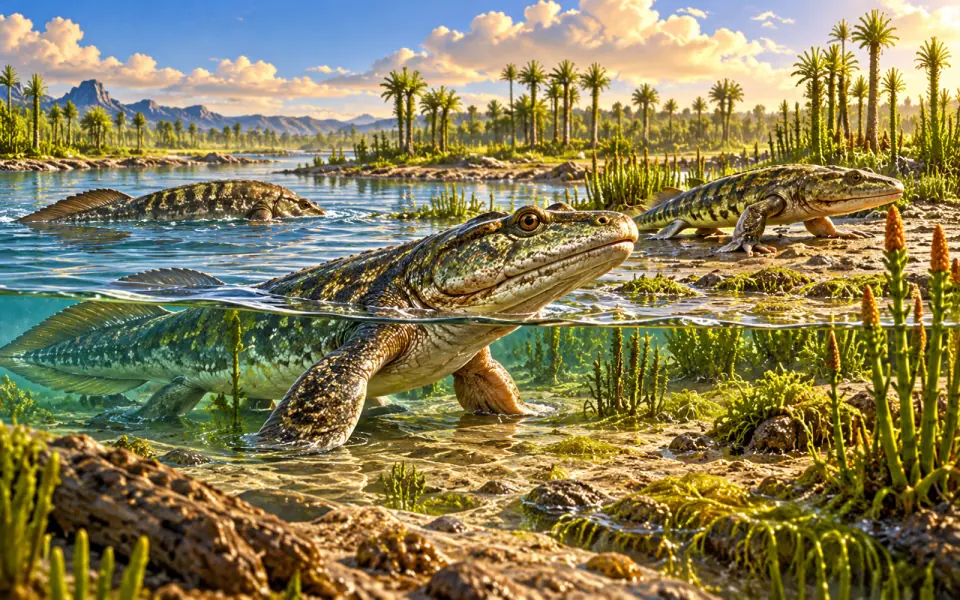 AfterThe first amphibiansabout 375 million years ago
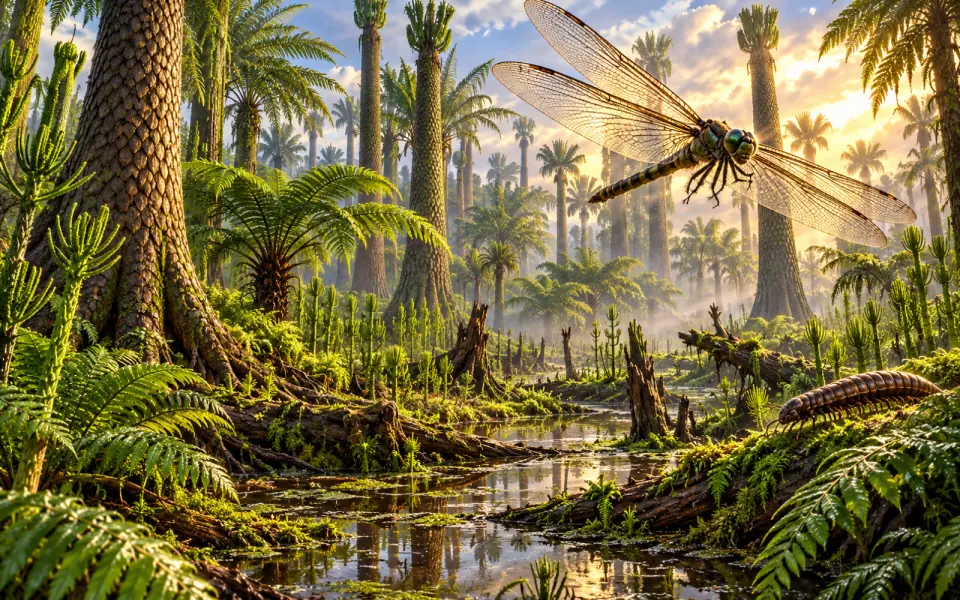 AfterCarboniferous forestsabout 320 million years ago
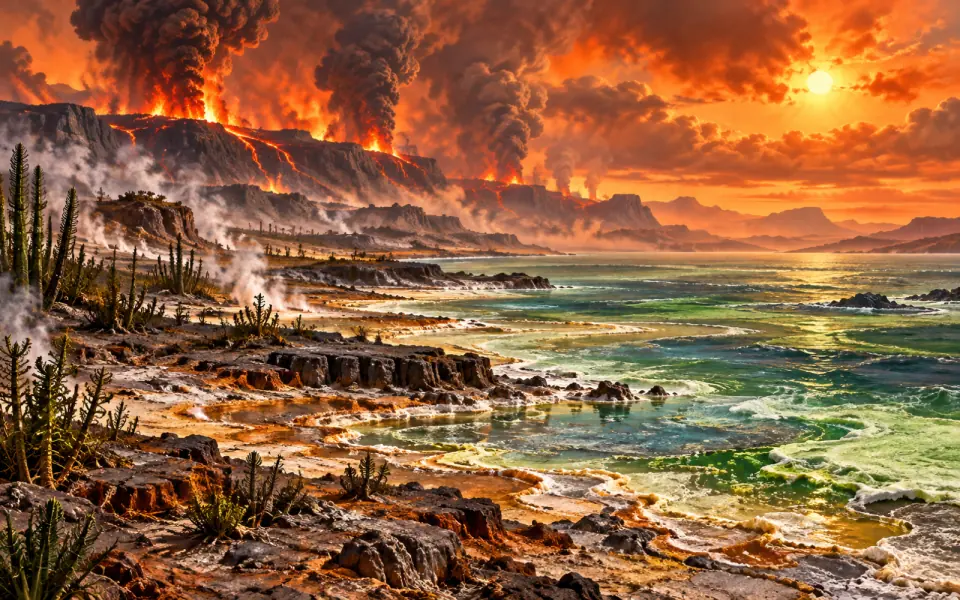 AfterThe great Permian extinctionabout 252 million years ago
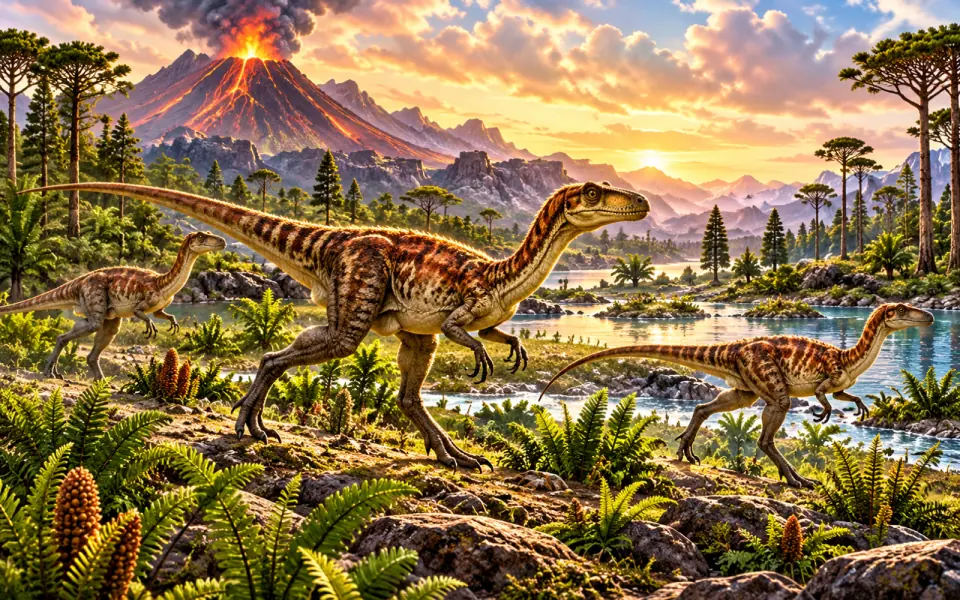 AfterThe first dinosaursabout 230 million years ago
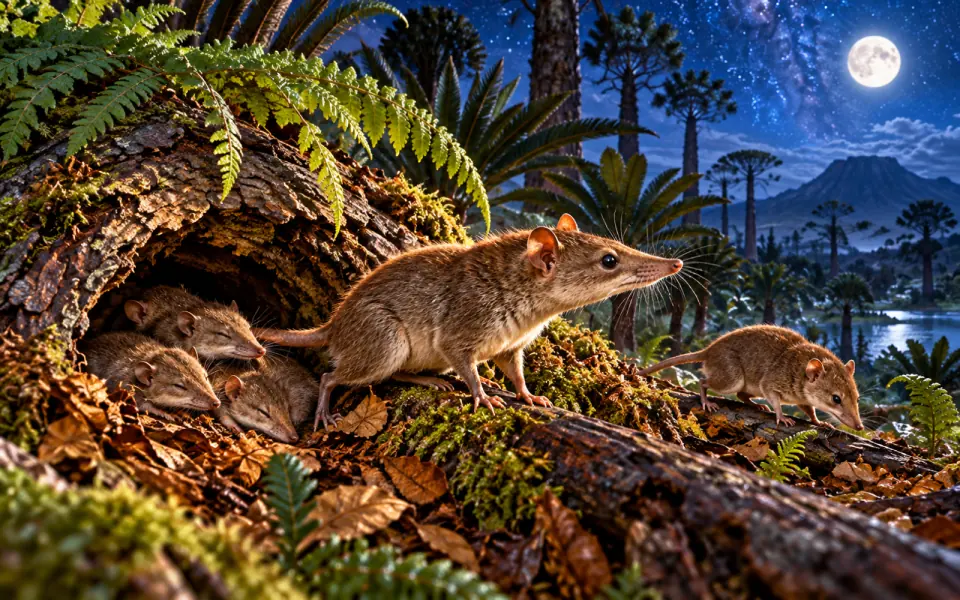 AfterThe first mammalsabout 225 million years ago
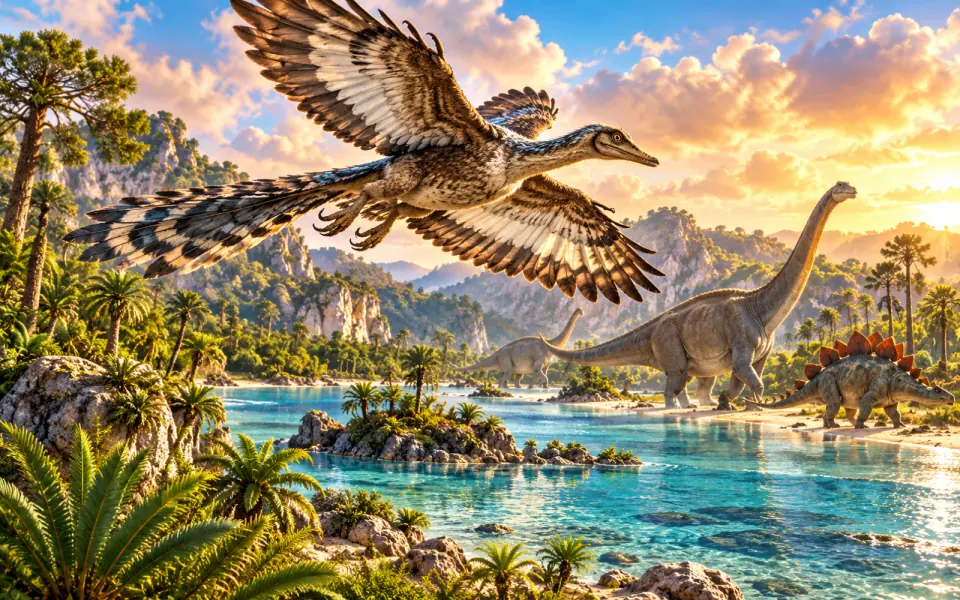 AfterThe first birdsabout 150 million years ago
 AfterExtinction of the non-avian dinosaursabout 66 million years ago
Listen / Read next
- Music to read by: Cinematic JourneyEpic film-style music, no lyrics, by Ciro Simone IrmiciSpotifyYouTube Music
Other events of the era “The Earth before us”
- The Big Bang
- The first stars
- Birth of the Milky Way
- Formation of the Solar System
- Birth of the Earth
- Formation of the Moon
- The oldest pieces of Earth
- The first oceans
- The first life on Earth
- Cyanobacteria and photosynthesis
- The Great Oxidation Event
- The first complex cells
- The Ediacaran creatures
- The Cambrian explosion
- The first plants on land
- The first fish with jaws
- The first insects
- The first amphibians
- Carboniferous forests
- The great Permian extinction
- The first dinosaurs
- The first mammals
- The first birds
- Extinction of the non-avian dinosaurs
