Storiascopio · Era 8 of 12 · lower secondary year 1
Public mechanical clocks
about 1350 · European towns (for example Padua and Milan)
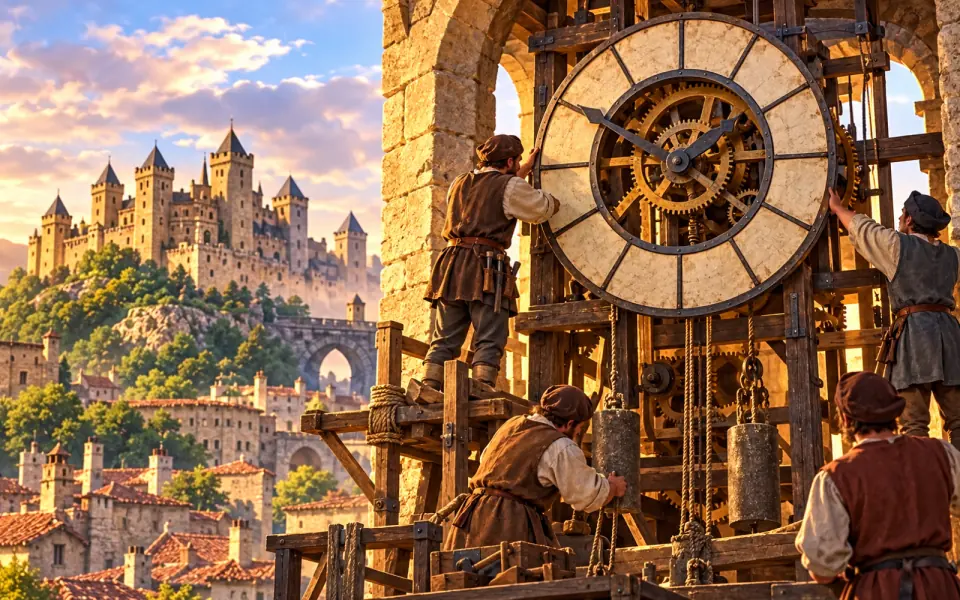
In short
Mechanical clocks worked thanks to a weight that slowly dropped and a device, the escapement, that controlled its fall. In the 14th century towns began to put them on towers, often with a bell that struck the hours. In Padua Giovanni Dondi built the Astrarium, which also showed the movements of the Sun, the Moon and the planets. Before then people mostly followed the church bells, which marked the hours of prayer.
Why it matters Having the same time for everyone changed the rhythm of work, markets and town life.
Source: Encyclopaedia Britannica, “Clock”
Where we are in the era “Late Middle Ages”
- 1
- 2
- 3
- 4
- 5
- 6
- 7
- 8
- 9
- 10
- 11
- 12
- 13
- 14
- 15
- 16
- 17
- 18
- 19
- 20
- 21
- 22
- 23
- 24
- 25
about 1050Event 24 of 251429
Your turn
Name ______________________ Class ______ Date __________
When did it happen? Find the date at the top and write it here:
Tell it in your own words: what happened?
Draw the scene below.
storiascopio.com/en/event/public-mechanical-clocks/ · free worksheet, you may photocopy it for your class